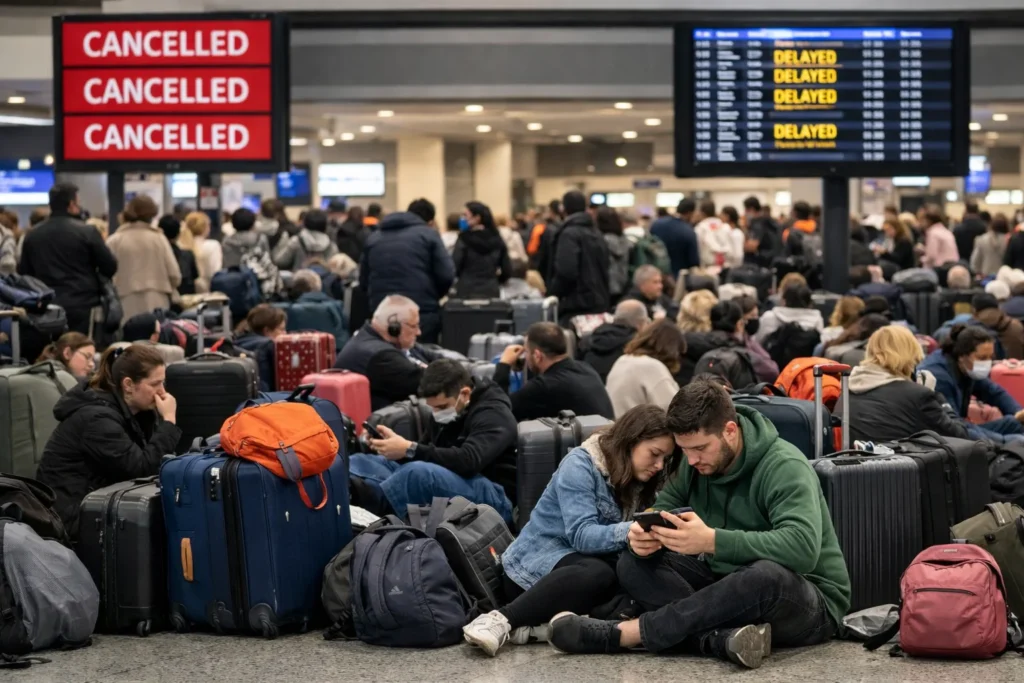
Thousands of passengers across Türkiye faced major travel disruptions today as widespread flight cancellations and delays impacted key aviation hubs including Istanbul, Antalya, İzmir and Muğla. The situation, driven largely by adverse weather conditions, caused significant operational strain across airlines and airports, leaving travelers stranded and forcing last-minute changes to itineraries.
According to the latest updates, a total of 192 flights were canceled while 149 experienced delays across the four major airports. The disruptions affected both domestic and international routes, highlighting the vulnerability of high-traffic travel corridors during periods of operational instability.
Istanbul Sabiha Gökçen International Airport emerged as the epicenter of the disruption, recording the highest number of cancellations and delays nationwide. With 167 flights canceled and 64 delayed, the airport bore the brunt of the impact. The scale of disruption at this major hub created a ripple effect across connecting flights, amplifying delays for passengers traveling through Türkiye to other destinations.
Antalya Airport also experienced significant operational challenges, reporting 12 cancellations and 63 delays. While cancellations were relatively limited compared to Istanbul, the high number of delays created congestion and extended waiting times for travelers. As one of Türkiye’s busiest tourism gateways, especially during peak travel periods, disruptions in Antalya can quickly affect international holiday plans.
İzmir Adnan Menderes International Airport reported moderate disruptions, with 7 cancellations and 19 delays. Although smaller in scale, the impact was still notable for passengers relying on timely connections. Meanwhile, Milas–Bodrum Airport in Muğla experienced comparatively fewer disruptions, with 6 cancellations and 3 delays, but still contributed to the overall nationwide impact.
Among airlines, Pegasus Airlines was the most heavily affected, accounting for the vast majority of cancellations. The carrier reported 188 canceled flights along with 63 delays, making it the primary contributor to the disruption across all four airports. As a major low-cost airline operating extensive domestic and regional routes, Pegasus Airlines’ operational challenges had widespread consequences for travelers.
Other carriers also faced delays, though to a lesser extent. SunExpress recorded 31 delays, particularly concentrated in Antalya and İzmir. Turkish Airlines, the country’s national carrier, reported 4 cancellations and 22 delays across multiple locations. AJet experienced 14 delays, mainly at Istanbul Sabiha Gökçen Airport, while smaller carriers such as Jet2, Flynas, Aer Lingus, Azimuth and Corendon Airlines reported minor delays affecting a limited number of flights.
The disruptions underline the complexity of managing flight operations in challenging conditions. Weather-related issues can quickly cascade across airport systems, affecting aircraft rotations, crew availability and scheduling. When multiple airports are impacted simultaneously, the situation becomes even more difficult to manage, leading to widespread cancellations and delays.
For passengers, the immediate consequences have been significant. Many travelers found themselves stranded at airports, dealing with long queues, rescheduling challenges and uncertainty around departure times. Those with connecting flights faced additional complications, including missed onward journeys and extended travel durations.
Travel experts emphasize the importance of preparedness during such disruptions. Passengers are advised to check flight statuses regularly, especially when traveling through major hubs like Istanbul or Antalya. Staying in close contact with airlines can help secure rebooking options more quickly, while arriving early at the airport allows extra time to manage unexpected changes.
Flexible travel arrangements are becoming increasingly important in today’s aviation environment. Tickets that allow modifications or rebooking without heavy penalties can provide much-needed flexibility when disruptions occur. Keeping digital and printed copies of travel documents also ensures smoother processing during rebooking or check-in procedures.
The broader implications of these disruptions extend beyond immediate inconvenience. Türkiye is a major global tourism destination, attracting millions of visitors each year. Smooth airport operations are essential to maintaining traveler confidence and supporting the country’s tourism industry. Large-scale disruptions, even when temporary, can influence travel decisions and highlight the need for robust contingency planning.
Airlines and airport authorities are continuously working to improve operational resilience. Enhanced communication systems, better coordination between airlines and ground services, and improved forecasting tools can help mitigate the impact of future disruptions. However, unpredictable factors such as weather will always remain a challenge in aviation.
Despite the scale of the current situation, operations are expected to gradually return to normal as conditions improve and airlines adjust schedules. Passengers are encouraged to remain patient and stay informed through official airline updates. In many cases, airlines are offering rebooking assistance and alternative travel options to minimize inconvenience.
In summary, Türkiye’s major airports experienced a day of significant disruption, with over 300 flights affected across Istanbul, Antalya, İzmir and Muğla. The majority of cancellations were linked to Pegasus Airlines, while delays were spread across multiple carriers. The situation highlights the interconnected nature of modern air travel and the importance of flexibility and preparedness for passengers.
As travel demand continues to grow, ensuring reliable and efficient operations will remain a priority for the aviation industry. Today’s disruptions serve as a reminder that while air travel connects the world, it also requires constant adaptation to navigate unexpected challenges.
For more travel news like this, keep reading Global Travel Wire