
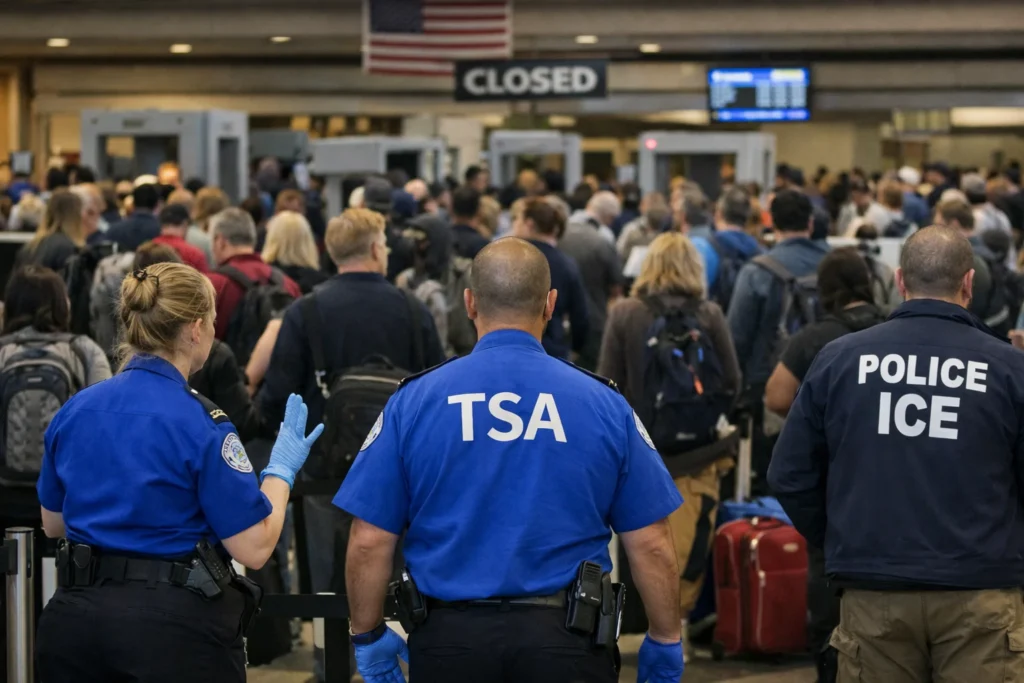
Air travel across the United States is facing severe disruption as an ongoing government funding crisis continues to impact airport operations nationwide. The situation has created mounting uncertainty for millions of passengers, with long security queues, delayed flights, and staffing shortages becoming increasingly common at major aviation hubs.
At the center of the disruption is the Transportation Security Administration, which is responsible for screening passengers and ensuring safety at airports. Due to the partial government shutdown, tens of thousands of security officers have been required to continue working without pay. This unprecedented situation is placing immense strain on the aviation system, raising concerns about both operational efficiency and long-term workforce stability.
The crisis has led to a noticeable increase in staff absenteeism across airports. Reports indicate that unscheduled absences have risen significantly, with some locations experiencing particularly high levels of disruption. At airports such as Hartsfield-Jackson Atlanta International Airport and William P. Hobby Airport, staffing shortages have forced the closure of multiple security lanes, resulting in extended wait times for passengers.
For travelers, the consequences are immediate and highly visible. Security queues at major gateways including John F. Kennedy International Airport, Newark Liberty International Airport, and Philadelphia International Airport have stretched to several hours during peak travel periods. These delays are causing passengers to miss flights, while airlines are struggling to maintain schedules amid unpredictable passenger flow.
The operational challenges extend beyond inconvenience. Aviation experts warn that reduced staffing levels could impact the overall efficiency of security screening processes. While safety protocols remain in place, the pressure on available personnel is increasing, potentially affecting the speed and consistency of operations. This has led to growing concerns about how long the system can sustain current conditions without significant intervention.
The human impact of the shutdown is equally significant. Many TSA employees are facing financial hardship as they continue to work without regular income. Reports from employee representatives highlight the difficulties faced by workers who are struggling to meet everyday expenses. Some have reportedly left their positions, unable to continue under such conditions. This trend is particularly worrying given the time and resources required to recruit and train new security personnel.
The loss of experienced staff could have lasting consequences for the aviation sector. Training a new officer typically takes several months, meaning that even after funding is restored, it may take time to rebuild workforce capacity. This potential gap in staffing could continue to affect airport operations well into the future.
In response to the growing crisis, authorities have introduced temporary measures aimed at maintaining airport functionality. Personnel from other federal agencies, including Immigration and Customs Enforcement, have been deployed to assist with non-specialized tasks such as managing queues and verifying documents. The intention is to allow trained security officers to focus on core screening responsibilities.
However, this approach has sparked debate among policymakers and industry observers. Critics argue that personnel without specialized training in aviation security may not be fully equipped to handle the complexities of airport operations. There are also concerns about how the presence of additional enforcement personnel may affect the overall passenger experience.
The broader issue stems from a political stalemate over government funding, particularly related to immigration and border security policies. The impasse has prevented the approval of a comprehensive budget for key agencies, including those responsible for transportation and security. As the shutdown extends into its second month, pressure is mounting on lawmakers to reach a resolution.
The economic impact of the disruption is also becoming more apparent. The travel industry, which plays a significant role in the national economy, is experiencing substantial losses as delays and cancellations affect passenger confidence. Analysts estimate that the ongoing situation is costing the travel sector billions of dollars, with ripple effects across airlines, airports, and tourism-related businesses.
For travelers, the uncertainty surrounding airport operations has made planning more challenging. Passengers are being advised to arrive at airports well in advance of their scheduled departures and to monitor flight updates closely. Airlines are also encouraging travelers to remain flexible, as schedules may change due to operational constraints.
Despite the challenges, efforts are being made to maintain safety and minimize disruption as much as possible. Airport authorities and airlines continue to work closely with federal agencies to manage the situation and support passengers. However, without a resolution to the funding issue, the strain on the system is expected to persist.
Looking ahead, the crisis highlights the importance of stable funding for critical infrastructure such as aviation security. The current situation serves as a reminder of how interconnected political decisions and operational systems can be, particularly in sectors that rely on coordinated efforts across multiple agencies.
As negotiations continue, millions of travelers remain caught in the middle, facing delays and uncertainty as they navigate the nation’s airports. Until a funding agreement is reached, the outlook for smooth and predictable air travel in the United States remains uncertain, with the potential for further disruptions in the weeks ahead.