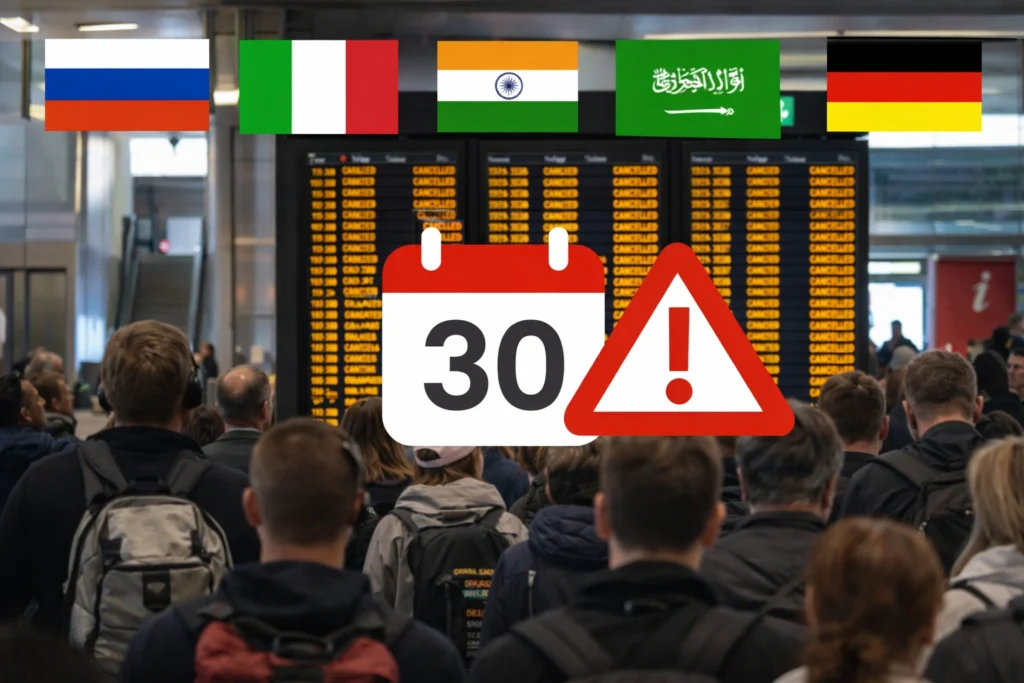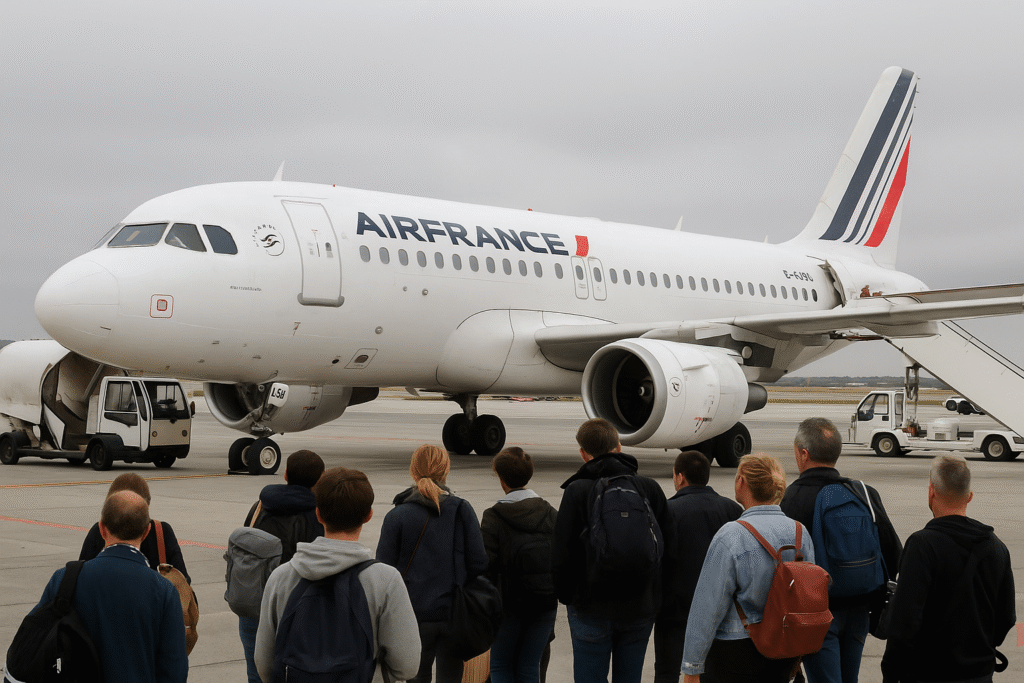
Air France has canceled 14 flights in a move that shocked travelers across Europe and Africa. The disruptions affected passengers departing from Paris, London, Frankfurt, Amsterdam, and Madagascar, creating major delays at one of the busiest times of the week.
The majority of flights were scheduled from Charles de Gaulle Airport in Paris, the central hub of Air France. The cancellations impacted both short-haul and long-haul services, forcing travelers to change plans quickly. Passengers bound for Italy, Germany, the United Kingdom, the Netherlands, and Madagascar found themselves searching for new options.
Details of the Canceled Flights
Flights canceled included services between Paris and London Heathrow, Paris and Frankfurt, and Paris and Amsterdam. Several domestic connections within France, including routes to Nice and Toulouse, were also suspended.
The most severe disruption came from the cancellation of multiple flights to Ivato International Airport in Madagascar. This route connects Europe with Africa and serves as a vital link for both tourism and trade. Passengers bound for Antananarivo faced significant delays, with services canceled on consecutive days.
The full list of cancellations covered 14 flights, including AFR1732 to Linate, AFR1518 to Frankfurt, AFR1580 to London, and AFR1740 to Amsterdam. Long-haul services such as AFR934 and AFR935 between Paris and Madagascar also faced disruption, stranding travelers far from home.
Immediate Impact on Travelers
Thousands of passengers felt the effects of these cancellations. Business travelers missed scheduled meetings, families saw vacations disrupted, and tourists faced long waits in crowded terminals. Passengers attempting to connect through Paris Charles de Gaulle struggled to find replacement flights.
London Heathrow and Frankfurt International, two of Europe’s busiest airports, also reported delays as returning Air France flights were canceled. Amsterdam Schiphol, already stretched with seasonal demand, faced additional congestion.
Causes of the Disruptions
Airlines cancel flights for many reasons, including staff shortages, unexpected maintenance, and weather problems. Air France has not provided specific details for these cancellations, but industry analysts note that staffing and scheduling pressures often trigger such large-scale disruptions.
European aviation regulators recently reported increasing strain on airlines managing post-pandemic travel demand. Carriers are balancing high passenger volumes with limited resources. Experts suggest that these factors continue to test airlines across Europe.
Options Available for Passengers
Air France has encouraged travelers affected by the cancellations to explore several options. Rebooking remains the most common solution. The airline allows passengers to move to another available flight without additional cost, subject to seat availability.
Refunds are also available for travelers who choose not to continue their journey. Many passengers have already applied for refunds through the airline’s official platforms.
Travelers with insurance have been urged to review their policies for coverage of meals, hotel stays, or alternative travel expenses. For those stranded abroad, this can provide crucial support during extended waits.
Customer support teams remain active at Charles de Gaulle and other affected airports. Passengers are advised to remain in contact with Air France staff to secure updates on rebooking and compensation.
Wider Tourism Impact
The cancellations extend beyond individual passengers. Paris, London, Amsterdam, and Frankfurt remain among Europe’s busiest travel hubs. Disruptions at these airports ripple across the tourism sector, affecting hotel bookings, tour schedules, and local businesses.
In Madagascar, tourism operators expressed concern about repeated cancellations. The Ivato International route supports both leisure travel and business connections. Cancellations during peak tourism season reduce visitor numbers, directly impacting local economies.
How Travelers Can Manage Disruptions
Travelers can take several steps to reduce the stress of flight cancellations. Checking flight status before leaving for the airport remains critical. Staying alert to official updates through airline apps, websites, or airport displays helps travelers respond quickly.
Planning for flexible itineraries also helps minimize disruption. Those traveling for tourism can allow additional time before critical events or tours. Business travelers can prepare for remote alternatives in case delays prevent in-person meetings.
Travel insurance offers valuable protection during unexpected cancellations. Policies covering delays, accommodation, and missed connections reduce financial strain and offer peace of mind.
Why These Cancellations Matter
Large-scale cancellations from a national carrier highlight the ongoing challenges faced by the aviation industry. Air France plays a central role in connecting Europe with global destinations. When flights are canceled, ripple effects spread across the continent.
Travelers rely on the reliability of carriers like Air France for both short business trips and long-haul vacations. Continued disruptions create frustration and reduce confidence among passengers planning future journeys.
Conclusion
Air France canceled 14 flights, affecting passengers across Paris, London, Frankfurt, Amsterdam, Nice, Toulouse, and Madagascar. Travelers faced delays, rebookings, and refund requests as they attempted to adjust their plans.
The majority of disruptions centered on Charles de Gaulle, the main hub of Air France. Both short-haul routes within Europe and long-haul routes to Africa faced cancellations, proving the wide scope of the disruption.
For affected passengers, rebooking, refunds, and insurance remain the best solutions. Air France continues to work with travelers to minimize disruption, but passengers must remain proactive.
These cancellations underscore the strain airlines face in balancing high demand with limited resources. As travel volumes grow, disruptions remain a reality. By preparing for delays, staying informed, and planning flexible journeys, travelers can navigate these challenges more effectively.
For more travel news like this, keep reading Global Travel Wire