



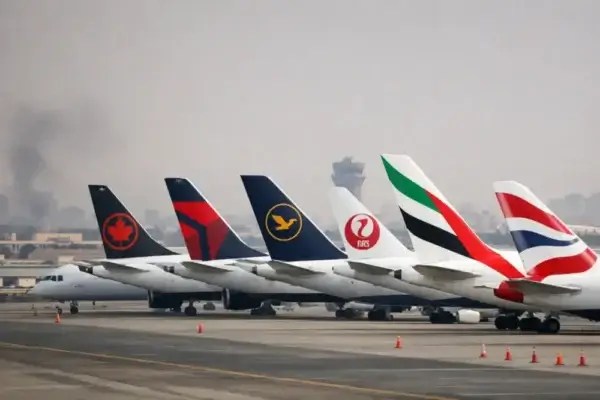




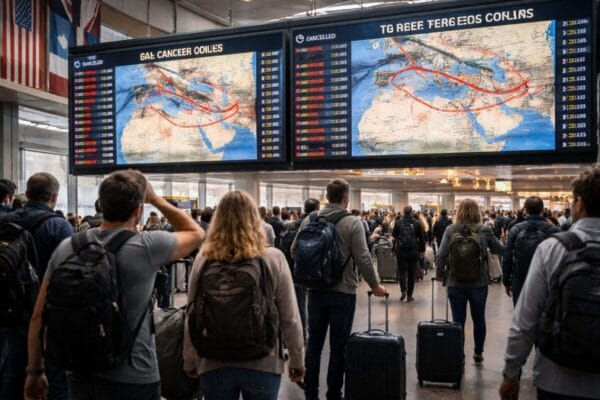
Airlines continue to avoid Middle Eastern airspace as rising conflict between the United States and Iran disrupts global aviation. British Airways joined United, Finnair, Delta, Luxair, Transavia, Air France, KLM and other major carriers in adjusting flight paths to bypass conflict zones. These changes continue to impact international travel and tourism during one of the busiest seasons for global mobility.
The United States government issued aviation warnings as tensions escalated. The Federal Aviation Administration prohibited American carriers from operating in high-risk zones. The European Union Aviation Safety Agency released guidance for European airlines through its conflict zone bulletin. Aviation safety officials highlighted the need to avoid Iranian and Iraqi airspace at all altitudes due to military activity and the potential for unexpected weapons fire.
Airspace Closures Create a Ripple Effect Across Global Travel
The Middle East functions as a major crossroads for international aviation. Airlines use routes through the region to connect Europe, Asia, Africa and Oceania. Closure of key flight corridors forced airlines to choose longer routes through Saudi Arabia, Egypt or Turkey, adding hours to flight times. Fuel consumption increased, operational costs rose and schedules shifted across multiple continents.
Tourism analysts noted that these restrictions affected more than direct travel to Middle Eastern countries. Travelers heading to Southeast Asia, India, and East Africa experienced diversions and delays. International travelers encountered longer journeys and higher ticket prices as airlines compensated for longer flight durations and rising fuel costs.
Safety Alerts Drive Rapid Operational Changes
EASA urged airlines to avoid Iranian and Iraqi airspace as tensions increased. European governments coordinated advisories with airlines and civil aviation authorities. The FAA maintained its long-standing prohibition for U.S. airlines in Tehran’s flight information region. Aviation planners remained focused on safety while logistics teams restructured flight paths on short notice.
Government agencies highlighted the increased risks of conflict near busy corridors. Military movements and missile activity increased during the crisis, raising the potential for misidentification of civilian aircraft. Historical precedent shaped these cautions, including previous incidents involving civilian aircraft during regional conflict.
Travelers Face Delays, Cancellations and Rerouting
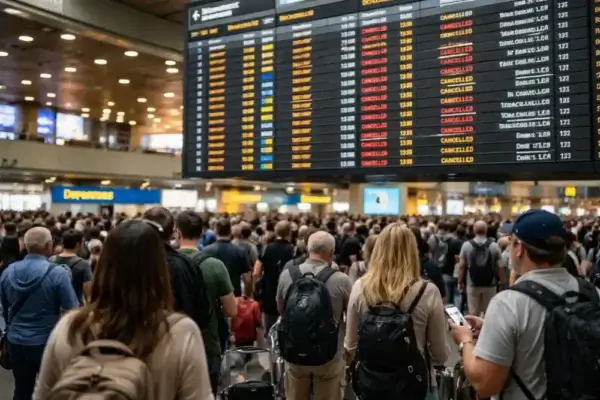
European and American airlines delayed or canceled flights due to restricted airspace. Lufthansa, Air France, KLM and British Airways paused services to several Middle Eastern cities during peak risk periods. Airlines reintroduced flights after adjusting paths to safer corridors. Some carriers resumed limited operations with new flight plans approved by regulators.
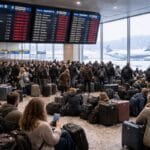
American carriers also faced broad disruptions. United and Delta revised flight schedules to meet safety requirements and avoid designated risk zones. U.S. airports including New York, Chicago and Los Angeles experienced passenger congestion due to cascading delays.
Travelers described longer flights, missed connections and higher ticket prices. Travel agencies reported increased customer inquiries regarding refunds, rebooking options and travel insurance claims. Tourism businesses experienced lower demand for routes involving the Middle East as passengers delayed or canceled travel plans.
Rising Operating Costs Bring Higher Ticket Prices
Rerouted flights increased travel time and fuel burn. Aviation experts estimated fuel increases of several tons per flight on select long-haul routes. Airlines passed some of these costs to passengers through dynamic fare adjustments. Major carriers continued to adjust pricing as the crisis evolved.
Airlines in Europe faced additional staffing and scheduling challenges as crews exceeded duty limits due to longer flight times. Crew rest regulations required airlines to replace or reposition crew members before operating modified flight schedules. These changes created operational complexity and increased expenses for airlines across the continent.
Tourism Industry Feels the Impact Beyond Aviation
The travel industry continued to feel indirect effects of the crisis. Tour operators faced itinerary changes for clients traveling to the Middle East or beyond. Hotel chains reported reduced occupancy in cities with reduced airline access. Business travel decreased for multinational companies that rely on Middle Eastern hubs for regional access.
Tourism ministries in affected countries monitored changes to visitor flows. Gulf nations highlighted tourism infrastructure investments designed to attract long-haul travelers. Destinations in the region continued to promote events and conferences. However, travelers showed hesitation due to the unpredictable political environment and limited air connectivity.
Updates Show Gradual Service Resumption With Modified Routes
Several European airlines resumed operations to the Middle East with modified flight paths. Air France resumed Paris to Dubai flights after pausing operations during peak conflict risk. British Airways resumed London to Bahrain services with alternate routing. KLM resumed flights to the region through new corridors after earlier suspensions. Finnair resumed Helsinki to Dubai and Doha routes through redesigned flight plans. Transavia restored select flights to the region with adjusted schedules.
These resumptions continued under strict safety reviews coordinated with national regulators and international agencies.
Future of Air Travel Faces Uncertainty in the Region
Aviation analysts predicted prolonged uncertainty for Middle Eastern airspace. Rising geopolitical tension and ongoing military buildup suggest continued volatility. Airlines may permanently adjust networks if conflict risk remains elevated. Higher operating costs may become the new normal for carriers crossing regions near active conflict zones.
Passengers will continue to experience longer flight times, higher fares and increased chance of disruptions. Tourism demand may shift toward destinations less dependent on Middle Eastern air corridors. Cruise travel, rail networks and regional tourism may absorb some long-haul demand as travelers prioritize stability.
For more travel news like this, keep reading Global Travel Wire