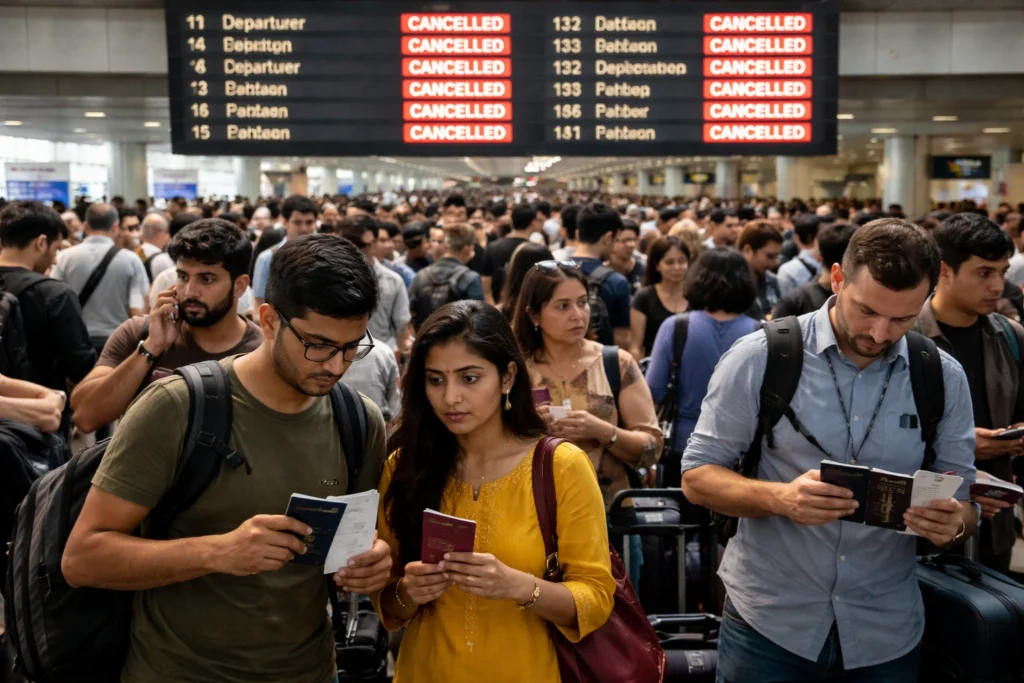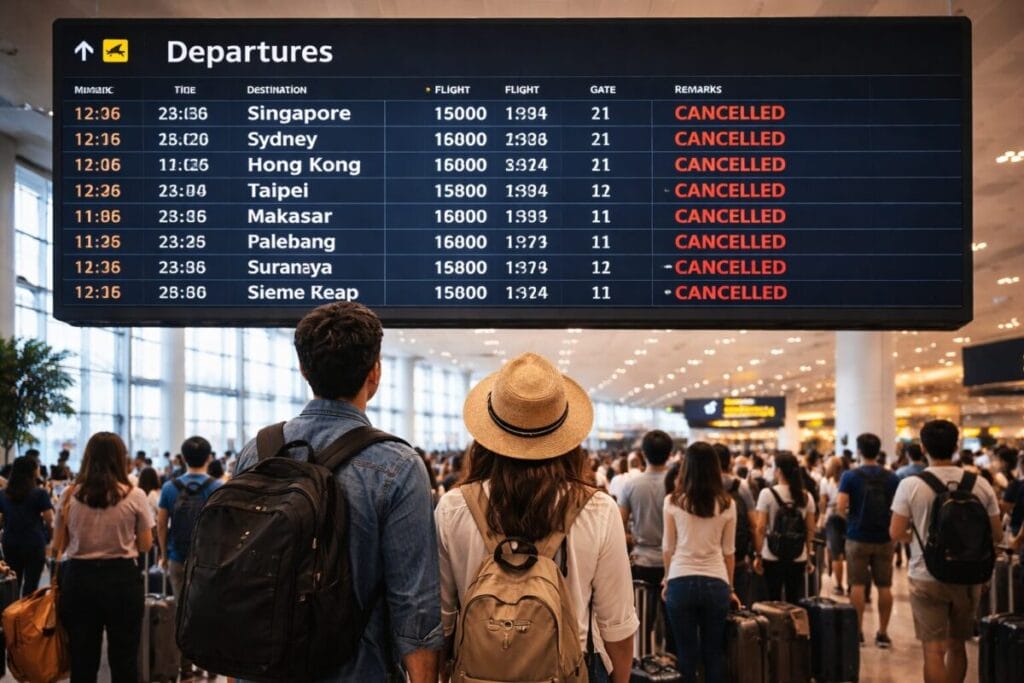
Air travel across Asia faced significant disruption after airlines cancelled more than twenty scheduled flights across major airports. The cancellations affected domestic, regional, and long-haul routes, leaving passengers stranded and forcing travel plan adjustments across Indonesia, Malaysia, Vietnam, Taiwan, and Hong Kong.
Airlines involved included Batik Air, Malaysia Airlines, VietJet, Cathay Pacific, and several other regional carriers. Key destinations impacted included Jakarta, Singapore, Sydney, Hong Kong, Taipei, and multiple Indonesian cities. The widespread nature of these disruptions highlights ongoing operational challenges within Asia’s interconnected aviation network.
Indonesia Experiences Highest Level of Disruption
Indonesia recorded the largest number of cancellations, with Jakarta’s Soekarno-Hatta International Airport seeing the most affected departures. Several domestic routes faced repeated cancellations over consecutive days, creating ripple effects across the country’s aviation system.
Cancelled services connected Jakarta with cities such as Palembang, Makassar, Yogyakarta, Pekanbaru, and Manado. International routes linking Jakarta to Singapore and Xiamen also experienced disruption.
Indonesia relies heavily on air travel due to its archipelagic geography. Flights provide essential connectivity between islands, making schedule disruptions particularly challenging for travelers. When airlines cancel multiple services on high-frequency routes, passenger rebooking options become limited.
Batik Air operated many of the affected flights, which resulted in a concentrated cluster of cancellations at one of the region’s busiest airports. Travelers faced longer wait times, delayed itineraries, and pressure on alternative carriers.
Makassar Hub Sees Reduced Connectivity
The disruption extended beyond Jakarta to eastern Indonesia, where Sultan Hasanuddin International Airport in Makassar recorded several cancellations. Flights connecting Makassar to Jakarta and Surabaya experienced suspension, reducing east–west connectivity.
Makassar functions as a key transit point linking eastern Indonesia with major urban centers. Reduced services from this hub increase travel times and create logistical challenges for both business travelers and tourists.
Airlines often rely on tight aircraft rotation schedules. When disruptions occur at one hub, they frequently affect multiple connected routes throughout the day.
Malaysia Airlines Cancellation Impacts Long-Haul Travel
Malaysia experienced fewer cancellations but faced a high-impact disruption at Kuala Lumpur International Airport. Malaysia Airlines cancelled a long-haul flight scheduled to connect Kuala Lumpur with Sydney.
Long-haul cancellations create significant challenges because alternative flights may operate only once daily or several times per week. Travelers planning onward international connections often encounter delays or complex rerouting.
The removal of a single intercontinental service can influence multiple airline networks. Passengers traveling between Southeast Asia and Australia needed to seek alternative itineraries, which increased demand for remaining seats.
Vietnam Regional Flights Disrupted
At Tan Son Nhat International Airport in Ho Chi Minh City, two regional services faced cancellation. A short-haul flight to Hong Kong and another regional connection to Siem Reap were removed from the schedule.
These routes serve both tourism and business travel markets. Southeast Asia continues to experience strong regional mobility, making consistent flight availability essential for economic activity and tourism recovery.
Short-haul cancellations often affect travelers with tight schedules or connecting flights. Airlines usually offer rebooking options, but capacity limitations may lead to delays.
East Asia Corridor Faces Paired Flight Suspension
Taiwan and Hong Kong experienced a linked disruption when Cathay Pacific cancelled flights operating in both directions between Taipei and Hong Kong. This corridor ranks among East Asia’s busiest air routes, supporting business travel and tourism.
The suspension reduced capacity between two major financial centers and created scheduling challenges for travelers with connecting itineraries. Widebody aircraft usually operate on this route, which means cancellations affect a large number of passengers at once.
Paired cancellations often indicate broader operational issues such as aircraft availability or network adjustments rather than isolated incidents.
Operational Patterns Highlight Industry Challenges
Analysis of the disruptions reveals several patterns across Asia’s aviation sector. Airlines cancelled flights across different aircraft types, including narrowbody jets for domestic routes and widebody aircraft for international services.
The cancellations occurred at major hub airports, which suggests network-wide adjustments rather than localized disruptions. Airlines may adjust schedules to manage staffing, fleet allocation, or operational efficiency.
High travel demand and evolving airline schedules continue to test operational resilience. Airlines increasingly use dynamic scheduling to respond to market conditions, which sometimes leads to sudden cancellations.
Impact on Tourism and Passenger Experience
Travel disruptions can influence tourism flows across the region. Southeast Asia depends heavily on reliable air connections to support leisure travel, business meetings, and regional trade.
Passengers affected by cancellations often encounter rebooking challenges, longer travel times, and higher demand for remaining flights. Travel insurance and flexible booking policies have become increasingly important for travelers navigating unpredictable schedules.
Airports and airlines encourage passengers to monitor flight status regularly and stay informed through official updates. Mobile notifications and airline applications help travelers respond quickly to schedule changes.
What Travelers Should Expect Moving Forward
Travelers flying within Asia should remain flexible and allow extra time when planning itineraries. Monitoring airline announcements and checking schedules before departure can reduce stress during disruptions.
Despite occasional operational challenges, Asia’s aviation sector continues to grow rapidly. Airlines and airports invest heavily in infrastructure and digital tools to improve resilience and passenger communication.
The recent cancellations demonstrate how interconnected the region’s aviation networks have become. Even a small cluster of disruptions can affect multiple countries and travel routes, reinforcing the need for adaptable planning and real-time information for modern travelers.
For more travel news like this, keep reading Global Travel Wire