
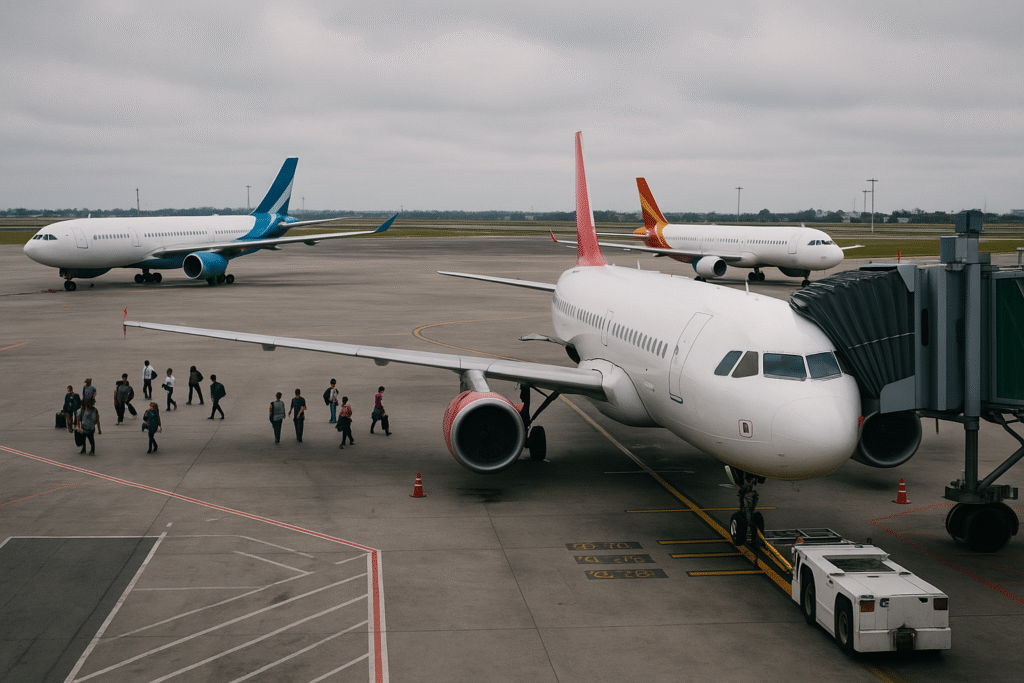
Travel across Asia faces heavy disruption this week as major airports report more than twenty flight cancellations. Travellers in Singapore, Malaysia, Vietnam, and Indonesia struggle with sudden changes to their plans as airlines adjust schedules. These cancellations affect popular routes to Darwin, Bali, Hanoi, Kuala Lumpur, Jakarta, and several other regional hubs. The rise in schedule changes highlights the growing strain on Asian aviation during peak travel periods.
Singapore Changi Faces Rising Pressure
Singapore Changi Airport continues to handle dense traffic from regional and long-haul flights. Yet the airport still saw cancellations on major routes to Australia. Singapore Airlines halted two scheduled flights to Darwin. These flights, SIA253 and SIA251, normally support steady travel between Singapore and northern Australia. Their cancellations created long queues at rebooking counters. Many travellers faced difficulty securing quick alternatives because Darwin receives limited daily services.
Changi staff worked to manage the crowds, but the high demand left few open seats on nearby departures. Many travellers waited for new slots, while others changed their travel dates. These disruptions added stress for tourists with limited schedules.
Hanoi Noi Bai Reports Sudden International Disruptions
Hanoi Noi Bai Airport faced several international cancellations that affected travel across Northeast and Southeast Asia. China Eastern Airlines cancelled a scheduled flight to Xi’an. Another major cancellation involved a service to Abu Dhabi. These flights usually support business travel and transit routes. Their removal from the schedule created challenges for passengers with onward connections to Europe or the Middle East.
Travellers searched for new options, yet many connecting flights filled quickly. Therefore, finding alternative routes became difficult, especially during afternoon and evening peaks. Hanoi authorities urged passengers to check flight updates before reaching the terminal.
Kuala Lumpur Airport Handles Heavy Cancellations
Kuala Lumpur International Airport also reported several cancellations across domestic and international routes. A long-haul service to Jeddah did not operate as planned. Several regional flights to Kota Kinabalu, Yogyakarta, and Semarang also halted. These cancellations affected both business travellers and holidaymakers heading to popular weekend destinations.
Many travellers sought help at airline service desks. However, available seats on later flights remained limited. Airlines worked to reorganize schedules, yet high demand slowed the process. Kuala Lumpur’s growing passenger numbers continued to test the airport’s capacity.
Indonesia Faces Widespread Cancellations Across Key Cities
Indonesia saw the largest cluster of cancellations across several major airports. Makassar recorded a cancellation on a key route to Jakarta. Surabaya faced multiple cancellations to both Jakarta and Bali. These cancellations affected passengers planning domestic trips as well as international travellers using Surabaya as a transit point.
Bali’s Ngurah Rai Airport also saw notable issues. A flight to Melbourne halted on Saturday afternoon. Several domestic services between Bali and Surabaya also stopped. These disruptions hit tourists heading to Bali for weekend holidays. Many travellers needed to extend their stays or rearrange their itineraries.
Jakarta Soekarno-Hatta Airport, the nation’s busiest hub, saw a series of cancellations to Surabaya, Pekanbaru, and Makassar. These changes placed strain on travellers with tight business schedules. The cancellations also disrupted family trips during a busy travel period.
Why Asia Faces Rising Flight Cancellations
Airlines across Asia deal with several challenges at the same time. Strong storms, haze, and shifting winds often disrupt flight paths. Airlines also manage tight aircraft rotations, which leave little room for delays. Crew shortages during peak travel periods add more pressure. These issues combine and create sudden cancellations that ripple across multiple routes.
Aircraft maintenance and technical checks also increase during high-use periods. When one aircraft becomes unavailable, airlines must rearrange several flights. This challenge grows when airports already operate close to their maximum capacity.
Passengers Feel the Impact of Sudden Schedule Changes
Travellers feel the strongest impact when flights cancel without much warning. Missed connections, hotel losses, and rearranged tours create rising stress. Many travellers spend long hours in terminal queues. Others struggle to find hotel rooms near the airport when delays stretch into the night.
Families with children and travellers with medical needs face added challenges. Their travel plans often require fixed timings. When schedules shift, they need immediate support from airlines. However, support desks fill quickly, which slows the process for everyone.
How Travellers Can Manage Rising Cancellations
Travellers can reduce stress by staying alert and flexible. Checking flight status often helps catch schedule changes early. Contacting the airline through digital channels can speed up rebooking. Travellers should also learn the compensation rules for each airline. This knowledge helps them request refunds or rebooking support when issues arise.
Flexible timing also helps. Travellers who can shift their trips by a day often find more open seats. Travel insurance may also cover some unexpected expenses.
Conclusion: Asia Faces Heavy Travel Pressure During Peak Season
Asia’s aviation network continues to feel heavy strain from rising travel demand. Major airports in Singapore, Malaysia, Vietnam, and Indonesia face repeated cancellations. Airlines work to manage weather shifts, technical checks, and staffing limits. Yet these issues still disrupt travellers across the region.
Travellers can reduce stress by preparing for sudden changes and monitoring flight updates. With careful planning and flexible choices, they can navigate these disruptions and continue their journeys with fewer setbacks.
For more travel news like this, keep reading Global Travel Wire