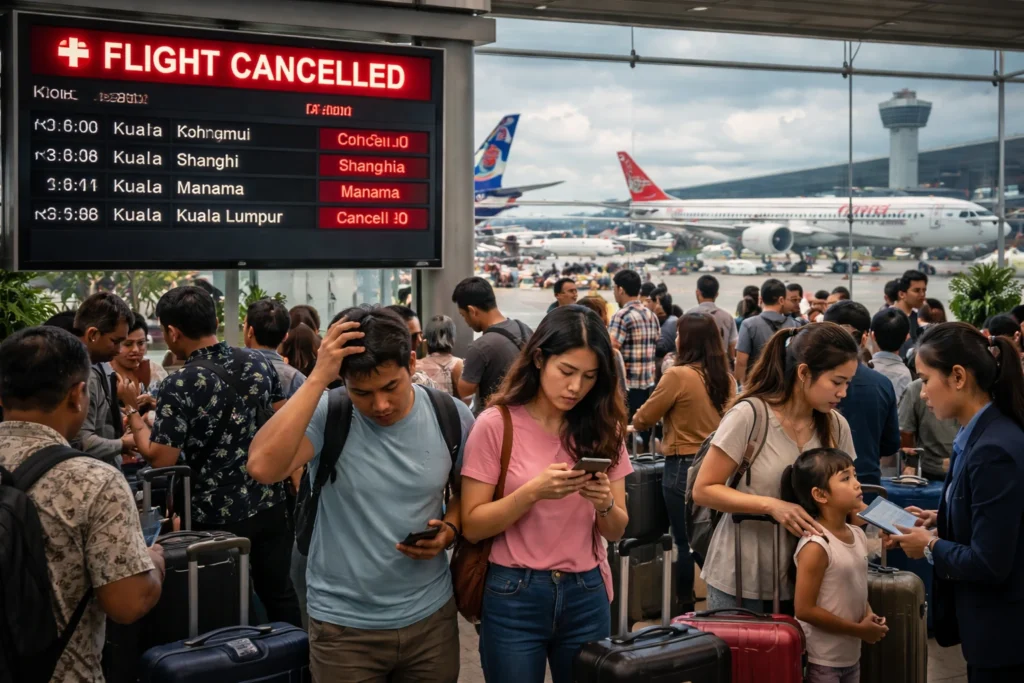
Bangkok experiences new travel disruptions in 2026 as airlines cancel several important flights. These cancellations affect both domestic and international routes.
Passengers across Thailand face delays and sudden itinerary changes. The situation highlights ongoing operational challenges in the aviation sector.
Bangkok remains a major hub for regional travel. Even a small number of cancellations creates widespread disruption across connected routes.
Suvarnabhumi Airport Sees Major Flight Cancellations
Suvarnabhumi Airport reports multiple flight cancellations affecting different destinations. These disruptions impact both short-haul and long-haul travel plans.
Flights to Koh Samui, Shanghai, and Manama face cancellation within a short time frame. These routes serve both tourists and business travelers.
The variety of aircraft involved suggests broader operational strain. Airlines struggle to maintain schedules across different fleets.
Passengers at the airport face long queues and limited rebooking options. This situation adds stress during peak travel periods.
Don Mueang Airport Adds to the Disruption
Don Mueang International Airport also reports flight cancellations that affect regional travel. Even a single cancellation creates pressure on alternative routes.
The disrupted route to Kuala Lumpur plays a key role in Southeast Asian connectivity. Many travelers rely on this route for business and tourism.
Passengers must adjust plans quickly due to limited flight availability. This disruption highlights the importance of reliable regional connections.
Airlines must address these issues to maintain smooth operations. Consistency remains essential for passenger confidence.
Impact on Tourism and Business Travel
The cancellations affect a wide range of travelers across Bangkok. Tourists heading to island destinations face unexpected delays.
Business travelers also deal with schedule disruptions that affect meetings and commitments. This situation creates challenges across multiple sectors.
Bangkok serves as a gateway to Southeast Asia. Disruptions here affect travelers connecting to other countries.
Tourism operators and hotels may also experience changes in bookings. This impact extends beyond the aviation sector.
Operational Challenges Behind the Disruptions
Airlines face several operational challenges that lead to cancellations. These include aircraft rotation issues and maintenance requirements.
Crew scheduling also plays a critical role in maintaining flight operations. Any disruption in staffing can affect multiple routes.
Air traffic congestion adds further pressure on busy travel corridors. This factor complicates scheduling and increases delays.
These combined challenges create a fragile operational environment. Airlines must respond quickly to prevent further disruption.
Passenger Experience Reflects Growing Frustration
Passengers at Bangkok airports face inconvenience due to sudden cancellations. Many struggle to find alternative flights within short notice.
Rebooking delays increase due to high demand and limited seat availability. Travelers must wait longer for confirmed arrangements.
Airport congestion rises as more passengers seek assistance. This situation affects overall travel experience.
Clear communication from airlines becomes essential during such disruptions. Travelers rely on timely updates to manage their plans.
Regional Impact Extends Beyond Thailand
Bangkok’s role as a major transit hub means disruptions spread across Asia. Flights connecting to cities like Shanghai and Kuala Lumpur play a vital role.
When these routes face cancellation, alternative flights fill up quickly. This creates pressure on neighboring airports and airlines.
Regional travel networks depend on stable operations in Bangkok. Any disruption here affects multiple countries and routes.
Airlines must coordinate across regions to minimize the impact. Strong communication helps manage these challenges effectively.
Airlines Work to Stabilize Operations
Airlines now focus on restoring stability after recent disruptions. They adjust schedules and allocate resources to improve reliability.
Improved planning can help reduce cancellations in the future. Airlines must address both technical and operational issues.
Coordination with airport authorities also plays a key role. This partnership ensures smoother operations during busy periods.
Efforts to stabilize the system will help rebuild passenger confidence. Reliable service remains essential for long-term growth.
Travelers Advised to Stay Alert and Flexible
Travelers planning trips through Bangkok should stay informed about flight updates. Regular checks help avoid unexpected surprises.
Arriving early at the airport provides extra time to manage changes. This approach reduces stress during disruptions.
Flexible travel plans can also help travelers adapt quickly. Alternative routes and schedules offer better options.
Staying in contact with airlines ensures access to the latest information. This step helps travelers make informed decisions.
Outlook for Bangkok’s Aviation Sector
The aviation sector in Bangkok continues to face short-term challenges. Airlines must balance demand with operational efficiency.
Improvements in planning and coordination will support recovery. Stable operations will reduce disruption across the network.
As airlines adjust schedules, conditions are expected to improve gradually. Travelers may see fewer disruptions over time.
However, uncertainty may continue in the near future. Travelers should remain cautious and prepared.
A Critical Moment for Thailand’s Travel Network
The recent flight cancellations highlight the importance of strong aviation systems. Bangkok plays a central role in regional and global travel.
Airlines must address operational issues to maintain this position. Reliable connectivity supports tourism and economic growth.
Passengers depend on consistent service for both leisure and business travel. Stability in the aviation sector benefits all stakeholders.
The coming weeks will shape how quickly the system recovers. Strong action can restore confidence and ensure smoother travel experiences.