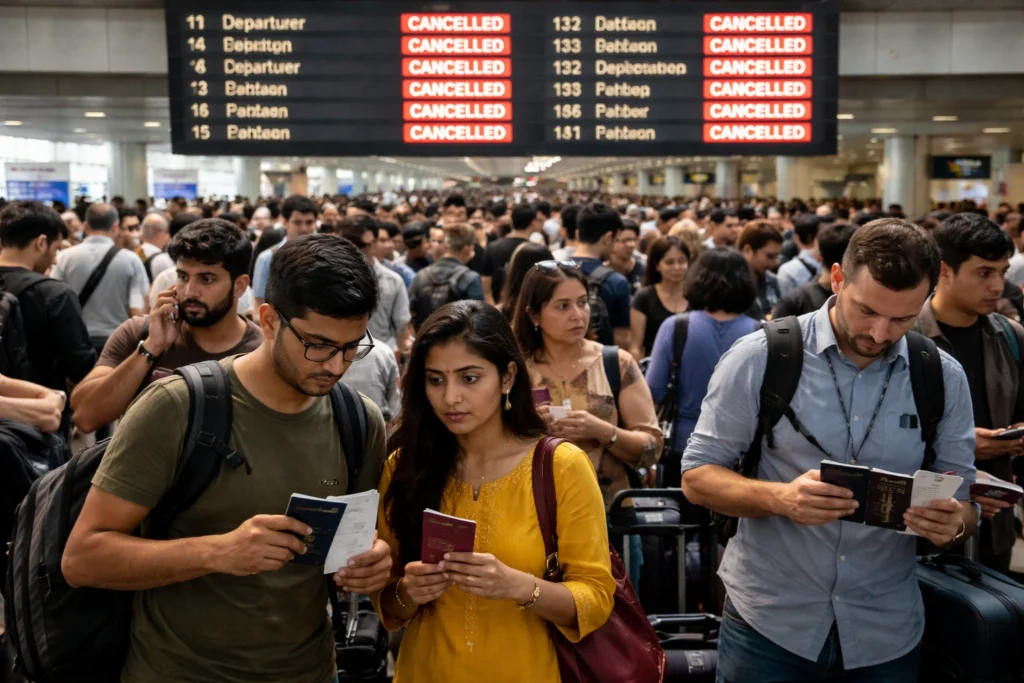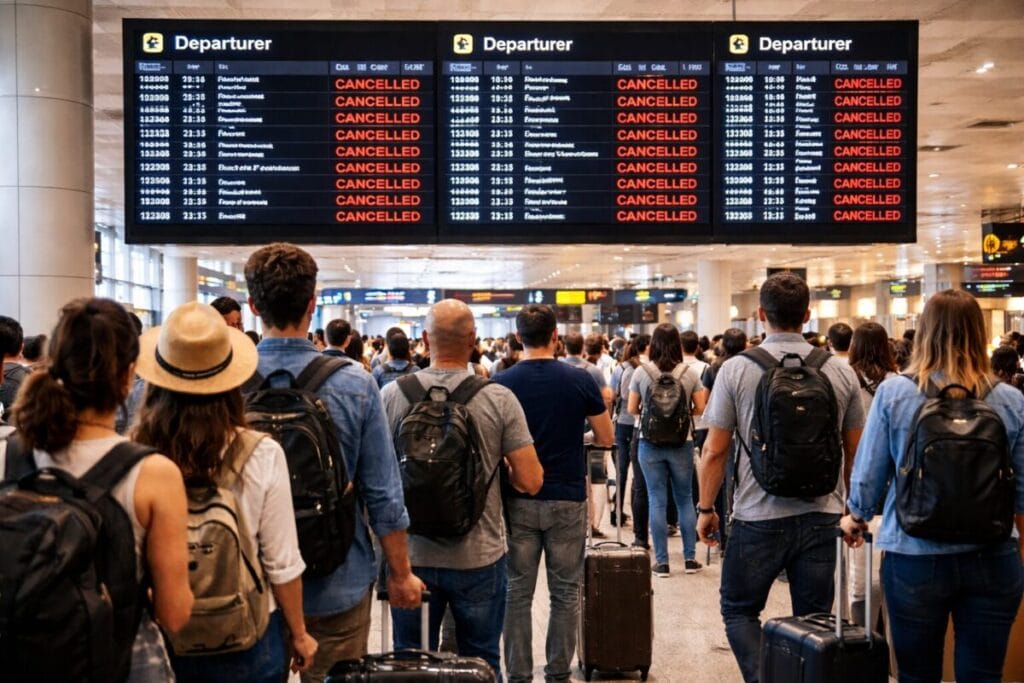
Air travel across Brazil’s busiest regions experienced significant disruption after several airlines cancelled more than twenty-five scheduled departures. The cancellations affected both domestic and international routes, leaving travelers stranded and creating operational pressure across São Paulo and Rio de Janeiro’s major airports.
Airlines involved included LATAM, Gol, Azul, Air Canada, and Iberia. Routes impacted ranged from short domestic connections to long-haul international flights linking Brazil with Canada and Europe. The widespread nature of the cancellations highlights ongoing operational challenges affecting airline scheduling and fleet management.
São Paulo Airports Experience Highest Impact
São Paulo’s Guarulhos International Airport and Congonhas Airport recorded the largest number of cancelled flights. These airports serve as key aviation hubs for domestic and international travel, which means disruptions quickly spread across the network.
At Guarulhos International Airport, airlines cancelled several flights connecting São Paulo to regional cities such as São José do Rio Preto, Santa Maria, Goiabeiras, Palmas, and Teresina. Domestic travel demand remains high in Brazil, so even a small cluster of cancellations can affect thousands of passengers.
Azul also cancelled flights to Curitiba and Rio de Janeiro, while international carriers suspended long-haul services. Air Canada removed scheduled flights to Toronto and Montréal, reducing transcontinental connectivity for the day. Iberia also cancelled its Madrid service, affecting travelers connecting between South America and Europe.
International cancellations often create significant challenges because alternative flights may operate less frequently. Travelers must often rebook through different hubs, which increases travel time and complexity.
Congonhas Airport Sees Business Route Disruptions
Congonhas Airport handles dense schedules focused on business travel between major cities. Gol cancelled multiple Boeing 737 services linking São Paulo with Rio de Janeiro and other coastal destinations such as Recife, Porto Seguro, and Navegantes.
These routes serve high-frequency travelers who rely on predictable schedules. When airlines cancel flights on tightly scheduled routes, aircraft rotations and crew assignments face disruption. This situation can affect additional flights later in the day.
LATAM also cancelled a domestic service to Porto Seguro, which further reduced connectivity to popular leisure destinations along Brazil’s coastline.
Rio de Janeiro Airports Experience Parallel Cancellations
Rio de Janeiro’s main airports, Galeão International and Santos Dumont, also faced multiple cancellations. These disruptions weakened the important air corridor connecting Rio and São Paulo, one of the busiest travel routes in Latin America.
Gol cancelled several flights from Galeão to São Paulo, Viracopos, and Vitória. Santos Dumont Airport recorded additional cancellations involving both Gol and LATAM services. Many affected flights operated as shuttle services, which business travelers frequently use for same-day trips.
Reduced frequency on this corridor can lead to crowded replacement flights and longer wait times for passengers.
Aircraft Types and Airlines Most Affected
Most cancellations involved narrowbody aircraft such as Airbus A319, A320, A321, and Boeing 737 variants. These aircraft form the backbone of Brazil’s domestic aviation network, which explains the broad impact across multiple cities.
Widebody aircraft cancellations added complexity, especially for international passengers. Flights operated by Air Canada and Iberia typically carry large numbers of travelers, making rebooking more difficult when services stop unexpectedly.
Airlines may cancel flights due to aircraft availability, crew scheduling constraints, or operational adjustments linked to demand patterns. Aviation authorities encourage airlines to prioritize safety and operational stability when managing disruptions.
Passenger Experience and Tourism Impact
Travelers affected by cancellations often faced missed connections, delayed itineraries, and rebooking challenges. Business passengers traveling between São Paulo and Rio de Janeiro experienced disruptions to meetings and tight schedules.
Leisure travelers heading to beach destinations such as Porto Seguro and Recife also faced uncertainty. Brazil’s tourism sector depends heavily on reliable domestic air connections due to the country’s vast geography.
Airports reported increased congestion as passengers sought assistance from airline counters. Alternative airports such as Viracopos experienced higher demand from rerouted travelers.
Operational Pressures Reveal System-Wide Challenges
The pattern of cancellations suggests broader operational strain rather than isolated incidents. Brazil’s aviation network relies heavily on a small number of major hubs. When disruptions occur in São Paulo or Rio de Janeiro, they quickly affect routes across the country.
Tightly scheduled aircraft rotations increase efficiency but leave limited room for unexpected delays. Airlines must balance cost efficiency with operational resilience, especially during periods of high travel demand.
Weather conditions, maintenance requirements, and staffing constraints also influence airline scheduling decisions. Aviation experts note that dynamic route adjustments have become more common as airlines respond to shifting market conditions.
What Travelers Should Expect Moving Forward
Passengers traveling within Brazil or connecting internationally should monitor flight updates closely and remain flexible with travel plans. Booking flights with longer connection times can reduce the risk of missed onward journeys.
Airlines continue to adjust schedules as they respond to operational pressures. Despite temporary disruptions, Brazil’s aviation sector remains a critical driver of tourism and economic activity.
The recent cancellations highlight how interconnected modern aviation networks have become. Even a limited number of disrupted flights can create widespread effects across domestic and international travel routes, emphasizing the importance of flexibility for travelers navigating today’s aviation environment.
For more travel news like this, keep reading Global Travel Wire