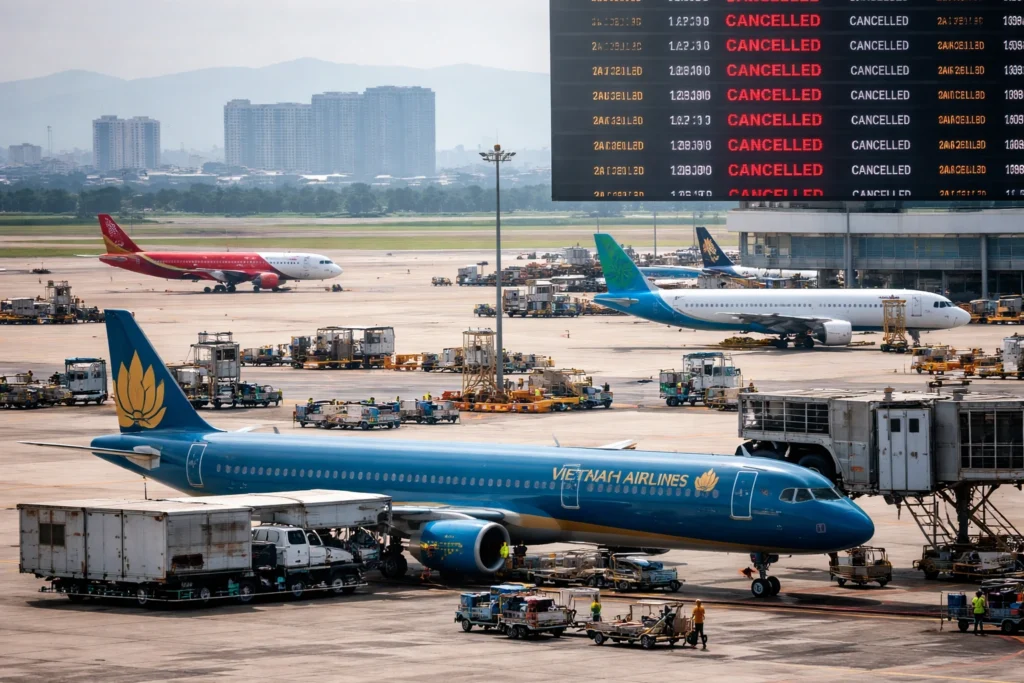
China’s aviation sector faces major disruption as airlines cancel over 200 flights across key cities. The situation affects major hubs such as Guangzhou, Shanghai, Beijing, Shenzhen, and Chengdu. These cancellations impact both domestic and international travel routes.
Airlines including China Southern Airlines, China Eastern Airlines, and Air China lead the cancellations. The disruptions stretch across multiple days and create widespread travel uncertainty. As a result, passengers experience delays, missed connections, and limited rebooking options.
The disruption does not remain isolated. Instead, it spreads across the entire aviation network and affects global travel corridors.
Guangzhou Faces the Highest Disruption Levels
Guangzhou reports the highest number of cancellations among all cities. Guangzhou Baiyun International Airport records over 50 cancelled departures in a short span.
Flights to major destinations such as Beijing, Shanghai Hongqiao, Nanjing, Hangzhou, and Chengdu face heavy disruption. Routes to Wuhan, Kunming, and Qingdao also see multiple cancellations.
The situation worsens during evening hours. Airlines cancel a large number of flights between 5 PM and 9:30 PM. This pattern shows rising operational pressure throughout the day.
Both narrow-body and wide-body aircraft remain grounded. This indicates that airlines struggle across both short-haul and long-haul operations.
Shanghai Pudong Experiences Repeated Schedule Disruptions
Shanghai Pudong International Airport also faces significant operational challenges. Flights to cities such as Liuzhou, Dalian, Lanzhou, Baotou, and Shenzhen get cancelled across different time slots.
One notable trend emerges clearly. Airlines cancel identical routes multiple times in a single day. For example, the Shanghai to Liuzhou route sees repeated cancellations. This pattern highlights ongoing operational strain rather than isolated issues.
International travel also suffers. A long-haul flight to Dubai gets cancelled, showing that disruptions extend beyond domestic routes.
As delays accumulate, airlines struggle to maintain scheduled departures. This leads to further cancellations throughout the day.
Beijing Airports Continue to Face Heavy Pressure
Both Beijing Capital International Airport and Beijing Daxing International Airport report multiple cancellations. These disruptions affect key domestic and international routes.
At Beijing Capital, flights to Shenzhen, Guangzhou, Changsha, Chengdu, and Shanghai get cancelled. Airlines also ground wide-body aircraft on major trunk routes.
At Beijing Daxing, flights to Xiamen, Fuzhou, Shenzhen, and Guangzhou face disruption. An international flight to Saudi Arabia also gets cancelled.
Cancellations occur throughout the day, not just during peak hours. This indicates sustained operational stress across both airports.
Shenzhen Sees Evening Surge in Flight Disruptions
Shenzhen Bao’an International Airport records a sharp spike in cancellations during evening hours. Flights between 7 PM and 10:30 PM face the most disruption.
Routes to Shanghai, Beijing, Chengdu, Chongqing, Nanjing, and Wuhan experience repeated cancellations. Airlines cancel multiple flights to the same destinations within short intervals.
This pattern reflects congestion and limited recovery capacity. Earlier delays continue to impact later schedules, creating a cascading effect.
Passengers face longer waiting times and uncertainty as flight schedules keep changing.
Chengdu Adds to Nationwide Aviation Disruption
Chengdu Tianfu International Airport reports fewer cancellations compared to other hubs. However, it still contributes to the broader disruption across China.
Flights to Shanghai, Shenzhen, Guangzhou, and Lhasa get cancelled during midday and evening hours. Regional routes also experience interruptions.
Although the numbers remain lower, the impact on connectivity remains significant. Even a small number of cancellations can disrupt passenger flow across interconnected routes.
Passenger Impact Intensifies Across Airports
Passengers across all affected cities face serious inconvenience. Many travelers struggle with last-minute cancellations and limited alternatives.
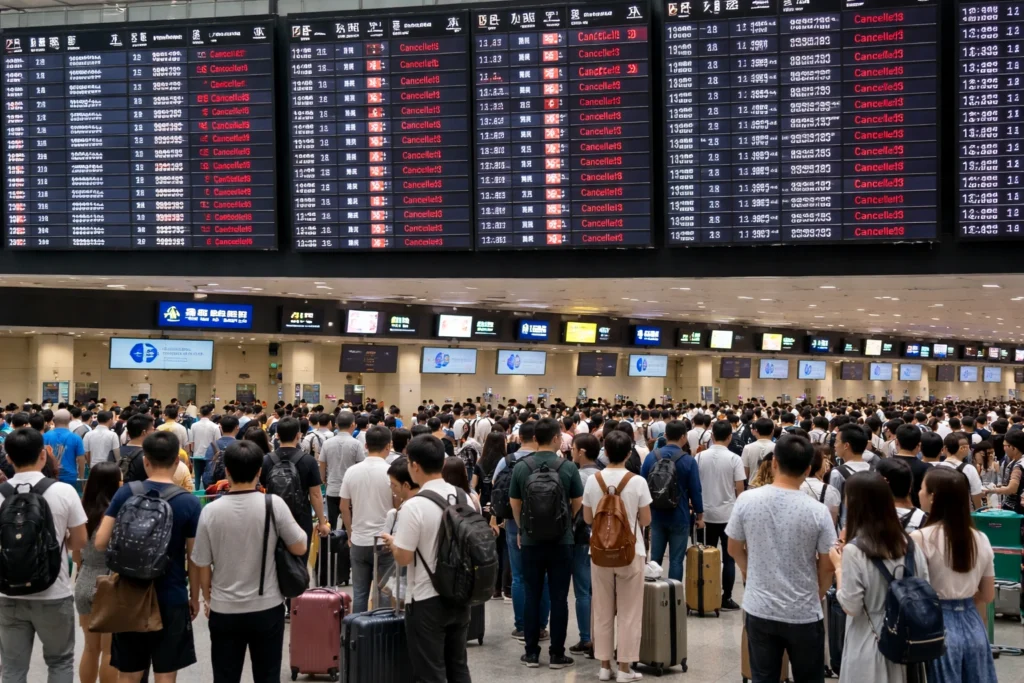
Airports witness long queues at check-in counters and customer service desks. Rebooking becomes difficult due to limited seat availability on remaining flights.
Travelers with connecting flights face additional challenges. Missed connections create further delays and extend travel time significantly.
Families, business travelers, and international passengers all feel the impact. The disruption affects both leisure and essential travel plans.
Key Trends Reveal Systemic Challenges
Several patterns emerge clearly from the disruption:
- High-frequency routes experience repeated cancellations
- Evening flights face the highest disruption levels
- Airlines cancel identical routes multiple times
- Both domestic and international routes get affected
These trends point to deeper operational challenges. The issue does not stem from isolated incidents but reflects a broader system strain.
Causes Behind the Large-Scale Disruptions
The scale of cancellations suggests operational constraints within the aviation system. When delays occur early in the day, they quickly affect aircraft rotation and crew scheduling.
Airlines often cancel later flights to stabilize operations. This strategy helps prevent further delays but reduces overall capacity.
As a result, busy routes such as Beijing to Shanghai or Guangzhou to Shanghai see repeated cancellations. Airlines prioritize operational recovery over maintaining full schedules.
The interconnected nature of aviation networks amplifies the issue. A delay in one city quickly spreads to others.
Conclusion: Aviation Network Struggles Under Pressure
China’s recent wave of flight cancellations highlights the fragility of large aviation systems. Over 200 cancelled flights disrupt major domestic and international routes.
Cities like Guangzhou, Shanghai, and Beijing face the most severe impact. Meanwhile, Shenzhen and Chengdu add to the overall disruption.
The situation shows how quickly delays can escalate into widespread travel chaos. Airlines now focus on restoring stability and rebuilding schedules.
As the aviation sector recovers, the incident underscores the need for stronger operational resilience and better contingency planning.
For more travel news like this, keep reading Global Travel Wire