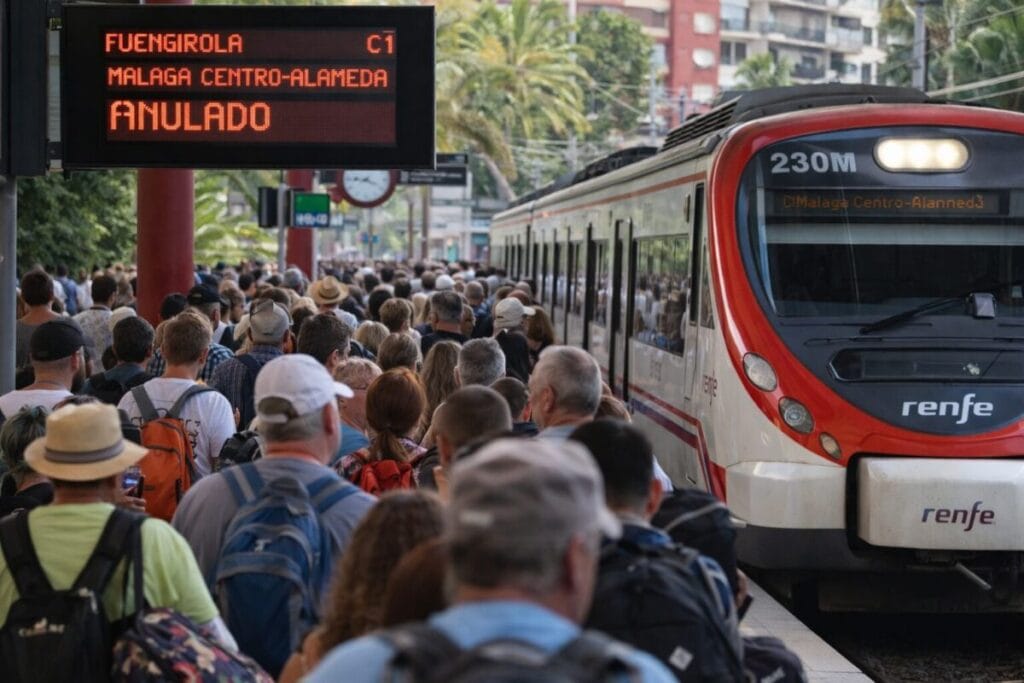
Travelers and local residents across Spain’s Costa del Sol face significant transport disruption following ongoing train cancellations between Malaga and Fuengirola. The strike has affected essential commuter services, creating challenges for tourists visiting one of Spain’s most popular holiday regions.
The Malaga–Fuengirola rail corridor serves thousands of passengers daily, connecting coastal resorts with Malaga city and the international airport. Reduced services have forced visitors to rethink travel plans and seek alternative transportation options.
With tourism activity rising ahead of the peak season, the disruption highlights the importance of reliable public transport infrastructure in maintaining smooth travel experiences.
Renfe Commuter Lines Experience Major Service Reductions
Renfe commuter services, particularly the C-1 line between Malaga and Fuengirola and the C-2 line linking Malaga with Alora, have experienced severe cancellations. Only a portion of scheduled trains continue operating, leaving passengers facing longer waiting times and overcrowded services.
The C-1 line remains especially important because it connects major coastal towns, beaches, and tourism hubs. Visitors rely on this service to move quickly between hotels, attractions, and transportation centers.
Reduced train frequency has created uncertainty for travelers attempting to explore multiple destinations within the region. Many tourists now adjust itineraries to accommodate limited service availability.
Labor Dispute Drives Ongoing Strike Action
The disruption stems from ongoing labor disputes involving railway workers and transport authorities. Workers have raised concerns about employment conditions and compensation, which led to strike actions affecting commuter rail operations.
Although unions have held negotiations with government representatives, full restoration of services has not yet occurred. Partial agreements have reduced some disruptions, yet many scheduled trains remain canceled.
Labor disputes within public transport systems often create widespread travel challenges because many commuters and tourists depend on predictable schedules.
Tourism Industry Feels Immediate Impact
The Costa del Sol attracts millions of visitors annually due to its beaches, cultural attractions, and favorable climate. Efficient transportation plays a crucial role in supporting tourism across the region.
Train cancellations have increased demand for buses, taxis, and private vehicles. This surge has placed additional pressure on alternative transportation systems, causing longer waiting times and higher costs for some travelers.
Hotels and tourism businesses report increased inquiries from visitors seeking travel advice. Tour operators now recommend adjusting schedules to avoid peak congestion times.
Airport Connections Face Additional Challenges
The Malaga–Fuengirola train line provides a direct connection to Malaga Airport, which serves as a major gateway for international travelers. Reduced rail services have complicated airport transfers for arriving and departing passengers.
Visitors who previously relied on trains for convenient transfers now explore alternative options such as shuttle buses or ride-sharing services. Increased traffic near airport routes may lead to longer travel times.
Travel experts encourage visitors to plan transfers carefully and allow extra time when traveling to or from the airport during the strike period.
Alternative Transportation Options for Travelers
Despite disruptions, travelers can still explore the Costa del Sol through other transport methods. Regional bus networks operate along coastal routes and provide connections between major towns.
Ride-sharing services and taxis offer flexible options for shorter journeys, although higher demand may increase waiting times. Renting a car provides additional independence, especially for travelers planning to visit multiple locations.
Drivers should consider parking availability in busy tourist areas, as popular destinations often experience limited space during peak periods.
Advice for Tourists Navigating the Strike
Visitors should check updated train schedules before heading to stations. Service availability may change throughout the day, and some trains could face last-minute cancellations.
Planning activities within walking distance or using local buses can reduce reliance on disrupted rail services. Travelers with tight schedules should allow additional travel time to avoid missing reservations or excursions.
Tourism authorities encourage flexibility and patience while transport services work toward restoring normal operations.
Wider Economic Implications for Costa del Sol
The Costa del Sol economy depends heavily on tourism revenue, which makes transportation reliability essential. Extended disruptions may affect local businesses that rely on steady visitor flows.
Restaurants, attractions, and event organizers may experience scheduling challenges when visitors arrive later than expected. However, the region’s strong tourism appeal continues attracting travelers despite temporary difficulties.
Local authorities and transport operators aim to resolve the dispute quickly to maintain the area’s reputation as an accessible and visitor-friendly destination.
Outlook for Train Services and Tourism Recovery
Negotiations between railway unions and government officials continue, raising hopes for a resolution that restores full service soon. Transport operators focus on minimizing disruption and communicating updates to passengers.
Tourism experts expect visitor numbers to remain strong once normal operations resume. The Costa del Sol’s popularity, combined with favorable weather and diverse attractions, ensures continued demand.
Travelers planning trips to Malaga, Fuengirola, and surrounding areas should stay informed about transport updates and prepare for temporary adjustments. Despite current challenges, the region continues offering vibrant cultural experiences, scenic coastal landscapes, and world-class hospitality.
The ongoing strike highlights the importance of resilient transport systems in supporting tourism growth. With effective planning and flexibility, visitors can still enjoy the Costa del Sol while authorities work toward restoring full rail services.
For more travel news like this, keep reading Global Travel Wire