
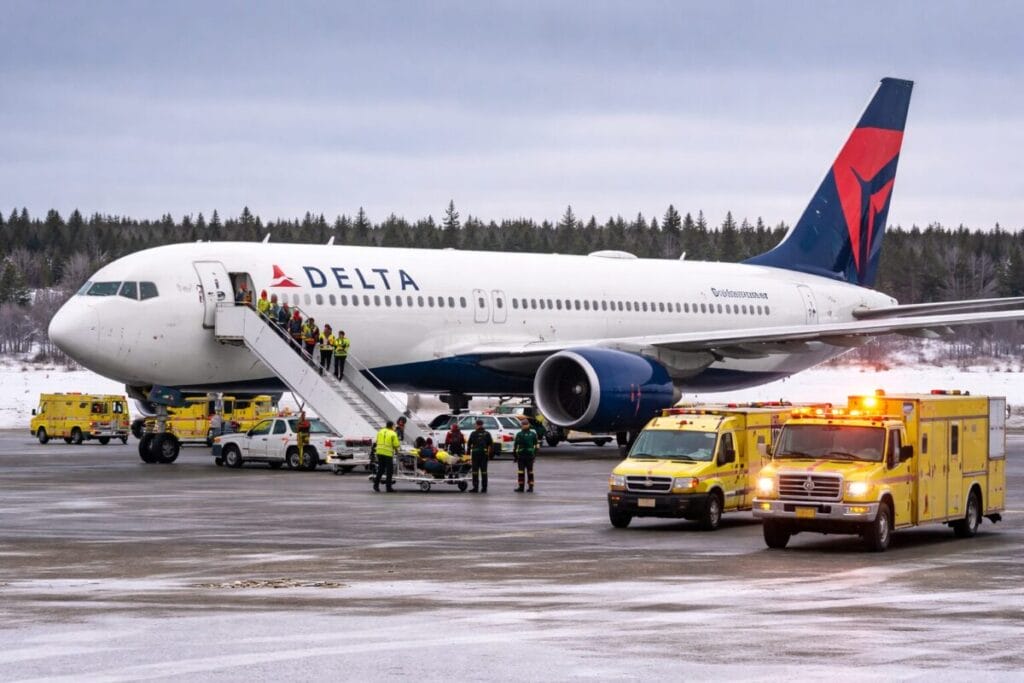
A Delta Airlines flight traveling from the Netherlands to the United States made an emergency diversion to Goose Bay in Canada due to a serious medical issue. The aircraft left Amsterdam with Minneapolis as its destination. The journey proceeded normally for several hours before a medical crisis forced a change of plans. The flight crew evaluated the situation and altered course toward Goose Bay so the passenger in need could receive medical care as quickly as possible.
Delta’s crew reacted with precision and followed established emergency procedures. Flight attendants coordinated with pilots, medical services and airline operations. The diversion disrupted schedules for many travelers, yet it also helped ensure that the medical situation received immediate attention.
Medical Emergency Prompts Urgent Decision
The incident occurred mid-flight as the aircraft crossed the Atlantic. Crew members alerted ground teams about the medical emergency through aircraft communication channels. The severity of the situation demanded quick action. The pilots identified Goose Bay as the safest diversion point due to its long runway and available emergency support.
Goose Bay Airport sits in Labrador and often serves as a diversion point for transatlantic flights. The location features experienced emergency teams and adequate facilities for unscheduled landings. The airport also handles military operations, which gives the region additional medical resources compared with other remote airports in the Canadian north.
Crew Training Plays Key Role
Delta flight crews train for onboard emergencies, including medical incidents. Flight attendants carry medical kits and coordinate with ground doctors when necessary. Pilots evaluate fuel, weather and runway conditions before choosing diversion points. These decisions happen under time pressure and can influence passenger safety.
During the diversion, passengers remained seated while flight attendants monitored the cabin. Parents comforted children and business travelers checked devices for updates as the aircraft descended toward Labrador. The cabin atmosphere held tension, yet passengers respected crew instructions and maintained calm.
Arrival in Goose Bay and Medical Response
The landing happened without further complications. Emergency vehicles lined the runway and met the aircraft as soon as it reached the gate. Paramedics boarded the aircraft to evaluate the passenger in distress. Medical teams transported the individual to regional care facilities. Delta staff updated the remaining passengers and coordinated onward travel options.
The diversion left the aircraft out of position for its original route. Travelers needed new itineraries and overnight accommodations. Airline staff worked with airport personnel to organize meals, hotel rooms and updated departure times. Travelers expressed relief that medical help arrived quickly and acknowledged that safety came first.
Impact on Passenger Experience
The diversion disrupted travel plans for many passengers. Some travelers missed connections in Minneapolis and had to rebook once Delta restored schedules. Corporate travelers adjusted meeting plans and leisure travelers contacted hotels to shift reservations. Despite the inconvenience, many passengers praised the crew for calm communication and professional handling of the situation.
For some travelers, this became their first visit to Goose Bay. The town often welcomes diverted passengers during winter storms or medical events. Local tourism businesses noted that diversions create brief yet memorable tourist encounters for those passing through the Labrador region.
Operational Considerations for Airlines
Transatlantic aviation carries inherent operational challenges. Aircraft must cross long stretches of ocean with limited diversion points. Airline dispatch teams track weather, medical readiness and runway conditions along the route. Medical emergencies require fast coordination with aerospace medicine professionals and ground authorities.
Delta and other major carriers maintain protocols for these incidents. Airlines update diversion playbooks as airports upgrade facilities or expand medical capabilities. Goose Bay holds strategic importance due to its long runway, radar coverage and access to emergency responders.
Medical Preparedness in Modern Aviation
Airlines continue to improve in-flight medical support. Crews carry upgraded kits and communication devices that link to health professionals on the ground. Many carriers train flight attendants in CPR, defibrillator use and trauma response. These measures increase patient survival odds when emergencies occur far from hospitals.
The aviation sector also evaluates trends in passenger health. Long international flights often attract older travelers, business travelers with tight schedules and tourists moving between continents. Airlines encourage passengers with chronic conditions to carry medications and disclose concerns before long flights.
Travel Disruptions and Rebooking
Delta arranged new travel plans for the remaining passengers so they could complete the trip to the United States. Airline staff provided guidance on meal vouchers, lodging and connecting flights. Passengers used Delta’s app and airport kiosks to track updates and secure rebooking options.
Travel agencies in Europe and North America also adjusted itineraries for clients. Tourism analysts noted that emergency diversions, while rare, can ripple through the travel network due to tight scheduling. Airlines evaluate these disruptions to refine response strategies and reduce downtime.
Conclusion
Delta Flight DL163’s diversion to Goose Bay showcased the importance of quick decision-making in aviation. The medical emergency created stress for passengers and disrupted schedules, yet the crew ensured that help reached the individual in distress without delay. Passengers resumed their itineraries once Delta organized onward travel, and the situation reinforced the priority that airlines place on safety and health during long-distance flights.
For more travel news like this, keep reading Global Travel Wire