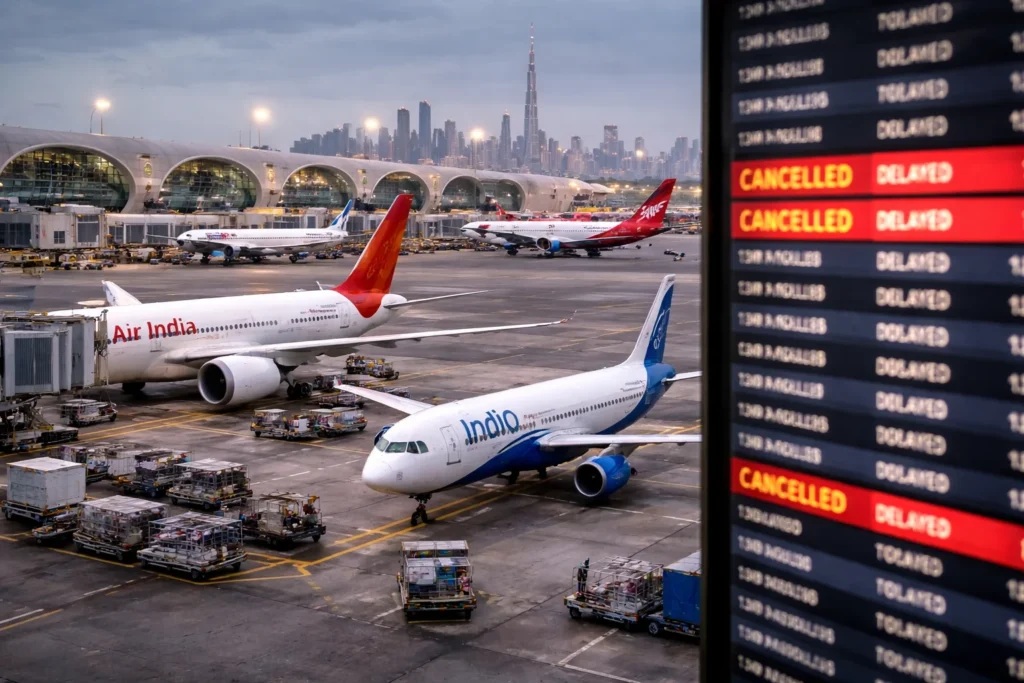
Air travel between India and the West Asia region continues under close monitoring as airlines issue fresh advisories and adjust schedules in response to evolving regional conditions. According to official airline statements and aviation authority updates, operations at Dubai International Airport and Al Maktoum International Airport remain functional, though services are being operated in a limited and carefully managed capacity.
On April 5, 2026, leading Indian carriers including Air India, Air India Express, IndiGo, and AirAsia issued updated travel advisories for passengers traveling to and from West Asia. These advisories emphasize the importance of staying informed as flight schedules continue to change in response to operational conditions.
Airlines have confirmed that a total of 32 scheduled and non-scheduled flights are operating between India and West Asia on this date. These flights are part of ongoing efforts to maintain essential connectivity, particularly for passengers with urgent travel needs. Aviation authorities have stated that ensuring safe and reliable transport remains the top priority during this period.
Dubai continues to serve as one of the most critical global transit hubs, with its airports handling significant volumes of international passengers. Official tourism and aviation data highlight the importance of Dubai in connecting Asia, Europe, and Africa, making it a key node in global travel networks. Despite regional challenges, authorities in the United Arab Emirates have ensured that airport operations remain stable and secure.
However, airlines have cautioned that schedules are subject to change due to evolving conditions in the broader West Asia region. Airspace management, route adjustments, and operational constraints are influencing how flights are planned and executed. As a result, carriers are advising passengers to take additional precautions when planning their journeys.
IndiGo has specifically urged travelers to check their flight status before heading to the airport. The airline has also confirmed that any updates will be communicated through registered contact details, ensuring that passengers receive timely information. Support services, including customer care assistance, are being made available to address queries and provide guidance.
Similarly, Air India and Air India Express have issued joint statements reinforcing their commitment to passenger safety while continuing operations. Aviation authorities note that such coordinated efforts between airlines help maintain continuity in travel services, even during challenging circumstances.
Tourism authorities in the region have acknowledged the impact of these developments on travel patterns. While flights are still operating, reduced capacity and schedule adjustments may affect travel plans for both leisure and business travelers. Visitors transiting through Dubai or traveling onward to other destinations are advised to allow additional time for their journeys and remain flexible.
The current situation highlights the importance of preparedness in modern travel. Government advisories emphasize that passengers should stay updated through official airline communications and avoid relying on outdated schedules. Booking flexible tickets and monitoring real-time updates have become essential practices for travelers navigating uncertain conditions.
Despite the challenges, the continuation of flights reflects the resilience of the aviation sector. Airlines are working closely with regulatory authorities to ensure compliance with safety standards while adapting to operational constraints. These measures are aimed at minimizing disruptions and maintaining connectivity between key regions.
Dubai’s role as a global aviation hub remains significant in this context. The city’s strategic location and advanced airport infrastructure enable it to support international travel even during periods of uncertainty. Tourism officials continue to promote Dubai as a safe and accessible destination, supported by robust operational protocols and coordinated management.
For Indian travelers, the availability of limited flights ensures that essential travel can continue. Whether for business, family visits, or tourism, these connections play a vital role in sustaining mobility between India and the Middle East. Aviation authorities have reiterated that passenger and crew safety remains the foremost priority in all operations.
Looking ahead, airlines and regulators are expected to continue monitoring the situation closely. Adjustments to flight schedules and routes may persist as conditions evolve, requiring ongoing coordination across the aviation sector. Tourism stakeholders are also adapting their strategies to accommodate changing travel patterns and ensure visitor confidence.
In conclusion, the Dubai airport update for April 2026 underscores the dynamic nature of global travel. While disruptions present challenges, the continued operation of flights demonstrates the industry’s ability to adapt and respond effectively. Travelers are encouraged to remain informed, plan carefully, and rely on official updates to navigate the current travel environment with confidence.