



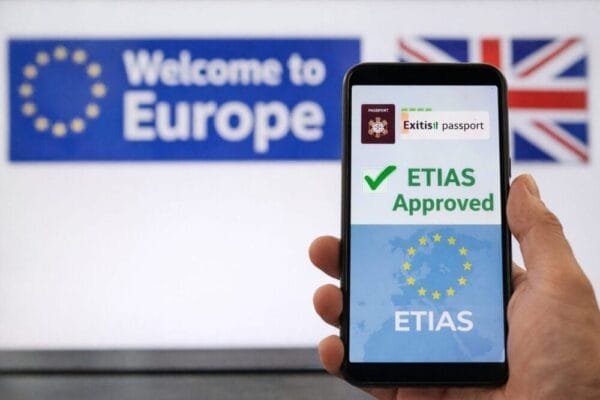






British tourists planning holidays across Europe will soon encounter a new travel requirement that will reshape how visitors enter many popular destinations. The European Union is preparing to introduce the European Travel Information and Authorisation System, commonly known as ETIAS, a digital travel permit designed for visitors from visa-exempt countries, including the United Kingdom.
Once implemented, the system will require UK citizens traveling to countries within the Schengen Area to complete an online authorization before departure. The rule will apply to popular tourist destinations such as Spain, France, Italy, Greece, Portugal and many other European countries.
Although British travelers can currently visit these destinations without a visa for short stays, the upcoming ETIAS requirement will add an additional step before traveling. Authorities say the system is intended to strengthen border security while making the entry process more efficient for travelers.
A New Digital Authorization for European Travel
ETIAS is a digital pre-travel authorization designed for travelers from countries that do not require a visa to enter the Schengen Area. Instead of applying for a traditional visa, eligible visitors will complete a short online application before their journey.
The system will conduct security checks using information provided by the traveler, helping authorities assess potential risks before visitors arrive in Europe. If approved, the traveler will receive authorization allowing entry for tourism, business or short visits.
For British travelers, the change represents one of the most significant updates to travel rules since the United Kingdom left the European Union. However, the system does not introduce a visa requirement for short visits.
Instead, it functions as an advance screening process similar to systems already used in several other regions around the world.
When the ETIAS Requirement Will Begin
European authorities plan to introduce ETIAS in late 2026, although the exact start date has not yet been confirmed. The launch will follow the implementation of another major border management initiative known as the Entry/Exit System.
Together, these two systems aim to modernize border control across Europe by replacing manual passport stamping with digital monitoring and biometric identification.
Once the systems are fully operational, travelers entering the Schengen Area will experience a more technology-driven border process that combines online authorization with biometric checks at airports and land crossings.
How British Tourists Will Apply for ETIAS
The application process for ETIAS will be completed entirely online. Travelers will be asked to provide basic personal details along with passport information and travel-related questions.
Applicants may also need to answer security and health-related questions as part of the pre-screening process. The system will then review the information using automated checks against international security databases.
In most cases, approvals are expected to be issued quickly, often within minutes. However, travelers are advised to apply several days before their trip in case additional checks are required.
Once approved, the authorization will be linked electronically to the traveler’s passport.
Validity and Travel Duration Rules
One advantage of the ETIAS system is its long validity period. Approved authorizations will remain valid for up to three years or until the passport used in the application expires.
During this time, travelers can visit multiple countries within the Schengen Area without applying again for each trip.
However, the existing short-stay rules will still apply. Visitors will be allowed to remain within the Schengen zone for up to 90 days within any 180-day period.
This rule applies to tourists, family visits and business travel across participating European countries.
Difference Between ETIAS and the Entry/Exit System
While ETIAS focuses on pre-travel authorization, the Entry/Exit System will manage the physical process of crossing the border.
The Entry/Exit System will introduce biometric checks including facial recognition and fingerprint scanning at border control points. These checks will record when travelers enter and leave the Schengen Area.
The system will automatically calculate how long visitors remain within the region, helping authorities monitor compliance with short-stay rules.
Together, ETIAS and the Entry/Exit System represent a broader effort to modernize European border management using digital technologies.
Why Europe Is Introducing ETIAS
European officials say the new travel authorization system is designed to improve security while maintaining efficient travel procedures for millions of visitors.
By screening travelers before they depart for Europe, authorities can identify potential security concerns in advance. This allows border officials to focus on processing approved travelers more efficiently when they arrive.
The system also aims to reduce the risk of illegal overstays by improving monitoring of travel patterns.
For the tourism industry, the system could eventually help speed up border checks by allowing pre-approved travelers to move through immigration more quickly.
What the Changes Mean for UK Holidaymakers
For British tourists, the new requirement will introduce an additional step when planning trips to Europe. Travelers who are used to spontaneous weekend getaways may need to plan slightly further ahead to ensure their ETIAS authorization is approved before departure.
However, the application process is expected to be straightforward and relatively quick. Once approved, travelers will be able to use the authorization for multiple trips across Europe.
The change is unlikely to significantly affect tourism flows, as the process is designed to remain simple and affordable.
Preparing for the New European Travel Rules
Travel experts recommend that British tourists check their passport validity before applying for ETIAS. Because the authorization is linked to a specific passport, travelers will need to apply again if they renew their passport.
Tourists should also monitor official announcements regarding the system’s launch date and application process.
Airlines and travel companies are expected to provide guidance to passengers once the new requirement comes into effect.
Europe Remains a Top Destination for UK Travelers
Despite the introduction of new digital entry procedures, Europe continues to be one of the most popular travel regions for British tourists.
Destinations such as Spain’s Mediterranean coast, Italy’s historic cities and France’s cultural attractions attract millions of visitors from the UK every year.
The introduction of ETIAS reflects Europe’s effort to balance tourism growth with modern border security measures.
For travelers, the new system will simply add a small digital step before departure while preserving the ease of visiting Europe’s most beloved destinations.
For more travel news like this, keep reading Global Travel Wire