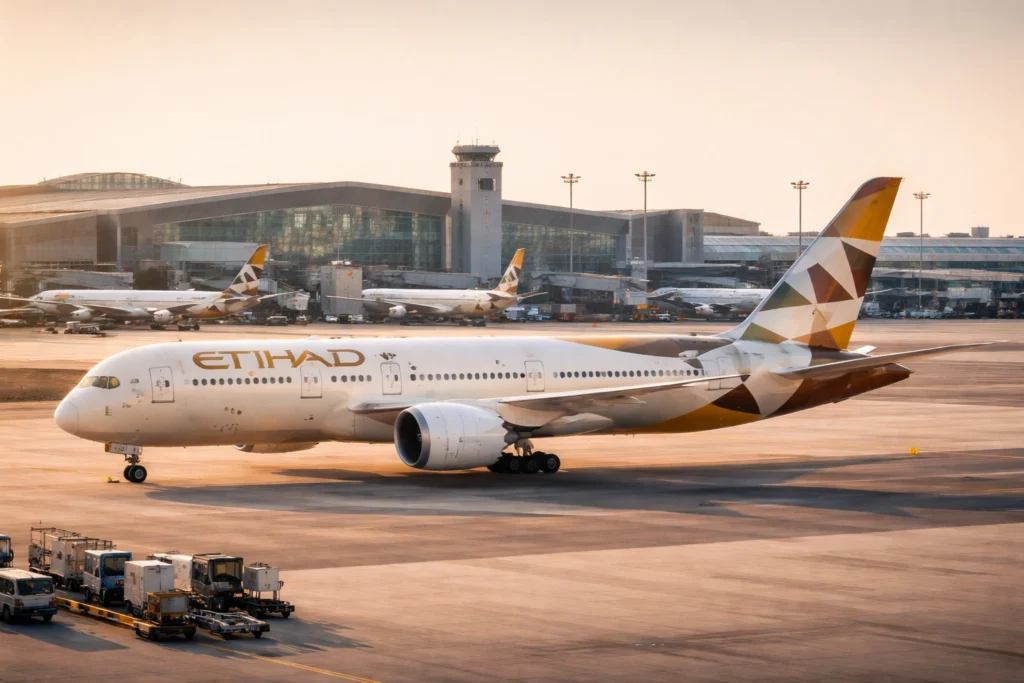
Etihad Airways has launched major fare cuts of up to 50 percent on long-haul routes. The move is driving a surge in global travel demand from the United Kingdom to Asia and Australia.
The airline confirmed the discounts as part of its strategy to boost bookings. These offers target key destinations such as Sydney, Singapore, Bangkok, and the Maldives.
The campaign comes at a time when airlines face operational disruptions across the Gulf region. Lower passenger demand has created pressure on airlines to fill seats.
Fare Cuts Reshape Long-Haul Travel
Travellers from London now see significantly lower fares on long-haul routes. Economy tickets to Sydney have dropped to around £688.
Previously, similar tickets often cost more than £1,800 on competing airlines. Business-class fares have also fallen sharply to about £2,465.
These price drops make premium travel more accessible. They also encourage more travellers to consider long-distance trips in 2026.
Airlines often use such pricing strategies during periods of weak demand. In this case, the goal is clear: increase bookings and maintain route performance.
Middle East Disruptions Drive Pricing Strategy
Airspace challenges in the Gulf region have affected airline operations. These include delays, route changes, and lower flight capacity.
Industry bodies like the International Air Transport Association have acknowledged these challenges. Airlines now face lower passenger loads on key routes.
Etihad Airways responded with aggressive pricing to stimulate demand. The strategy helps offset reduced traffic through major hubs like Abu Dhabi.
However, travellers should remain aware of possible schedule changes. Flight timings may shift as the situation evolves.
Tourism Boost Across Asia and Australia
Tourism boards across Asia-Pacific are expected to benefit from these fare reductions. Lower airfares often lead to higher visitor numbers.
Australia, especially Sydney, may see strong growth in arrivals from Europe. The city remains a top destination for international tourists.
Singapore also stands to gain from increased travel demand. The city relies heavily on air connectivity for tourism growth.
More affordable flights will likely boost hotel stays, shopping, and visitor spending. This supports the wider tourism economy.
Thailand could see a similar impact. Bangkok attracts millions of international visitors each year. Lower fares make the destination more accessible to European travellers.
The Maldives may experience a shift in visitor profiles. Budget-conscious travellers may now consider this luxury destination.
Impact on European Travel Market
The fare cuts are also changing travel patterns in Europe. Travel agencies in the UK report strong interest in long-haul trips.
Tour operators now see higher demand for Asia and Australia packages. This trend is especially strong for peak seasons.
Airlines across Europe may respond with competitive pricing. This could trigger a wider price adjustment in the market.
The availability of cheaper flights also gives travellers more options. Many now consider destinations that were once too expensive.
What Travellers Should Know
Experts advise travellers to stay informed before booking. Conditions in the Middle East may still affect flight schedules.
Travel insurance is highly recommended during this period. Flexible policies can help protect against unexpected changes.
Options like “Cancel for Any Reason” coverage offer added security. These policies help travellers manage risks linked to disruptions.
Limited-Time Opportunity for Global Travellers
Industry experts expect these discounted fares to be temporary. Prices will likely rise once stability returns to the region.
Travellers who book early may secure the best deals. This creates a short window of opportunity for long-haul travel.
Etihad Airways’ strategy highlights how airlines adapt to global challenges. Pricing remains a key tool to drive demand and support tourism.
For now, travellers can explore international destinations at lower costs. This shift is reshaping global travel trends in 2026.
For more travel news like this, keep reading Global Travel Wire