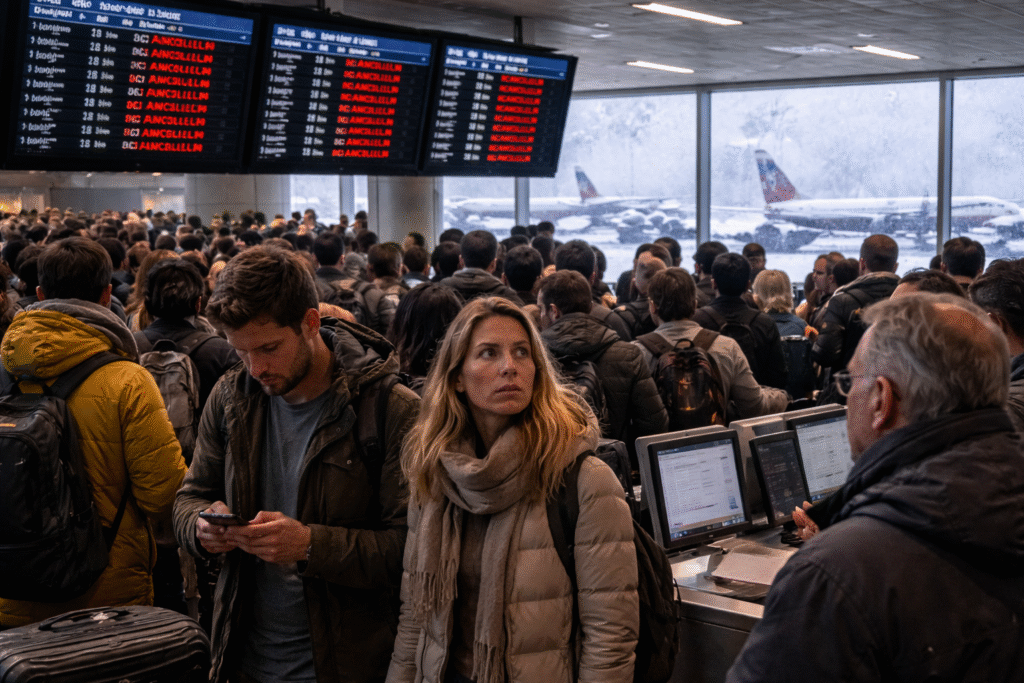
A powerful winter snowstorm has disrupted air travel across large parts of Europe. Amsterdam Schiphol Airport faced the most severe impact as heavy snowfall reduced operations. The storm caused 344 flight cancellations and 55 delays within a single day. Travelers across the Netherlands, Germany, Switzerland, the United Kingdom, Luxembourg, and Spain experienced widespread disruption.
Amsterdam Schiphol Becomes the Epicenter
Amsterdam Schiphol ranks among Europe’s busiest international hubs. The airport struggled to maintain operations under extreme winter conditions. Heavy snow covered runways and taxiways throughout the day. Poor visibility slowed aircraft movement and ground handling. Strong winds further complicated safe takeoffs and landings, forcing authorities to reduce airport capacity.
Airlines Cancel Flights to Maintain Safety
Major European airlines responded quickly as conditions deteriorated. KLM canceled the highest number of flights due to its hub operations at Schiphol. Lufthansa, Iberia, Air France, and British Airways followed with widespread cancellations. Several regional and low-cost carriers also adjusted schedules to protect passengers and crews.
KLM Faces Major Operational Disruption
KLM operates the largest number of flights from Amsterdam Schiphol. The airline canceled more than two hundred services during the storm. Short-haul European routes suffered the heaviest impact. Several long-haul departures also failed to operate. KLM deployed additional staff to assist stranded passengers inside terminals.
Ripple Effects Spread Across Europe
The disruption extended far beyond the Netherlands. German airports faced delays from missed inbound connections. Swiss hubs reported stranded transfer passengers. UK airports experienced aircraft shortages due to grounded planes in Amsterdam. Spanish routes also faced cascading delays and schedule changes throughout the day.
Passengers Stranded in Crowded Terminals
Thousands of travelers remained stuck at airports across Europe. Many passengers missed onward connections and international transfers. Families waited hours for rebooking assistance. Nearby hotels reached full capacity within hours. Rail and bus alternatives filled quickly as travelers searched for options.
Extreme Winter Conditions Challenge Operations
Winter storms regularly test airport preparedness, but this storm exceeded forecasts. Snowfall intensity slowed runway clearing efforts. Aircraft de-icing queues stretched for hours. Air traffic controllers reduced movements to maintain safety margins. Ground crews worked continuously to keep essential services running.
Key Routes Experience Heavy Disruption
Flights between Amsterdam and London faced repeated cancellations. Routes to Germany, Switzerland, and Spain followed similar patterns. Business travelers missed meetings and events. Tourists lost hotel bookings and pre-paid tours. Cargo operations also slowed due to aircraft positioning challenges.
Tourism Sector Suffers Immediate Losses
The storm struck during a busy winter travel period. Hotels expected strong occupancy from international arrivals. Tour operators reported sudden cancellations across multiple markets. Museums, attractions, and transport providers saw reduced visitor numbers. Local economies felt immediate financial pressure.
Airlines Introduce Flexible Travel Policies
Airlines quickly introduced flexible rebooking options. Passengers could change travel dates without penalties. Refund requests increased sharply across Europe. Customer service teams faced record demand. Airlines encouraged travelers to rely on apps for real-time updates.
Airports Work Toward Recovery
Schiphol deployed additional snow removal and ground crews overnight. Runway clearing operations continued without interruption. Airport authorities coordinated closely with airlines. Staff worked extended shifts to restore operations. Safety remained the top priority during recovery efforts.
Travel Advice for Winter Passengers
Travelers should always check flight status before departure during winter months. Flexible tickets offer better protection against disruptions. Extra airport time helps manage unexpected delays. Travel insurance remains essential for winter journeys. Backup plans reduce stress during weather events.
European Aviation Remains Weather Sensitive
Winter storms often impact several countries at once. Hub airports play a critical role in European connectivity. Disruptions at one hub quickly spread across networks. Airlines must reposition aircraft and crews carefully. Full recovery can take several days.
Outlook for the Coming Days
Weather forecasts suggest gradual improvement across the region. Airlines will restore schedules in stages. Residual delays may continue temporarily. Airports expect congestion during recovery. Stability depends heavily on weather conditions.
Final Takeaway for Travelers
The snowstorm exposed the vulnerability of European winter travel. Amsterdam Schiphol experienced unprecedented disruption. Over 344 flight cancellations reshaped travel plans overnight. Major airlines responded with flexibility and support. Travelers should remain prepared as winter weather continues to challenge European aviation.
For more travel news like this, keep reading Global Travel Wire