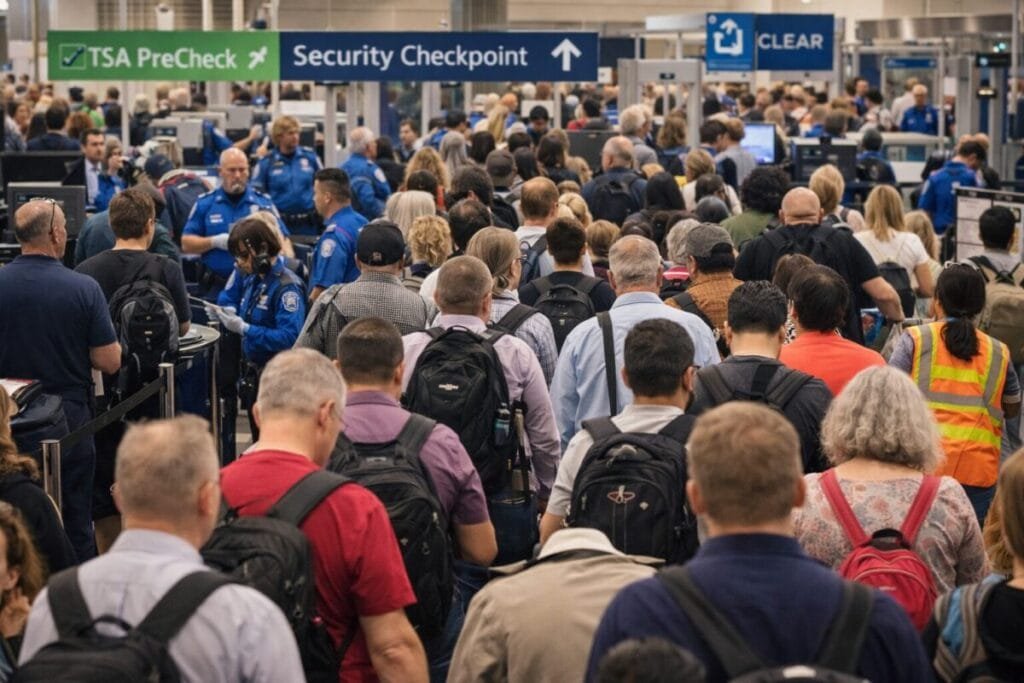
Air travel between Europe and the United States faces rising challenges as security disruptions create delays and operational strain. Ireland, Denmark, Germany, Portugal, the Netherlands, France, Finland, and other European nations now experience longer wait times and growing airport backlogs.
The situation stems from reduced operational capacity at US airport security checkpoints. These disruptions ripple across international travel networks, affecting airlines, tourism businesses, and passengers traveling between continents.
Although aviation regularly encounters operational challenges, this situation highlights how closely global travel systems connect. Changes in one region can quickly influence airports worldwide.
US Security Operations Slowdowns Create International Ripple Effect
Recent funding issues within US government agencies have affected airport security screening operations. The Transportation Security Administration continues operating but faces staffing challenges that slow passenger processing.
Many security personnel must continue working despite operational strain, which impacts morale and scheduling flexibility. Even small staffing gaps can increase wait times, especially during peak travel periods.
Airports rely on efficient security procedures to maintain smooth operations. When screening slows, airlines adjust boarding timelines and departure schedules to prevent passengers from missing flights.
International flights require coordinated processing between security teams, immigration officers, and airlines. Any slowdown at one stage creates a chain reaction that affects passengers globally.
Ireland and Other European Countries Experience Direct Impact
Ireland stands among the countries most affected because of strong travel links with the United States. Airports serving transatlantic routes report growing queues and schedule uncertainty for US-bound passengers.
Germany, France, and the Netherlands also face operational challenges due to high passenger volumes traveling to major US destinations. Travelers report longer pre-departure procedures and increased stress before boarding.
Portugal and Finland experience similar disruptions, particularly during peak travel hours. Airports attempt to maintain efficiency, yet extended security procedures often slow passenger flow.
Countries with strong business and tourism ties to the United States feel the impact most strongly. Airlines must adapt schedules to account for longer processing times at arrival and departure points.
Airport Backlogs Increase Pressure on Airlines and Travelers
Longer security lines often force airlines to delay boarding or extend check-in windows. These adjustments aim to prevent missed connections but can disrupt tightly scheduled flight networks.
Airlines must balance on-time performance with passenger needs. Delays at major hubs can affect connecting flights across Europe, creating additional challenges for travelers.
European airports continue operating normally, yet coordination with US security procedures influences overall travel timelines. Airlines encourage passengers to arrive earlier to reduce stress during peak periods.
Tourism businesses also notice the impact. Travel agencies, hotels, and tour operators rely on predictable flight schedules to maintain customer satisfaction.
Difference Between Security Slowdowns and Air Traffic Disruptions
Despite current challenges, air traffic control operations remain stable. Flights continue operating, and airlines maintain normal route networks.
Security slowdowns mainly affect passenger processing rather than aircraft operations. This distinction helps prevent widespread cancellations, although delays may still occur.
Airlines sometimes hold flights to allow passengers additional time to clear security. These decisions help reduce missed departures but may create minor schedule changes throughout the day.
Travel experts emphasize that cumulative delays often build gradually. Extended disruptions can increase pressure on airport infrastructure and staff over time.
Why European Travelers Feel the Effects Strongly
European airports serve as major gateways for transatlantic travel. Thousands of passengers depart daily for US cities, making efficient coordination essential.
When US security processes slow, airlines adjust schedules and boarding times to maintain compliance with arrival requirements. These adjustments affect passengers even before they reach American airports.
High demand for travel between Europe and the United States amplifies the impact. Business travel, tourism, and student exchanges contribute to heavy passenger volumes year-round.
Smaller airports with limited resources may struggle more during disruptions because fewer security lanes or staff members handle large passenger numbers.
Tourism Industry Responds to Operational Challenges
European tourism authorities continue promoting travel while encouraging flexibility among visitors. Airlines issue travel advisories that recommend earlier arrival times and close monitoring of flight updates.
Travel industry leaders highlight the importance of communication during disruptions. Clear guidance helps travelers manage expectations and plan accordingly.
Tour operators often adjust itineraries to accommodate changing flight schedules. Digital tools such as mobile boarding passes and real-time notifications help passengers stay informed.
Despite current challenges, strong demand for transatlantic travel continues driving tourism growth. Airlines expect passenger numbers to remain high throughout 2026.
Practical Advice for Travelers Navigating Current Disruptions
Travelers flying between Europe and the United States should arrive at airports earlier than usual. Allowing extra time for security screening can reduce stress and minimize the risk of missed flights.
Checking airline apps regularly provides updated departure information. Travelers should also prepare essential items for longer waits at airports.
Flexible travel plans help manage unexpected schedule changes. Booking direct flights when possible may reduce exposure to connection delays.
Maintaining patience and clear communication with airline staff often improves the travel experience during disruptions.
Outlook for Global Travel Systems
The current situation highlights how interconnected aviation systems operate. Decisions affecting one region can influence passengers across multiple continents.
Ireland and other European countries continue adapting to changing operational conditions while maintaining strong tourism activity. Airlines, airports, and government agencies work together to maintain safety and efficiency.
As travel demand grows, aviation authorities may implement additional measures to streamline security processes and improve resilience. For now, travelers should expect longer processing times while global systems adjust.
The ongoing disruptions serve as a reminder that modern air travel depends on coordinated international systems. Efficient communication and operational flexibility remain essential for maintaining smooth travel experiences worldwide.
For more travel news like this, keep reading Global Travel Wire