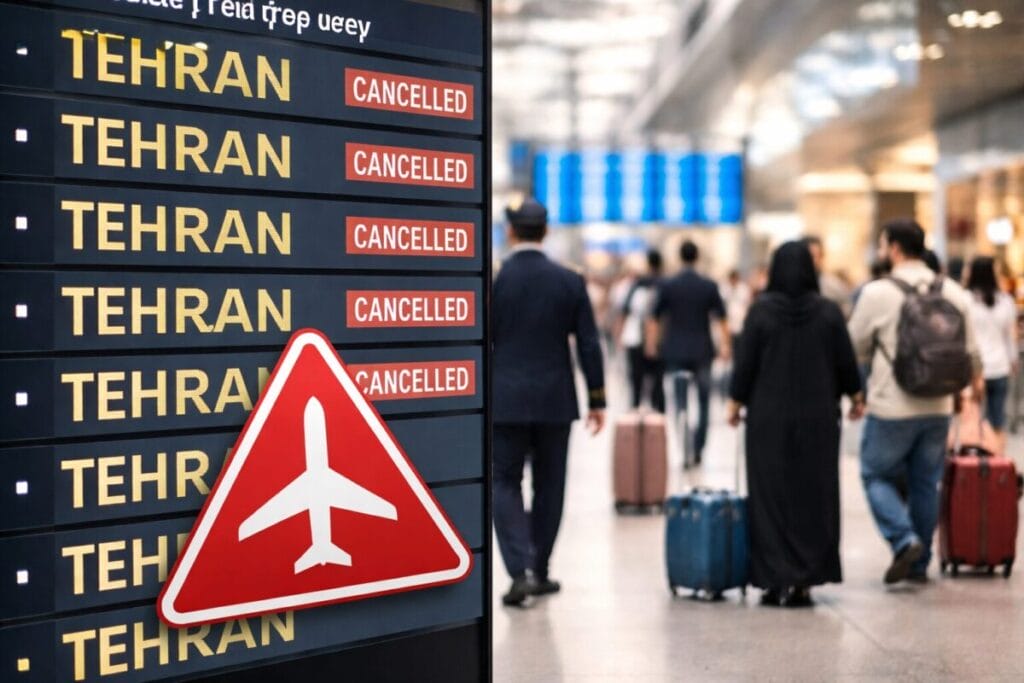
United Airlines has joined Emirates, Lufthansa, American Airlines, Delta, KLM, and Finnair in halting flights to and over Iran. Heightened security tensions and expanding military activity across the region triggered these decisions. Flight networks now shift around Iranian airspace. This shift affects tourism travel across Europe, the Middle East, and Asia. Travelers now face longer flight times, new itineraries, and increased logistical planning.
Aviation observers note similar patterns during earlier geopolitical crises in the region. Airlines often choose to avoid any risk of misidentification during periods of military escalation. Tourism experts now analyze the ripple effects of these evasive routes on travel hubs in Dubai, Doha, Istanbul, and Tel Aviv. These hubs often rely on direct transcontinental flight networks that normally cross Iranian skies.
Why Airlines Choose to Halt Iran Flights
Civil aviation authorities continue to track regional military movements. These authorities urge airlines to reassess flight paths that cross high-risk zones. The European Union Aviation Safety Agency issued guidance on Iran flight risks. The Federal Aviation Administration already prohibited U.S. carriers from using Iranian airspace for several years. These restrictions align with a global shift toward more aggressive aviation risk management strategies.
Airlines choose to avoid Iran mainly due to two factors. First, military radar systems in the region remain on high alert. Second, the risk of airborne miscommunication rises during active military operations. Airline safety teams prefer slower but safer options over direct exposure to volatile airspace.
Tourists may see added travel time on routes between Europe and Asia. Flights that once crossed Iran now detour across Turkey, the Caucasus, Central Asia, or the Arabian Peninsula. Some rerouted flights add two or more hours to travel time during peak seasonal traffic. These delays influence hotel bookings, tour schedules, and cruise departures in major tourism hubs.
United Airlines Shifts Long-Haul Network Strategy
United Airlines already followed strict FAA rules. The airline now keeps all long-haul routes away from Iran. These adjustments affect flights to the Middle East and South Asia. Travelers heading to Dubai, Doha, or Delhi now see new detour paths across northern Asia or southern maritime corridors. United promotes these changes as safety-driven measures for its global customers.
Tourism analysts note that many U.S. tourists prefer multi-country itineraries in the region. These itineraries often include extended layovers in Dubai or Doha. Longer flight times may influence traveler behavior during high-demand seasons, especially during winter holidays.
Emirates Redirects Flights and Protects Tourism Demand
Emirates represents the largest long-haul carrier in the Middle East. The airline attracts millions of international tourists to Dubai each year. The carrier now reroutes flights that previously crossed Iran. These new paths support safety and continuity during a volatile period. Dubai tourism officials remain confident that travel demand will stay resilient due to strong passenger interest in leisure events, shopping festivals, and theme parks.
European Airlines Take Collective Action
Lufthansa, KLM, and Finnair aligned with collective European safety standards. These carriers now send aircraft through the Caucasus or Central Asia. These detours influence flights to China, India, Japan, South Korea, and Southeast Asia. Flight planners now analyze fuel costs, airway permits, crew hours, and slot availability at destination airports. These operational factors contribute to longer onward connections for tourists heading to Asian resorts and business hubs.
Finnair has faced unique route planning challenges. The closure of Russian airspace previously forced the airline to reroute Asian flights through southern corridors. The added Iran restrictions increase complexity. These adjustments show how geopolitics now defines long-haul network strategies for many airlines.
Delta and American Adapt U.S. Traffic Flows
Delta and American Airlines adjust their flight schedules to reduce exposure to volatile zones. Their detours influence flights that connect the United States with the Gulf region and South Asia. Passengers now expect longer travel times to Dubai, Doha, and Abu Dhabi. Airlines advise travelers to plan for extended layovers during peak demand periods such as Eid holidays and summer travel seasons.
Tourism Travel Faces New Patterns Across the Middle East
These flight restrictions reshape tourism travel across the Middle East. Gulf countries often function as transit nodes between Europe and Asia. Dubai alone handled more than 80 million passengers in recent years and expects tourism growth during future global events. Airline detours do not halt this demand, but they influence schedule reliability and traveler expectations.
Travel agents in Dubai and Doha now educate customers on updated itineraries. Tourists now book longer trips due to increased flight durations. Cruise operators also adjust departure times to support connecting passengers.
What Travelers Need To Know
Travelers should track flight status updates and allow wider buffers for onward connections. Travel insurance with delay protection also helps during volatile seasons. Tourism demand remains strong, but flexibility supports smoother trips during this transition period.
The Outlook for Global Tourism Routes
Airlines will continue to monitor Iran airspace risk levels. Aviation regulators will update guidelines as conditions evolve. Tourism analysts expect continued adjustments until the region stabilizes. Safety decisions now shape global travel in profound ways, and the industry continues to adapt while balancing security and consumer demand.
For more travel news like this, keep reading Global Travel Wire