




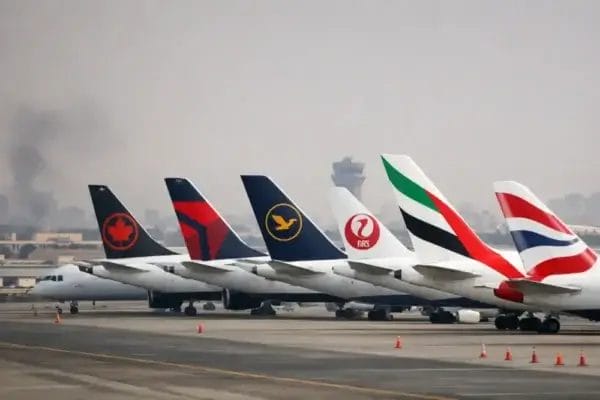






The global aviation industry is experiencing a major disruption in 2026 as leading international airlines suspend flights to key Middle Eastern destinations. Carriers including Air Canada, Delta Air Lines, Lufthansa, Japan Airlines, Air France, British Airways, and Turkish Airlines have halted operations to countries such as Bahrain, Saudi Arabia, the United Arab Emirates, Kuwait, and Oman.
This wave of suspensions follows escalating security concerns and widespread airspace restrictions across the region, triggering one of the most significant travel disruptions in recent years. The consequences are being felt not only by airlines and passengers but also by the tourism-dependent economies of the Gulf.
Airspace Restrictions Force Immediate Operational Changes
At the heart of the crisis is the closure of critical air corridors that connect Europe, Asia, and North America through the Middle East. These routes are essential for long-haul travel, making the region a central hub for global aviation.
With increasing geopolitical tensions and heightened safety risks, aviation authorities have imposed strict limitations on flights over certain areas. Airlines, prioritizing passenger and crew safety, have responded by suspending routes or rerouting flights through longer and less efficient paths.
In many cases, rerouting is not feasible due to fuel constraints or operational limitations, leading to widespread cancellations. The situation has created a ripple effect across global travel networks, disrupting connections far beyond the Middle East.
Major Airlines Ground Key Routes
Airlines from multiple continents have taken decisive action. North American carriers have suspended direct flights linking major cities to Gulf destinations, while European airlines have paused services from key hubs.
Asian carriers, which rely heavily on Middle Eastern transit routes for connections to Europe, are also adjusting operations. Some have extended flight times significantly, while others have temporarily withdrawn from affected markets altogether.
The scale of these suspensions highlights the severity of the situation. Routes that once handled thousands of passengers daily are now largely inactive, leaving travelers with limited alternatives.
Impact on Gulf Aviation Hubs
Airports in cities such as Dubai, Abu Dhabi, Riyadh, Muscat, and Manama have long served as major international gateways. These hubs connect millions of passengers each year, acting as vital links between continents.
However, with international carriers suspending services, passenger traffic has declined sharply. Transit passengers, a key component of these hubs, are particularly affected, as connecting flights become less reliable or unavailable.
Airlines based in the region are attempting to maintain limited operations where possible, but the reduced connectivity is significantly altering travel patterns.
Tourism Industry Faces Sudden Slowdown
The Gulf region has built a strong reputation as a global tourism destination, attracting visitors with luxury hospitality, shopping, cultural attractions, and major events. Cities like Dubai and Abu Dhabi have positioned themselves as year-round travel hotspots.
The current aviation disruption is now placing this momentum at risk. With fewer flights operating, international arrivals have dropped, affecting hotels, tour operators, and retail sectors.
Major attractions, once bustling with visitors, are seeing reduced footfall. Events that depend on international attendance, including conferences and exhibitions, are also facing challenges due to travel restrictions.
This slowdown is not limited to leisure tourism. Business travel, a key driver of the region’s economy, is also being impacted as companies delay or cancel trips.
Passenger Disruptions and Travel Challenges
Travelers planning trips to or through the Middle East are encountering significant challenges. Many are dealing with:
- Flight cancellations with limited rebooking options
- Longer travel times due to indirect routes
- Increased ticket prices on alternative flights
- Uncertainty about return journeys
Passengers already in transit are particularly affected, with some stranded at airports or forced to make last-minute changes to their itineraries.
Airlines are offering flexible policies, including refunds and rebooking options, but availability remains constrained due to high demand on unaffected routes.
Broader Implications for Global Travel
The disruption extends beyond the Middle East. As airlines adjust schedules and redeploy aircraft, routes across Europe, Asia, and North America are also experiencing delays and capacity changes.
The Middle East has traditionally served as a bridge between continents. With this bridge temporarily disrupted, global travel networks are being reshaped, forcing airlines and passengers to adapt quickly.
This situation highlights the vulnerability of interconnected aviation systems, where disruptions in one region can have global consequences.
Industry Response and Recovery Efforts
Airlines and aviation authorities are closely monitoring the situation and exploring ways to restore operations safely. Some carriers are considering alternative routes that avoid restricted airspace, while others are waiting for clearer security conditions before resuming flights.
Governments in the region are also working to address safety concerns and stabilize travel conditions. Efforts include enhanced security measures and coordination with international aviation bodies.
However, the timeline for full recovery remains uncertain. Much will depend on how quickly geopolitical tensions ease and airspace restrictions are lifted.
What Travelers Should Do Now
For those planning travel in 2026, flexibility and preparedness are essential. Travelers are advised to:
- Check flight status frequently before departure
- Stay updated on official travel advisories
- Consider alternative destinations or routes
- Book flexible tickets when possible
- Allow extra time for travel disruptions
Travel insurance is also becoming increasingly important, offering protection against unexpected cancellations and delays.
A Challenging Period for Gulf Tourism
The Gulf region now faces a critical period as it navigates this aviation crisis. While the long-term outlook for tourism remains positive, the immediate impact is significant.
Recovery will depend on restoring traveler confidence, reopening airspace, and rebuilding connectivity. In the meantime, the region’s tourism and aviation sectors must adapt to rapidly changing conditions.
Looking Ahead
Despite the current challenges, the resilience of the global aviation industry offers hope. Airlines, governments, and tourism bodies have faced similar disruptions in the past and have demonstrated the ability to recover.
For now, travelers should remain cautious and informed. While travel to the Middle East may be limited, the situation continues to evolve, and opportunities for safe travel are expected to return over time.
As 2026 unfolds, adaptability and awareness will be key for anyone planning international journeys in an increasingly complex travel environment.
For more travel news like this, keep reading Global Travel Wire