




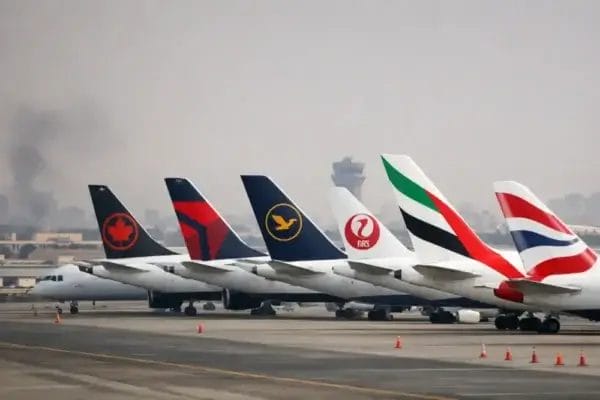






The global aviation sector is facing a major disruption in early 2026, as widespread airspace restrictions across key regions have forced leading international airlines to cancel, delay, and reroute hundreds of flights. Carriers such as Emirates, Qatar Airways, Lufthansa, and Turkish Airlines are among those significantly impacted, creating a ripple effect across global tourism and business travel networks.
This sudden upheaval has emerged as one of the most serious challenges to international travel in recent years, raising concerns among travelers about the safety and reliability of their upcoming vacation plans.
Airspace Closures Disrupt Key Global Travel Corridors
At the center of the disruption is the closure or restriction of critical air corridors linking Europe, Asia, and parts of North America. These routes are essential for long-haul connectivity, especially through major transit hubs in the Middle East.
With these pathways no longer fully accessible, airlines have been forced to redesign flight paths, often adding several hours to journey times. In some cases, flights require additional fuel stops or are canceled altogether due to operational constraints.
The result is a cascading effect across airline networks, where delays in one region quickly impact schedules worldwide. Airports that depend heavily on transit passengers are now experiencing congestion, missed connections, and unpredictable departures.
Major Airlines Struggle to Maintain Schedules
Airlines operating global hub-and-spoke models have been particularly affected. Gulf carriers, known for connecting passengers between continents through strategic hubs, are facing complex rerouting challenges.
European airline groups are also dealing with extended flight durations to Asia, increasing operational costs and straining aircraft availability. Meanwhile, North American carriers are adjusting long-haul schedules and, in some cases, suspending routes that are no longer viable under current conditions.
Asian airlines are encountering similar challenges, with flights to Europe being redirected through longer northern or southern routes. This not only increases travel time but also complicates crew scheduling and aircraft rotations.
Impact on Tourism and Global Travel Demand
The ongoing disruptions are already influencing travel behavior. Tourists planning international trips are reconsidering itineraries, opting for closer destinations or postponing long-haul vacations altogether.
Travel agencies and tour operators are reporting increased inquiries about flexible bookings and travel insurance, as uncertainty becomes a key concern. Popular routes connecting Europe with Asia and the Middle East—traditionally among the busiest for tourism—are experiencing noticeable slowdowns.
Destinations that rely heavily on transit passengers are particularly vulnerable. Cities known for serving as global stopover hubs are seeing reduced passenger flow, which could impact local tourism economies, hotels, and related services.
Passenger Experience: Delays, Reroutes, and Uncertainty
For travelers, the current situation translates into longer travel times, unexpected stopovers, and last-minute schedule changes. Many passengers are facing:
- Extended layovers due to missed connections
- Sudden flight cancellations with limited rebooking options
- Increased ticket prices on alternative routes
- Uncertainty regarding return travel plans
Even flights that are operating on schedule may be subject to changes with little notice, as airlines continue to adapt to evolving airspace conditions.
Operational Challenges Behind the Scenes
Behind the disruptions lies a complex web of logistical challenges. Airlines must balance safety, fuel efficiency, and regulatory requirements while navigating restricted airspace.
Longer routes mean higher fuel consumption, increased costs, and potential capacity limitations. Aircraft that were scheduled for multiple daily rotations may now complete fewer flights, reducing overall availability.
Additionally, crew duty time regulations require airlines to carefully manage pilot and cabin crew schedules, further complicating operations.
Industry Response and Adaptation
Despite the challenges, airlines and aviation authorities are working to stabilize operations. Some carriers have introduced adjusted schedules designed to reflect longer routes, while others are prioritizing key routes with high passenger demand.
Airlines are also enhancing communication with passengers, providing real-time updates through apps and notifications. Customer support teams are being expanded to handle increased rebooking requests and inquiries.
In parallel, governments and international aviation bodies are closely monitoring the situation, exploring ways to ensure safe and efficient air travel while minimizing disruption.
What Travelers Should Expect in 2026
Experts suggest that the current disruption may continue for several months, particularly during peak travel seasons. As a result, flexibility will be essential for travelers planning international trips.
Key recommendations for travelers include:
- Checking flight status regularly before departure
- Allowing extra time for connections
- Considering alternative routes or nearby airports
- Booking flexible or refundable tickets
- Staying informed about travel advisories
Travelers are also encouraged to maintain close communication with airlines to receive timely updates and support.
A New Reality for Global Travel
The ongoing situation highlights the interconnected nature of modern aviation. A disruption in one region can quickly impact travel across the globe, affecting millions of passengers and reshaping tourism flows.
While the industry is adapting to these challenges, the experience of travel in 2026 is likely to remain different from previous years. Longer journeys, adjusted schedules, and increased planning will become part of the new normal—at least in the short term.
Outlook: Cautious Optimism Amid Uncertainty
Although the current disruption presents significant challenges, the aviation industry has historically demonstrated resilience. Airlines are continuously refining operations, and as conditions stabilize, travel networks are expected to gradually recover.
For now, travelers should remain informed and flexible. While vacations may still be possible, navigating the current landscape requires careful planning and awareness.
As global travel continues to evolve, one thing remains clear: adaptability is now an essential part of the journey.
For more travel news like this, keep reading Global Travel Wire