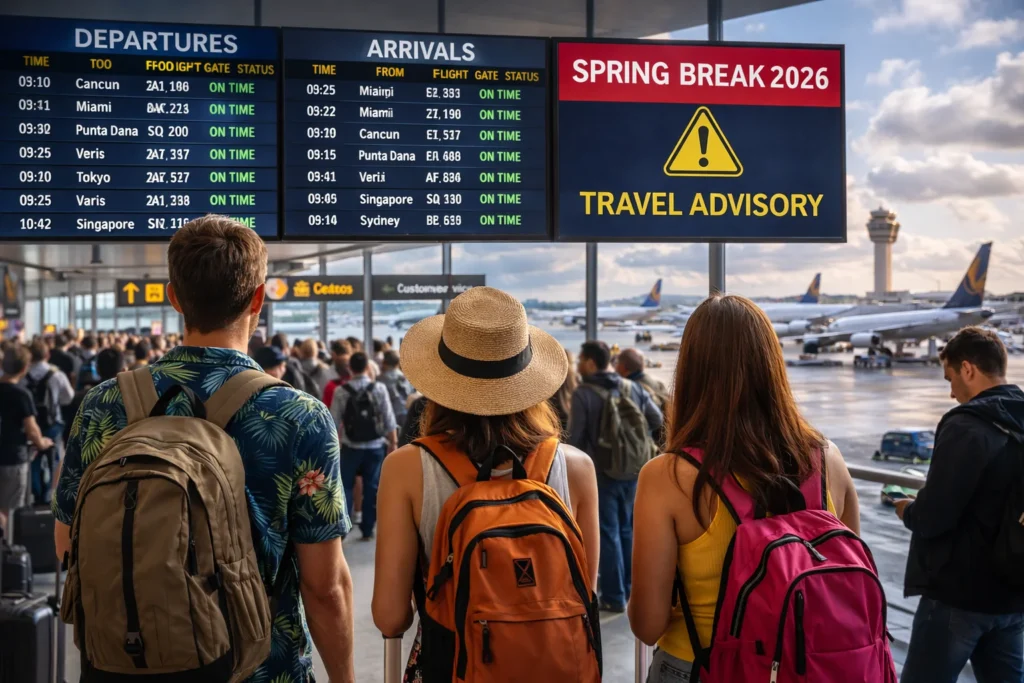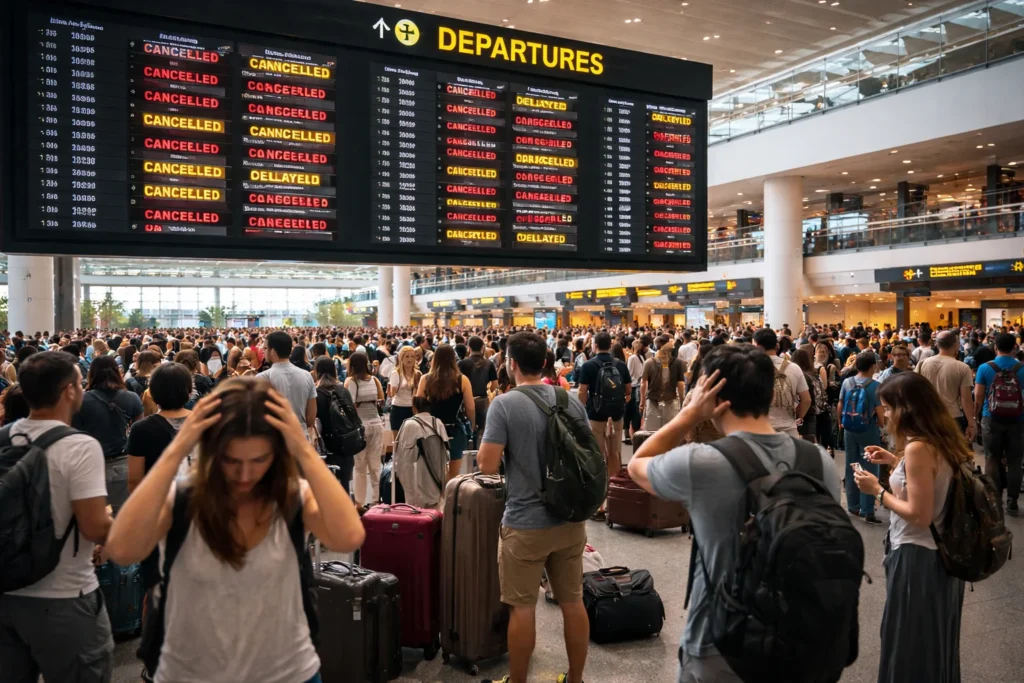
The global aviation industry is facing a major turning point in 2026 as widespread flight disruptions expose deep-rooted infrastructure challenges and significant economic losses. A surge in delays and cancellations across continents has revealed what officials and aviation authorities describe as a systemic crisis affecting travel, tourism, and airline operations worldwide.
Recent operational data from aviation authorities highlights the scale of disruption. In March 2026 alone, more than 31,000 flight delays and cancellations were recorded across North America and nearby regions, impacting millions of passengers. On a single day, over 2,300 flights were canceled globally, while delays exceeded 18,000, illustrating how localized issues can rapidly escalate into global travel disruptions.
Major international airports such as Los Angeles International Airport, Dubai International Airport, and Tokyo Haneda Airport have experienced operational strain during peak periods. These hubs play a critical role in connecting global tourism flows, and disruptions at these locations often trigger ripple effects across entire airline networks.
From a tourism perspective, the ongoing global flight chaos is having a direct impact on travel demand and destination economies. Air travel remains the backbone of international tourism, and disruptions affect not only passengers but also hotels, tour operators, and local businesses that rely on consistent visitor flows.
The economic implications are significant. Official aviation assessments estimate that disruptions across the United States alone contribute to approximately $34 billion in annual economic losses. These losses include passenger expenses, airline operational costs, and broader impacts on business productivity and supply chains.
Passengers are among the most affected. Travel disruptions often lead to additional expenses such as accommodation, meals, and rebooking costs. For many travelers, especially those on tight schedules, delays can result in missed connections, canceled plans, and financial setbacks. Tourism authorities emphasize the importance of preparedness and flexible travel arrangements in the current environment.
Airlines are also facing mounting challenges. Rising fuel costs, increased maintenance requirements, and operational inefficiencies caused by delays are placing pressure on airline finances. Carriers are adopting strategies such as schedule adjustments, capacity reductions, and dynamic pricing to manage these challenges while maintaining service levels.
One of the primary drivers behind the current crisis is the combination of weather-related disruptions and climate variability. Extreme weather events, including storms and seasonal patterns, are becoming more frequent and unpredictable, affecting flight schedules and air traffic management systems. Aviation authorities are working to improve forecasting and response mechanisms, but infrastructure limitations continue to pose challenges.
Geopolitical developments have further complicated the situation. Changes in airspace availability in certain regions have forced airlines to reroute flights, increasing travel time and fuel consumption. These adjustments not only affect operational efficiency but also contribute to higher ticket prices for passengers.
Staffing shortages within the aviation sector have also been identified as a critical issue. Air traffic control facilities and airport operations teams in several regions are operating below optimal capacity, limiting their ability to handle high volumes of flights. Government aviation agencies have acknowledged the need for workforce expansion and training to address these gaps.
Infrastructure constraints are another key factor. Many airports and air traffic management systems were designed for lower levels of traffic and are now operating near or beyond their intended capacity. This leaves little room for error when disruptions occur, resulting in cascading delays that can take days to resolve.
Technology plays a crucial role in modern aviation, but system vulnerabilities have also contributed to recent disruptions. Operational outages can affect flight scheduling, crew management, and passenger communication systems, leading to widespread cancellations and delays. Aviation authorities are prioritizing digital resilience and system upgrades to mitigate these risks.
Despite these challenges, efforts are underway to strengthen the aviation system. Governments and regulatory bodies are focusing on long-term investments in infrastructure, workforce development, and technological innovation. Enhanced coordination between airlines, airports, and air traffic management organizations is also being emphasized to improve operational efficiency.
For travelers, the current situation underscores the importance of planning and awareness. Tourism authorities recommend checking flight status regularly, allowing extra time for airport procedures, and considering travel insurance to cover unexpected disruptions. Choosing flights earlier in the day and avoiding tight connections can also reduce the risk of delays.
The impact on tourism varies across regions. While some destinations may experience reduced international arrivals due to disruptions, others may benefit from increased domestic travel as passengers seek alternative options. Tourism boards are adapting their strategies to address these shifts and maintain visitor engagement.
Looking ahead, the global aviation industry is expected to undergo significant transformation. The challenges highlighted by the 2026 disruption crisis are likely to drive reforms aimed at improving resilience and sustainability. Investments in modern infrastructure, advanced technology, and workforce capacity will be essential to support future growth.
The current wave of global flight chaos serves as a wake-up call for the aviation and tourism sectors. While the disruptions present immediate challenges, they also provide an opportunity to address long-standing issues and build a more robust and efficient travel system.
As the industry moves forward, collaboration between governments, airlines, and tourism authorities will be key to restoring stability and ensuring that global travel remains accessible. The lessons learned from the 2026 crisis are expected to shape the future of aviation, with a renewed focus on reliability, efficiency, and passenger experience.
For now, travelers and industry stakeholders alike must navigate a complex landscape, balancing demand with operational realities. The resilience of the aviation sector will play a crucial role in sustaining global tourism and supporting economic growth in the years ahead.