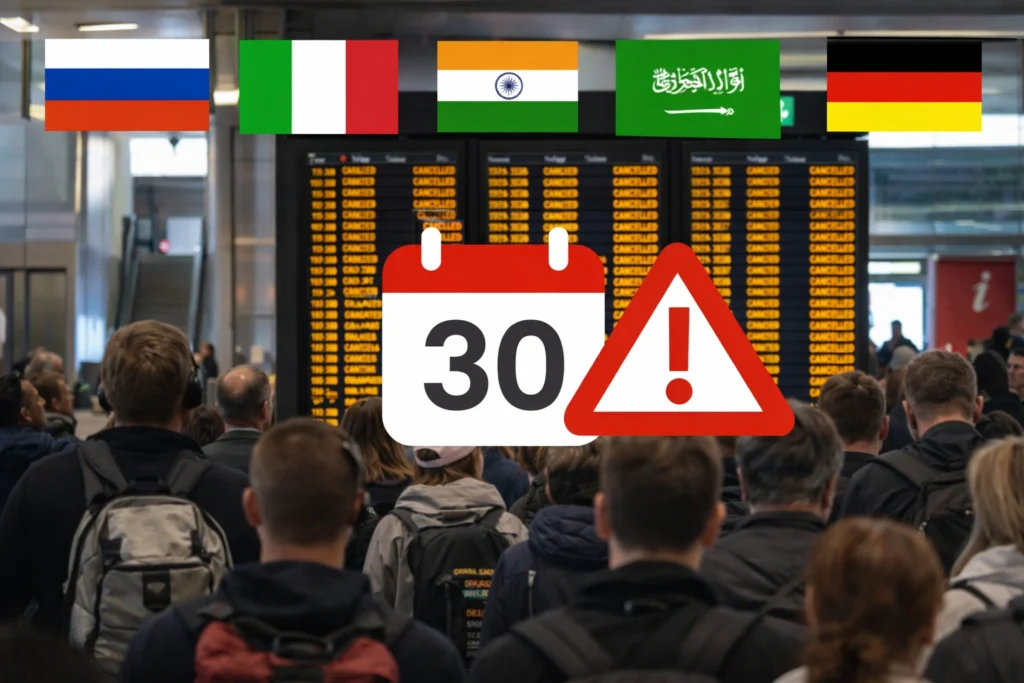
A coordinated global response has emerged as countries extend visas and provide emergency aid to travelers stranded by ongoing airspace closures. Nations including Russia, Italy, India, Saudi Arabia, Germany, and Turkey introduced one-month visa extensions to support affected travelers.
These emergency measures came as widespread flight cancellations and airspace restrictions disrupted travel across the Middle East. Thousands of travelers remain unable to return home, creating pressure on governments to provide immediate relief.
Visa Extensions Provide Temporary Relief
Governments acted quickly to prevent legal complications for stranded travelers. Many countries introduced automatic visa extensions and waived overstay penalties.
These measures allowed travelers to remain legally in host countries while waiting for flights. The extensions also reduced stress for tourists and business travelers facing uncertain timelines.
However, these temporary policies are now nearing their expiry. This has created new concerns for travelers who still cannot leave due to ongoing disruptions.
Russia Leads Large-Scale Evacuation Efforts
Russia played a key role in evacuation operations during the crisis. Authorities organized flights to repatriate citizens from affected regions.
The country also worked with international partners to assist travelers from other nations. Coordination with airlines helped facilitate safe return journeys.
These efforts highlight the importance of international cooperation during global travel disruptions.
Europe Expands Support for Stranded Travelers
Italy and Germany introduced flexible visa policies and consular support. Authorities waived penalties for overstayed visas and extended legal stay periods.
European governments also coordinated repatriation flights. Airlines played a central role in transporting stranded passengers back to their home countries.
These actions helped stabilize travel conditions for many affected individuals. However, ongoing restrictions continue to challenge recovery efforts.
India Focuses on Traveler Support
India implemented a traveler-focused approach to manage the crisis. Authorities extended visas for foreign nationals and supported Indian citizens abroad.
Consular services provided assistance with documentation, travel arrangements, and emergency needs. Airlines were also engaged to prioritize return flights.
These measures helped reduce the impact of disruptions on travelers. They also ensured smoother coordination between government agencies and airlines.
Middle Eastern Countries Offer Local Relief
Countries in the Middle East introduced their own support measures. Qatar, the UAE, Saudi Arabia, Bahrain, and Israel extended visas for stranded visitors.
Authorities also waived penalties and provided flexible travel options. Airlines offered rebooking and refund services to affected passengers.
These efforts helped manage the immediate impact of airspace closures. They also supported tourism sectors that rely on international visitors.
Airspace Closures Continue to Disrupt Travel
The crisis has led to widespread airspace restrictions across key regions. Airlines have canceled flights or rerouted services to avoid affected areas.
These disruptions have increased travel times and operational costs. Passengers face delays, missed connections, and limited flight availability.
The aviation industry continues to adapt, but uncertainty remains high. Travel demand has been affected as passengers reconsider plans.
Tourism Industry Faces Ongoing Challenges
Tourism sectors across affected regions are experiencing reduced activity. Hotels, airlines, and tour operators are adjusting to lower demand.
Destinations that rely on international visitors face short-term economic impacts. Travel disruptions also affect business travel and events.
Despite these challenges, governments and industry stakeholders continue to work toward recovery. Coordinated efforts aim to restore confidence in global travel.
What Travelers Should Do Now
Travelers are advised to monitor official updates and airline communications. Checking visa status and extension policies is essential.
Passengers should contact embassies or consulates for assistance if needed. Keeping travel documents updated can help avoid complications.
Flexibility remains important during this period. Travelers may need to adjust plans or explore alternative routes.
Outlook for Global Travel Recovery
The current crisis highlights the importance of international coordination. Visa extensions and emergency aid have provided temporary relief, but long-term solutions are needed.
As airspace conditions evolve, governments and airlines will continue to adapt. The focus remains on ensuring safe and efficient travel for passengers.
The coming weeks will be critical for travelers still affected by disruptions. Clear communication and coordinated action will play a key role in restoring stability.
For now, the global travel industry faces a complex environment. Careful planning and awareness remain essential for navigating ongoing challenges.
For more travel news like this, keep reading Global Travel Wire