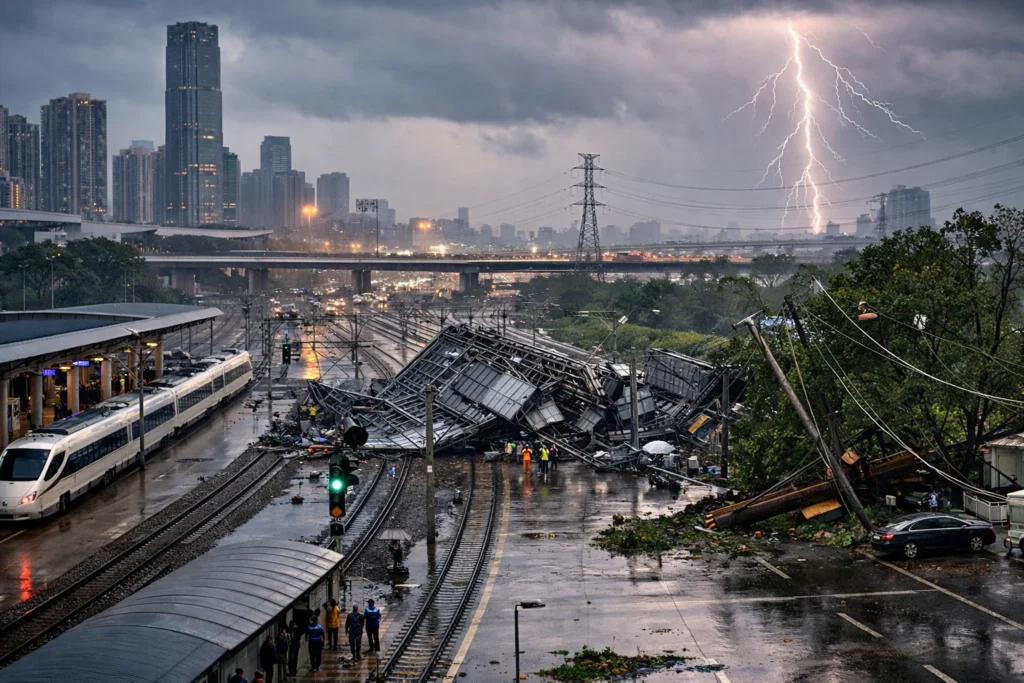
A powerful thunderstorm swept across southern China’s Guangdong Province on March 29, 2026, triggering widespread disruption to transport networks and daily life. With wind gusts reaching an intense 34 meters per second in the city of Foshan, the storm caused significant damage, forced railway delays and left residents and travelers dealing with unexpected chaos.
The sudden weather event transformed what began as a routine day into a major disruption across one of China’s most economically vital regions. Guangdong, known for its dense urban centers and extensive transport systems, experienced the full force of the storm as heavy rain and strong winds swept through cities and infrastructure corridors.
Foshan emerged as one of the hardest-hit areas, recording some of the highest wind speeds during the storm. Gusts of this magnitude are capable of causing structural damage, uprooting trees and disrupting power supply systems. Reports from across the city indicated fallen debris, damaged rooftops and temporary outages, all of which contributed to the broader disruption of daily activities.
The storm’s rapid development caught many residents and travelers off guard. Meteorological stations across Guangdong recorded a sharp escalation in wind speeds and rainfall within a short period, highlighting the unpredictable nature of convective weather systems in the region. Authorities quickly issued high-level weather alerts, urging people to remain indoors and avoid unnecessary travel.
One of the most significant impacts of the storm was on the region’s railway network. Guangdong’s rail system, which serves millions of passengers daily, faced severe delays as safety protocols were activated. Strong winds and reduced visibility forced operators to impose speed restrictions and temporarily suspend services on several routes.
Railway authorities confirmed that multiple train services experienced delays, with some routes halted entirely until conditions improved. Foshan, due to its location within a busy transport corridor, became a focal point for these disruptions. Passengers traveling through the city faced extended waiting times, missed connections and uncertainty regarding departure schedules.
The ripple effects of the railway delays extended beyond Foshan, affecting neighboring cities and major transit hubs across Guangdong. As trains were delayed or rescheduled, congestion built up at stations, creating additional challenges for travelers attempting to reach their destinations on time. For many, the disruption required last-minute changes to travel plans, including cancellations or alternative arrangements.
Air travel and road transport were also indirectly affected. While the primary impact was felt on the rail network, adverse weather conditions contributed to slower traffic flow on highways and potential delays in airport operations. Guangdong’s interconnected transport system means that disruptions in one sector can quickly influence others, amplifying the overall impact.
Authorities and emergency services responded swiftly to manage the situation. Local government agencies coordinated efforts to clear debris, restore power and ensure public safety. Meteorological departments provided continuous updates, helping residents and travelers stay informed about the evolving conditions.
The storm also served as a reminder of Guangdong’s vulnerability to extreme weather. Located in a subtropical climate zone, the province is prone to sudden thunderstorms, particularly during seasonal transitions. Experts have noted that such weather events can become more frequent and intense, requiring enhanced preparedness and infrastructure resilience.
For travelers, the immediate priority was adapting to the disruption. Many passengers were advised to monitor transport updates closely and remain flexible with their schedules. Authorities recommended checking train and flight statuses regularly and allowing extra time for travel during periods of unstable weather.
The impact on tourism and business travel is also noteworthy. Guangdong is a major economic hub, attracting both domestic and international visitors. Disruptions to transport networks can affect tourism flows, business meetings and logistics operations. While the storm was short-lived, its effects highlight the importance of reliable infrastructure in supporting the region’s economic activity.
Looking ahead, the event underscores the need for continued investment in weather-resilient transport systems. Railways, airports and road networks must be equipped to handle sudden disruptions, ensuring minimal impact on passengers and operations. Improved forecasting, real-time communication and contingency planning will play a crucial role in managing future events.
Residents of Guangdong demonstrated resilience in the face of the storm, adapting quickly to changing conditions. Emergency services worked efficiently to restore normalcy, and transport operators began gradually resuming services as weather conditions stabilized.
Meteorological experts have warned that similar storms may occur throughout the spring and summer months, particularly as the region enters its rainy season. This makes preparedness essential for both authorities and travelers. Understanding weather patterns and planning accordingly can help reduce the impact of future disruptions.
In conclusion, the March 29 thunderstorm in Guangdong has highlighted the challenges posed by extreme weather in a highly connected and densely populated region. With strong winds, heavy rain and widespread transport disruptions, the event serves as a reminder of the importance of resilience and adaptability in modern travel systems. As Guangdong continues to grow as a major economic and travel hub, strengthening its ability to respond to such events will remain a key priority.
For more travel news like this, keep reading Global Travel Wire