
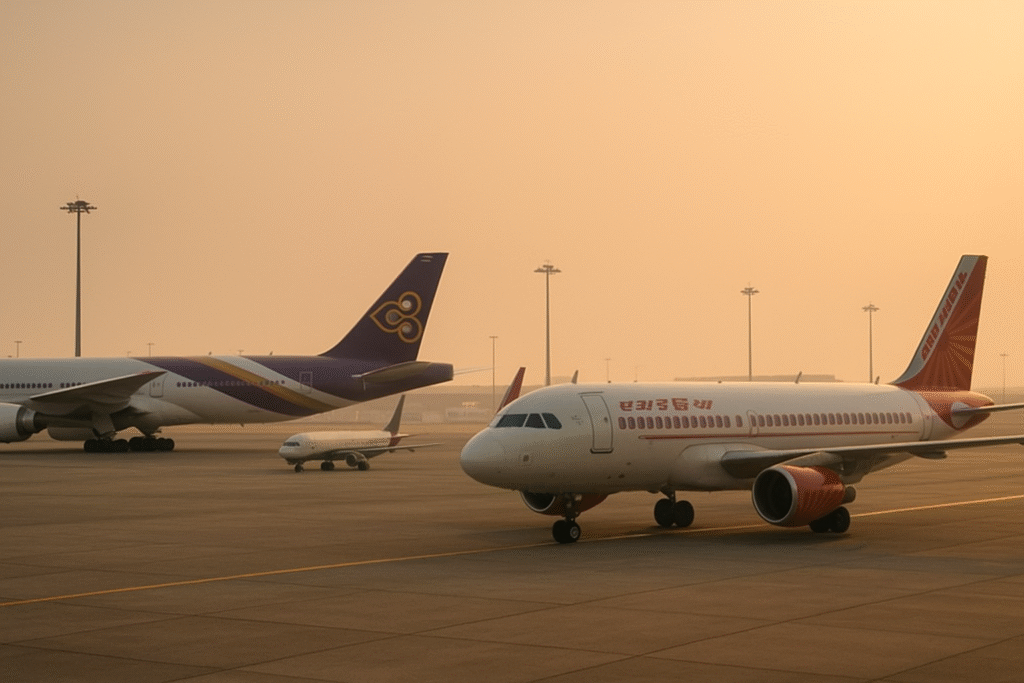
India and Southeast Asia saw heavy travel disruption this week as several major airlines cancelled more than a dozen flights across key routes. Travellers faced long waits and sudden schedule changes at airports in Delhi, Hyderabad, Kolkata, Bangkok, and Ahmedabad. Airlines struggled with demand, weather shifts, and tight aircraft availability. These issues created a chain of delays that affected both domestic and international passengers.
Airports in India and Thailand saw repeated cancellations during peak hours. Airlines such as Thai Airways, Air India, and SpiceJet adjusted their schedules due to crew limits, maintenance delays, and weather alerts. These sudden changes created stress for travellers who relied on timed connections and fixed travel windows.
Rising Cancellations Across Major Airports
Several airports saw multiple cancellations within short periods. Bangkok’s Suvarnabhumi Airport halted flights to destinations like Ubon Ratchathani and Khon Kaen due to operational limits. Thai Airways also halted a late-night flight to Hyderabad.
In India, major hubs saw similar issues. Delhi, Hyderabad, and Kolkata dealt with aircraft rotation problems, crew shortages, and congestion. Airlines cancelled flights to Mumbai, Varanasi, Port Blair, and Pune. The sudden loss of scheduled services left travellers with fewer options during busy weekend traffic.
Airport teams attempted to redirect passengers to later flights. Yet the sharp rise in passenger numbers left limited seats on alternative routes. Many travellers waited for hours to secure new bookings.
Travellers Face Expensive and Stressful Detours
These cancellations created serious hurdles for passengers. Travellers missed business meetings, family events, and holiday transfers. Passengers with international connections faced the hardest impact. They needed new tickets and fresh travel approvals. These changes added unexpected costs to travel budgets.
Many travellers struggled to find new routes that fit their plans. Hotels near airports filled quickly due to sudden rebookings. Food costs and transport charges added to the stress. Airline desks worked nonstop to assist travellers, but long queues slowed the process.
Travellers also faced uncertainty about luggage transfers. Some bags remained stuck at originating airports because baggage teams had little time to shift them to new flights. This increased frustration for passengers who needed their bags for same-day travel.
Airlines Struggle With Tight Schedules and Staff Shortages
Airlines across India and Southeast Asia face increasing strain this season. Aircraft availability remains tight due to maintenance cycles and late deliveries from manufacturers. Airlines also deal with crew shortages during high-demand months. These challenges make schedules harder to maintain during sudden weather changes.
Operational teams must move aircraft between airports with little room for delays. When one flight stops, several routes feel the impact. This chain reaction creates further cancellations, even when the original issue seems minor.
Airlines in India also deal with heavy airport congestion. Major airports handle more flights each year. Infrastructure upgrades continue, but demand grows faster than capacity. This puts pressure on ground handling teams and air-traffic controllers, especially during peak travel periods.
Airports Face Heavy Pressure From Growing Passenger Numbers
India’s airports carry more passengers every year. Delhi, Mumbai, Hyderabad, Bengaluru, and Kolkata report record travel activity each season. Yet infrastructure growth struggles to keep pace with rising traffic. This mismatch creates delays during peak hours.
Weather changes also cause schedule disruption. Fog in North India affects early-morning departures. Storms in coastal areas delay evening flights. When airlines wait for weather clearance, aircraft and crews fall behind schedule. This creates a wave of cancellations across the network.
Airports in Southeast Asia face similar limits. Bangkok’s main airport handles heavy regional traffic. When one route experiences delays, flight operations throughout the region slow down.
Aviation Network Feels the Heat From Repeated Disruptions
Flight cancellations affect more than the passengers on each flight. Ground crews must adjust their work plans with little warning. Catering teams must prepare or hold meals. Airport cleaning teams work overtime to manage irregular passenger flow. Security teams must handle new crowds when multiple flights shift to later hours.
These disruptions create extra costs for airlines. They must offer compensation, hotel stays, and rebooking support. The long-term impact also matters. Frequent cancellations harm customer trust. Many passengers choose other airlines after facing repeated delays.
Airlines push for better weather forecasting tools, faster baggage handling systems, and improved crew planning. Yet the rise in air travel continues to challenge these systems.
Industry Looks for Long-Term Solutions
India’s aviation authorities plan to expand major airports in Delhi, Mumbai, Bengaluru, and Hyderabad. These upgrades aim to ease congestion and improve punctuality. Authorities also review airline schedules to avoid tight turnarounds.
Southeast Asian countries continue to invest in runway upgrades and new terminal expansions. These projects aim to support growing regional tourism. Yet these changes take time, and passengers continue to feel the pressure today.
Conclusion
The latest cancellations across India and Southeast Asia highlight the rising strain on the aviation network. Airlines struggle with operational limits, crew shortages, and weather swings. Airports face heavy passenger traffic and tight infrastructure. Travellers feel the impact through delays, higher costs, and disrupted plans.
Stronger planning, faster communication, and steady infrastructure growth can ease these issues. Until then, travellers must prepare for sudden changes during peak seasons and monitor airline updates before each trip.
For more travel news like this, keep reading Global Travel Wire