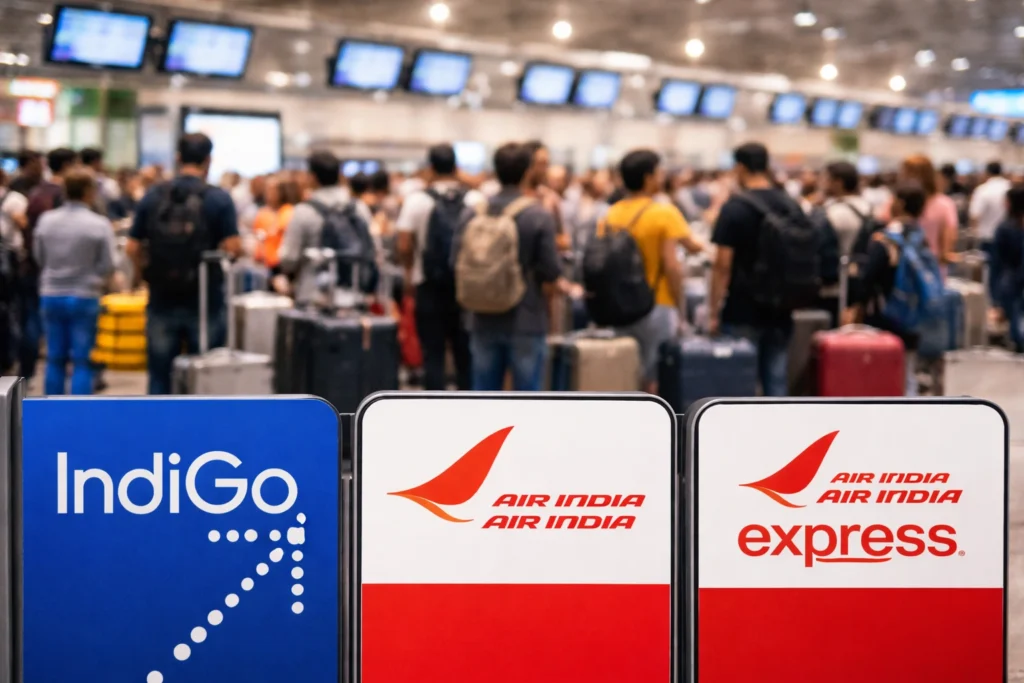
Indian airlines have introduced urgent changes to Middle East flight operations. IndiGo, Air India, and Air India Express now adjust schedules due to regional disruptions.
These changes affect routes to Dubai, Abu Dhabi, Jeddah, and other major destinations. Airlines urge passengers to confirm bookings and stay updated.
The situation remains fluid due to ongoing airspace challenges. Therefore, airlines continue to revise plans daily.
Rapid Operational Changes Across West Asia
Airlines have shifted operations quickly to maintain connectivity. They now rely on flexible scheduling and special flights.
Air India and Air India Express have planned multiple flight movements. These include both regular and non-scheduled services.
Authorities have approved several special flights between India and the UAE. However, final operations depend on real-time conditions.
UAE Routes See Major Disruptions
Flights to the UAE have seen the most significant changes. Airlines have paused several regular services temporarily.
Instead, they now operate limited special flights. These flights focus on high-demand routes and urgent travel needs.
Dubai continues to receive select services. Air India operates additional flights from Delhi, while Air India Express serves from Mangalore.
Abu Dhabi also remains connected through alternative routes. Airlines operate services from Delhi, Kochi, Mumbai, and Mangalore.
Sharjah still receives limited flights from Amritsar and Kannur. However, other UAE destinations currently lack confirmed services.
Stable Routes Offer Some Relief
Despite disruptions, some routes remain stable. Flights to Oman and Saudi Arabia continue without major interruptions.
Muscat maintains regular connections from Delhi and Mumbai. This route provides a reliable option for travelers.
Saudi Arabia also sees steady operations. Airlines continue flights to Jeddah and Riyadh from several Indian cities.
These stable routes help reduce pressure on the overall network.
Complete Suspension In Key Destinations
Several destinations currently face full suspension of services. Airlines have halted flights to Bahrain, Qatar, Kuwait, and Israel.
Major hubs like Doha and Kuwait City have no active operations. This highlights the severity of disruptions in certain areas.
Passengers traveling to these destinations must explore alternatives. Airlines recommend rebooking or refunds for affected tickets.
Passenger Advisory Becomes Critical
Airlines now emphasize clear communication with travelers. They urge passengers to check flight status before heading to airports.
Schedules can change quickly due to evolving conditions. Therefore, real-time updates remain essential.
Travelers should use official airline platforms for updates. Mobile apps and websites provide the latest information.
Flexible Policies Help Travelers Adapt
Airlines have introduced flexible policies to reduce inconvenience. Passengers can rebook flights without heavy penalties.
Refund options also remain available for canceled services. These measures aim to support travelers during uncertainty.
Such flexibility allows passengers to adjust plans with ease.
Airports Prepare For Operational Shifts
Airports across India and the Middle East have adjusted operations. They now handle irregular schedules and increased passenger queries.
Longer waiting times may occur due to changing procedures. Therefore, travelers should arrive early and stay prepared.
Authorities continue to coordinate with airlines to manage passenger flow.
Aviation Network Faces Ongoing Pressure
The India–Middle East aviation corridor remains under pressure. Airlines must balance safety, demand, and operational limits.
They now use non-scheduled flights to maintain essential connectivity. However, limited capacity continues to challenge the system.
Demand for available flights has increased sharply. This may lead to higher fares and limited seat availability.
What Travelers Should Do Now
Travelers must take proactive steps during this period. They should confirm flight status before leaving for the airport.
They should also remain flexible with travel dates and routes. Exploring alternatives can reduce disruption.
Registering for airline alerts can provide timely updates. This helps travelers avoid last-minute confusion.
Recovery Will Depend On Regional Stability
The situation continues to evolve across the Middle East. Airlines will adjust operations based on changing conditions.
Full recovery may take time as airspace restrictions remain uncertain.
However, coordinated efforts from airlines and authorities offer hope. They aim to restore stability and ensure safe travel soon.
A Critical Phase For International Travel
This period marks a challenging phase for global aviation. Airlines must respond quickly to sudden disruptions.
At the same time, they must maintain passenger confidence and safety.
Through flexible operations and constant updates, airlines continue to adapt. Travelers must stay informed and plan carefully until normalcy returns.