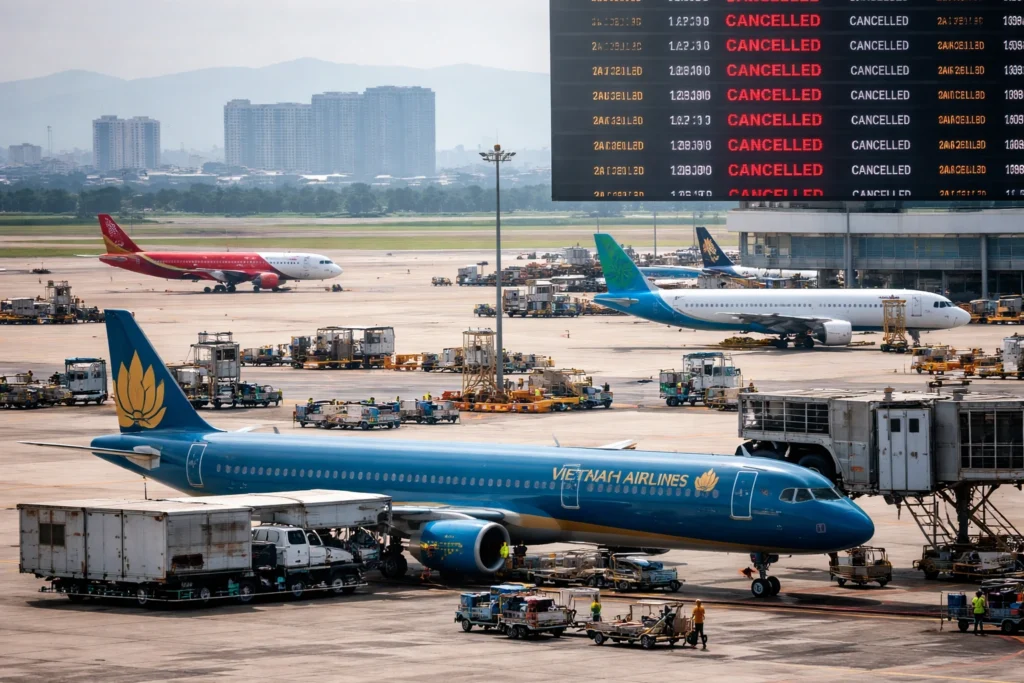
Japan’s aviation network faces fresh disruption as airlines cancel nearly a dozen flights across major airports. The cancellations affect both domestic and international routes, creating travel uncertainty for passengers.
Airlines such as United Airlines, Jetstar Japan, All Nippon Airways, and ANA Wings lead the cancellations. These disruptions impact key destinations including Tokyo, Osaka, Hokkaido, Guam, and Fukuoka.
Although the number of cancelled flights appears small, the impact spreads across critical travel corridors. Japan’s tightly connected aviation system amplifies the effects of each cancellation.
Major Airports Experience Widespread Disruptions
Several major airports across Japan report cancellations during this period. Narita International Airport, Kansai International Airport, Chubu Centrair International Airport, Osaka Itami Airport, and New Chitose Airport all experience disruptions.
These airports serve as key hubs for both domestic and international travel. Even a limited number of cancellations can disrupt multiple connecting routes.
Airlines adjust schedules across different regions, which leads to reduced capacity and longer waiting times. Travelers face uncertainty as airlines continue to manage operational constraints.
International Travel Disrupted from Tokyo Narita
Narita International Airport reports a significant international cancellation. United Airlines cancels a flight connecting Tokyo to Guam.
This route plays a vital role in connecting Japan to Pacific destinations. The cancellation affects passengers traveling for both leisure and business purposes.
As a result, travelers must seek alternative flights or adjust their schedules. International disruptions also affect connecting passengers arriving from other cities.
Domestic Travel Between Osaka and Tokyo Hit Hard
Kansai International Airport sees a major domestic cancellation on the Osaka to Tokyo route. Jetstar Japan cancels a late-evening service connecting Kansai and Narita.
This route ranks among the busiest domestic corridors in Japan. Many travelers rely on it for business and same-day connections.
The cancellation creates inconvenience for passengers who depend on late-night travel options. It also increases pressure on remaining flights between the two cities.
Central Japan Faces Regional Connectivity Challenges
Chubu Centrair International Airport reports a regional cancellation affecting travel between central Japan and Kyushu. IBEX Airlines cancels a flight to Fukuoka.
This route supports both business and tourism traffic. Its cancellation disrupts regional connectivity and delays travel plans.
Passengers traveling to southern Japan must explore alternative routes or wait for the next available flight. Such disruptions highlight the importance of regional aviation links.
Osaka Itami Airport Records Highest Number of Cancellations
Osaka International Airport, also known as Itami, faces the most significant disruption. Multiple flights operated by ANA Wings and All Nippon Airways get cancelled.
Routes to Miyazaki, Kagoshima, Kumamoto, and Tokyo Haneda all experience cancellations. These routes connect Kansai with key cities in Kyushu and the capital region.
The cancellations affect both short-haul and high-demand routes. Travelers experience delays, rebooking challenges, and increased congestion at the airport.
Airlines appear to adjust schedules to manage operational pressure. However, these changes create ripple effects across the domestic network.
Northern Japan Routes Experience Repeated Interruptions
New Chitose Airport in Hokkaido reports several cancellations, especially on routes to Sendai and Hakodate. Airlines cancel multiple flights on the same route within a short period.
This pattern suggests consolidation of passenger loads or limited aircraft availability. Regional carriers face increased pressure in maintaining schedules.
Travelers in northern Japan experience delays and fewer travel options. These disruptions affect both tourism and regional business travel.
Operational Challenges Drive Flight Cancellations
Several factors contribute to these Japan flight cancellations. Airlines likely face constraints related to aircraft availability and crew scheduling.
Weather conditions may also influence operations, especially in northern regions like Hokkaido. In addition, airlines may adjust capacity to match changing demand patterns.
Regional aircraft such as CRJ700 and Dash 8 models appear more affected. This indicates that short-haul operations face higher pressure than long-haul services.
Airlines prioritize operational stability, which leads to selective cancellations. This approach helps prevent larger disruptions across the network.
Passenger Impact Grows Across the Network
Passengers across Japan face multiple challenges due to these disruptions. Limited rebooking options create stress for travelers, especially on regional routes.
Airports see increased congestion as passengers seek assistance and alternative flights. Delays extend travel time and disrupt schedules for both domestic and international journeys.
Connecting passengers face higher risk of missed flights. This creates additional complications for those traveling across multiple cities.
Travelers must remain flexible and stay updated on flight schedules. Airlines continue to adjust operations as the situation evolves.
Conclusion: Small Disruptions Create Large Network Impact
Japan’s latest wave of flight cancellations shows how even limited disruptions can affect a wide aviation network. Nearly a dozen cancelled flights impact major cities and critical routes.
From Tokyo and Osaka to Hokkaido and Kyushu, the disruption spreads across regions. Airlines continue to manage operational challenges while maintaining essential connectivity.
The situation highlights the importance of flexibility in modern travel. As airlines adjust schedules, passengers must prepare for sudden changes and delays.
For more travel news like this, keep reading Global Travel Wire