












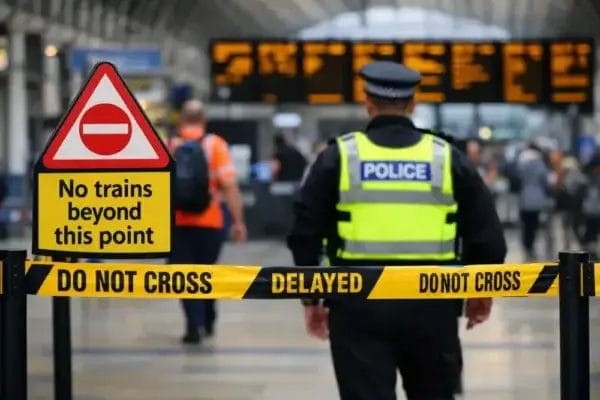
A major rail disruption has unfolded across one of England’s busiest transport corridors after a tragic incident forced the suspension of train services between Oxford and Worcester. The disruption has significantly impacted routes operating through London Paddington, leaving thousands of passengers stranded or facing severe delays.
The incident, which involved a person being struck by a train, prompted an immediate halt to services along the affected section of track. Emergency services quickly arrived at the scene, and rail authorities enforced a full closure of the line to ensure safety and allow responders to carry out their work.
Widespread Impact Across Key Rail Routes
The closure has created a ripple effect across the wider rail network, particularly affecting services connecting London Paddington with destinations in the West Midlands and surrounding regions. Routes to Worcester Shrub Hill, Worcester Foregate Street, Great Malvern, and Hereford have all been suspended.
This corridor is a critical link between London and several important regional hubs. With trains unable to operate through the affected section, passengers traveling for both business and leisure have been forced to reconsider their plans.
The disruption extends beyond direct routes, as connecting services and onward journeys have also been impacted. Travelers heading toward the Welsh Borders and other parts of western England are experiencing delays, cancellations, and limited alternatives.
Commuters and Tourists Face Uncertainty
London Paddington is one of the UK’s busiest railway stations, serving as a gateway for commuters, domestic tourists, and international visitors. The sudden suspension of services has created confusion and congestion within the station, as passengers seek information and alternative travel options.
For tourists, particularly those exploring destinations outside London, the disruption has complicated itineraries. Popular travel routes linking the capital to scenic regions such as the Cotswolds and Herefordshire are currently inaccessible by rail.
Commuters, meanwhile, are facing significant delays in reaching workplaces or returning home. Many are being forced to rely on alternative modes of transport, including buses, taxis, or rescheduled train services on unaffected lines.
Emergency Response and Safety Measures
Emergency services remain on-site managing the situation. Standard railway safety procedures require that all lines in the vicinity of such incidents remain closed until authorities confirm it is safe to resume operations.
Rail operators are working closely with emergency responders to assess the condition of the track and surrounding infrastructure. Only after thorough checks can services gradually restart.
While details surrounding the incident remain limited, authorities have emphasized that passenger safety is the top priority. Investigations into the circumstances are ongoing, and updates are expected as more information becomes available.
Advice for Passengers
Rail officials are urging passengers to stay informed and avoid unnecessary travel on affected routes until services resume. Travelers are advised to:
- Check real-time journey updates before leaving home
- Allow extra time for travel or consider postponing journeys
- Follow guidance from station staff and official announcements
- Explore alternative routes or transport options where available
Passengers already at stations are encouraged to remain patient and monitor live information displays for the latest updates.
Alternative Travel Options Limited
Due to the scale of the disruption, alternative rail services are limited. Replacement bus services may be introduced for certain segments, but capacity constraints mean they may not accommodate all passengers.
Some travelers are opting for indirect rail routes, although these often involve longer travel times and multiple transfers. Road transport is also experiencing increased demand, adding pressure to local transport networks.
The lack of immediate alternatives highlights the importance of the Oxford–Worcester line within the UK’s rail infrastructure.
Economic and Tourism Implications
Short-term disruptions like this can have broader implications for regional tourism and local economies. Areas that rely on rail connectivity for visitor access may see temporary declines in footfall.
Hospitality businesses, tour operators, and local attractions in affected regions could experience cancellations or reduced visitor numbers, particularly if disruptions extend beyond the expected timeframe.
For business travelers, missed meetings and delayed schedules may also result in economic impacts, especially in sectors that depend on reliable rail connections between London and regional cities.
Gradual Service Recovery Expected
Rail operators have indicated that services are expected to resume once emergency work is completed and safety checks are finalized. However, even after reopening, delays and reduced service frequency are likely as the network recovers.
Passengers should be prepared for continued disruption throughout the day, with normal service levels potentially taking time to fully restore.
Rail authorities will provide ongoing updates as the situation develops, including confirmation of when services can safely resume.
A Reminder of Rail Network Vulnerability
This incident underscores how quickly unexpected events can disrupt major transport networks. The UK rail system, while extensive and efficient, remains vulnerable to sudden closures that can impact thousands of passengers.
It also highlights the importance of contingency planning for travelers, particularly those with tight schedules or connections.
Looking Ahead
As emergency teams continue their work, the priority remains ensuring safety and restoring services as quickly as possible. Passengers are encouraged to stay informed, remain flexible, and plan ahead during this period of disruption.
While incidents of this nature are rare, their impact can be significant. The swift response from emergency services and rail operators is aimed at minimizing disruption and ensuring that normal operations can resume safely.
For now, travelers using London Paddington and the Oxford–Worcester corridor should remain vigilant, check updates regularly, and allow extra time for their journeys as the network works toward recovery.
For more travel news like this, keep reading Global Travel Wire