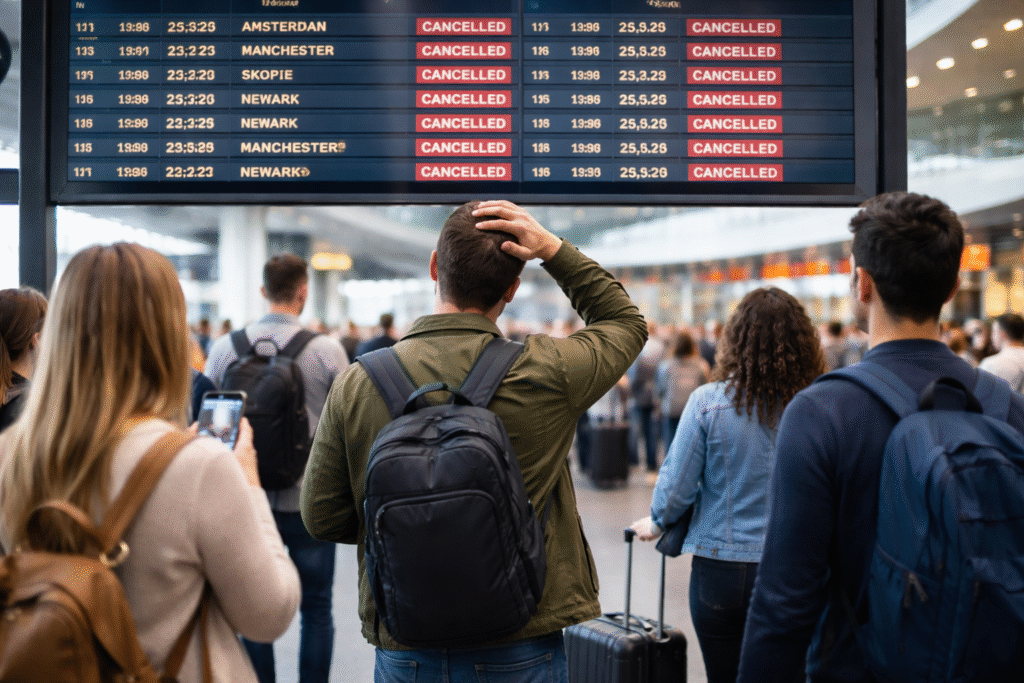
Germany faces serious travel disruption this weekend after multiple airlines cancel key flights. KLM, EasyJet, Wizz Air, United Airlines, and Lufthansa cut services across major airports. These cancellations affect both European and transatlantic routes. Passengers now rush to rebook flights or adjust travel plans.
Authorities report twelve confirmed flight cancellations across the country. The affected airports include Berlin, Frankfurt, Munich, Hanover, Stuttgart, and Dusseldorf. Popular destinations such as Amsterdam, Manchester, Skopje, and Newark face the biggest impact.
Hanover and Stuttgart See Early Disruptions
Travel problems began early in the weekend. Hanover Airport reported the cancellation of a KLM service to Amsterdam. The evening departure left passengers with limited same-day alternatives. Airport staff advised travelers to contact airlines directly for rebooking.
Stuttgart Airport faced similar trouble. A KLM morning flight to Amsterdam did not depart as scheduled. This cancellation disrupted onward connections across Europe. Morning travelers experienced the most inconvenience due to limited replacement flights.
Berlin Airport Records the Highest Number of Cancellations
Berlin Brandenburg Airport recorded the highest concentration of canceled flights. Several airlines halted operations on major international routes. EasyJet canceled a late-night service to Manchester. KLM grounded an early morning flight to Amsterdam.
Wizz Air canceled an evening departure to Skopje. United Airlines also canceled a long-haul flight to Newark. These combined disruptions created widespread uncertainty for passengers at Germany’s capital airport.
Travelers reported long queues at service desks. Many sought overnight accommodation or alternative routes. Airport officials urged passengers to check flight status frequently and avoid unnecessary travel to terminals.
Frankfurt Faces Ripple Effects Across Europe
Frankfurt Airport experienced cancellations on important European routes. A German regional airline canceled a flight to Amsterdam during peak evening hours. As a major international hub, Frankfurt depends heavily on schedule stability.
Even one cancellation at Frankfurt can disrupt multiple onward connections. Travelers connecting through Amsterdam faced delays and missed meetings. Airlines worked to reroute passengers through alternative hubs where possible.
Munich Disruptions Affect Early Morning Travelers
Munich Airport added to the weekend challenges. A morning flight to Amsterdam did not operate as planned. Business travelers and weekend tourists faced immediate schedule changes.
Early departures create added pressure for airlines. Replacement flights often fill quickly. Many passengers waited several hours for confirmed alternatives.
Amsterdam Routes Face the Heaviest Impact
Flights to Amsterdam account for most of the cancellations. Several German cities lost direct connections to the Dutch capital. These routes support both tourism and business travel.
Amsterdam serves as a major European transfer hub. Disruptions there impact global itineraries. Travelers heading to North America or Asia felt the effects most sharply.
The concentration of cancellations suggests operational strain on short-haul European routes. Industry experts often link such strain to crew availability and aircraft rotation challenges.
Passenger Rights and Official Guidance
German aviation authorities remind travelers of their rights. European regulations require airlines to offer refunds or rebooking options. Passengers may also receive meals or accommodation during long delays.
Airports advise travelers to arrive early and remain flexible. Officials stress the importance of checking airline notifications before leaving home. Government travel agencies continue to monitor the situation closely.
What Travelers Should Do Now
Passengers should take proactive steps to reduce stress.
- Confirm flight status directly with airlines
- Avoid unnecessary airport visits without confirmation
- Allow extra travel time for connections
- Keep travel documents easily accessible
Travel insurance providers also recommend documenting all expenses related to disruptions.
Outlook for the Coming Days
Airlines continue working to stabilize schedules. Additional disruptions remain possible during peak travel periods. Winter staffing levels and high passenger demand increase operational pressure.
Travelers planning trips through Germany should stay alert. Real-time updates remain essential for smooth journeys.
Conclusion
Germany’s aviation network faces a challenging weekend. Multiple airlines canceled flights across major airports. Routes to Amsterdam, Manchester, Skopje, and Newark suffered the most disruption. These events highlight how quickly airline operations can unravel. Careful planning and constant updates remain vital for travelers navigating Germany’s skies.
For more travel news like this, keep reading Global Travel Wire