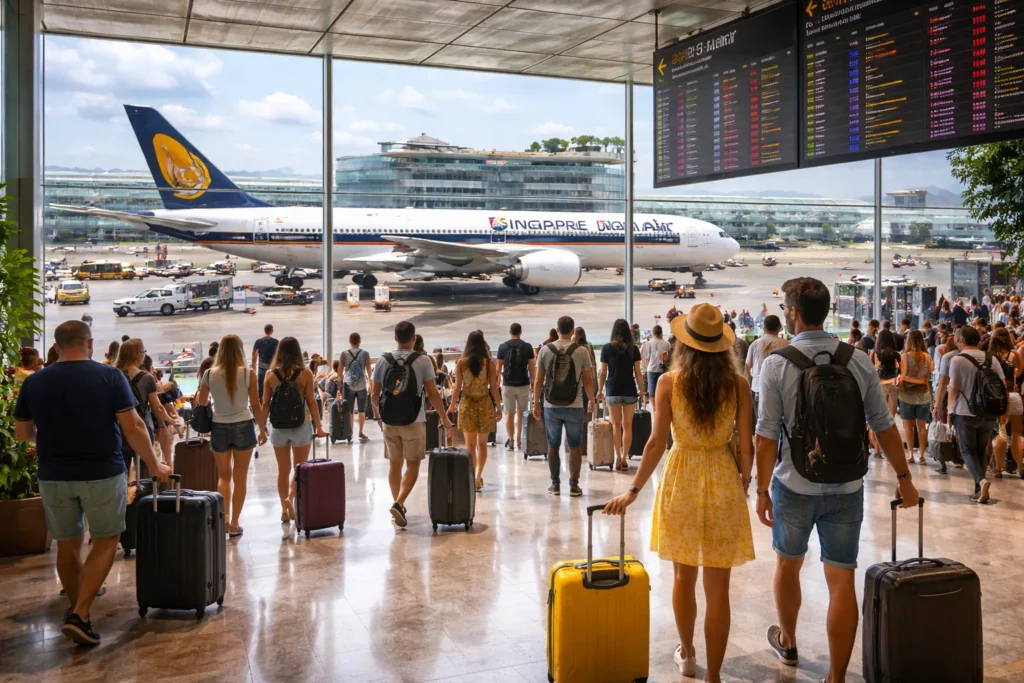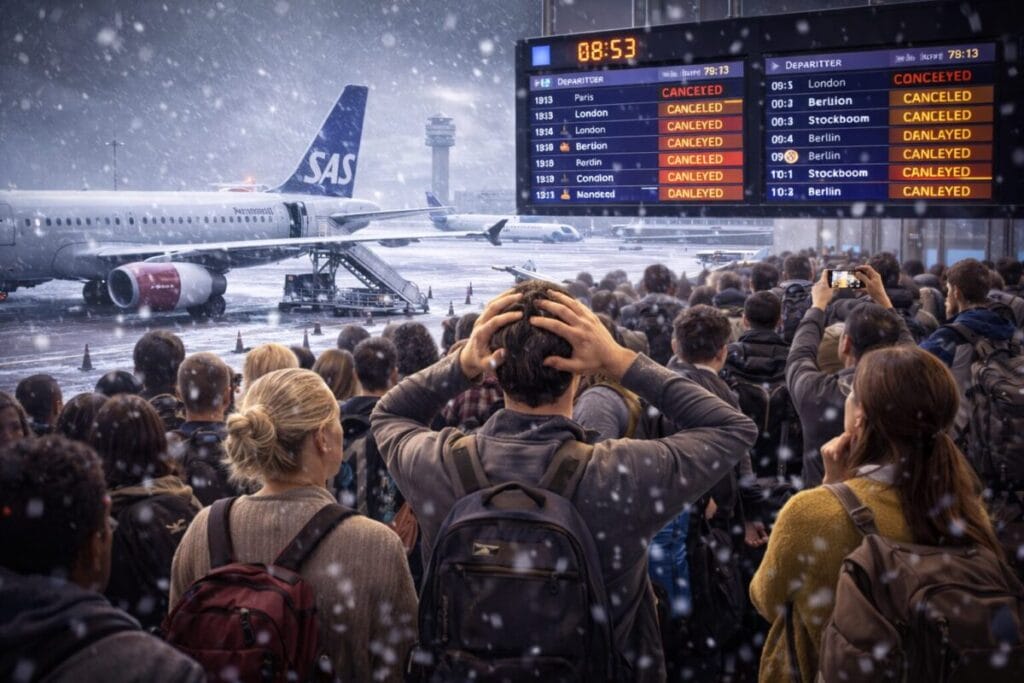
Hundreds of passengers faced travel chaos across Denmark, Norway, and Sweden after SAS Airlines delayed 119 flights and cancelled 26 services. The disruption affected key routes to major European cities, including Paris, London, Berlin, and Stockholm. Severe winter weather combined with operational challenges created widespread delays that impacted both leisure and business travelers.
Airports across Scandinavia experienced significant congestion as passengers waited for updates and rebooking options. The incident highlights ongoing vulnerabilities within aviation networks during winter travel periods.
Severe Weather Triggers Operational Challenges
Winter conditions across northern Europe created difficult flying environments. Snowfall, strong winds, and reduced visibility disrupted airport operations in Oslo, Stockholm, and Copenhagen. Runway availability decreased as ground crews worked to maintain safety standards.
Airlines operating in colder regions often face seasonal disruptions. However, the scale of this event intensified its impact. Weather delays quickly triggered operational bottlenecks involving aircraft positioning, crew scheduling, and maintenance planning.
Airport authorities coordinated with airlines to manage passenger flow, but long queues formed as travelers sought alternative arrangements. Many passengers missed connecting flights, causing ripple effects throughout European airspace.
Key European Routes Experience Significant Delays
The disruption affected multiple high-demand routes linking Scandinavia with major European destinations. Flights between Stockholm and Paris, Oslo and London, and regional routes within Norway faced extended delays or cancellations.
Business travelers heading to financial centers encountered significant setbacks. Tourists planning winter holidays also experienced unexpected schedule changes. Some passengers faced overnight stays at airports while waiting for rebooking assistance.
Regional flights connecting smaller cities to major hubs experienced additional pressure. Delays on these feeder routes disrupted onward connections across Europe.
Passenger Experience and Airport Response
Passengers reported frustration due to uncertain schedules and limited communication during peak disruption periods. Airlines attempted to provide accommodation and rebooking solutions, but demand for assistance exceeded available resources in some locations.
Airports implemented contingency procedures to manage crowds and maintain safety. Additional staff assisted with information desks and boarding adjustments. Despite these efforts, travelers experienced long waiting times.
Travel experts advise passengers to monitor flight updates closely during winter travel. Flexible itineraries and advance planning can help reduce disruption risks during unpredictable weather conditions.
Impact on Tourism and Business Travel
The disruption extends beyond immediate passenger inconvenience. Major cities like Paris, London, and Berlin rely on consistent air connectivity to support tourism and business events. Flight cancellations can affect hotel bookings, conference attendance, and local tourism spending.
Winter tourism in Scandinavia depends heavily on reliable air transport. Destinations known for seasonal attractions, including northern lights tours and ski resorts, risk losing visitors when flight networks experience instability.
Airline disruptions also influence regional economies. Restaurants, transportation services, and cultural attractions may experience sudden changes in visitor flow due to travel delays.
Challenges Facing Airlines During Winter Operations
Airlines operating in northern climates must balance safety with operational efficiency. Winter weather introduces complex challenges, including aircraft de-icing, runway maintenance, and scheduling flexibility.
Operational resilience depends on accurate forecasting and rapid response strategies. Airlines often adjust schedules to avoid cascading delays, yet unpredictable weather can disrupt even well-planned operations.
Industry analysts highlight the need for enhanced digital monitoring tools and predictive analytics. Advanced data systems can help airlines anticipate weather impacts and adjust operations proactively.
Future Preparedness and Industry Improvements
Aviation experts emphasize the importance of contingency planning to reduce future disruptions. Investment in advanced forecasting technology and real-time communication systems may improve operational performance.
Airlines can strengthen resilience by increasing staffing flexibility and improving coordination with airport authorities. Enhanced passenger communication systems also play a critical role during crisis situations.
European aviation regulators continue to focus on improving air traffic management efficiency. Collaborative decision-making between airlines and airports may reduce delays during challenging weather conditions.
Advice for Travelers Facing Winter Disruptions
Travelers can take several steps to minimize disruption risks. Monitoring airline notifications and weather forecasts helps travelers stay informed. Flexible ticket options allow easier adjustments when schedules change.
Travel insurance can provide additional protection against cancellations and delays. Passengers should also allow extra time for connections during winter months.
Airlines encourage travelers to check flight status regularly and arrive prepared for potential delays. Preparedness remains essential when traveling during unpredictable seasonal conditions.
Scandinavian Aviation Faces Renewed Scrutiny
The recent SAS disruptions highlight the fragile balance between safety, efficiency, and operational resilience in modern aviation. Winter weather remains a major challenge for airlines operating in northern Europe.
As flight operations gradually return to normal, industry stakeholders will analyze lessons from this incident. Improved technology, stronger contingency planning, and enhanced communication may help prevent similar disruptions in the future.
For passengers and tourism stakeholders alike, the event serves as a reminder that even advanced aviation systems face challenges when severe weather and operational pressures collide.
For more travel news like this, keep reading Global Travel Wire