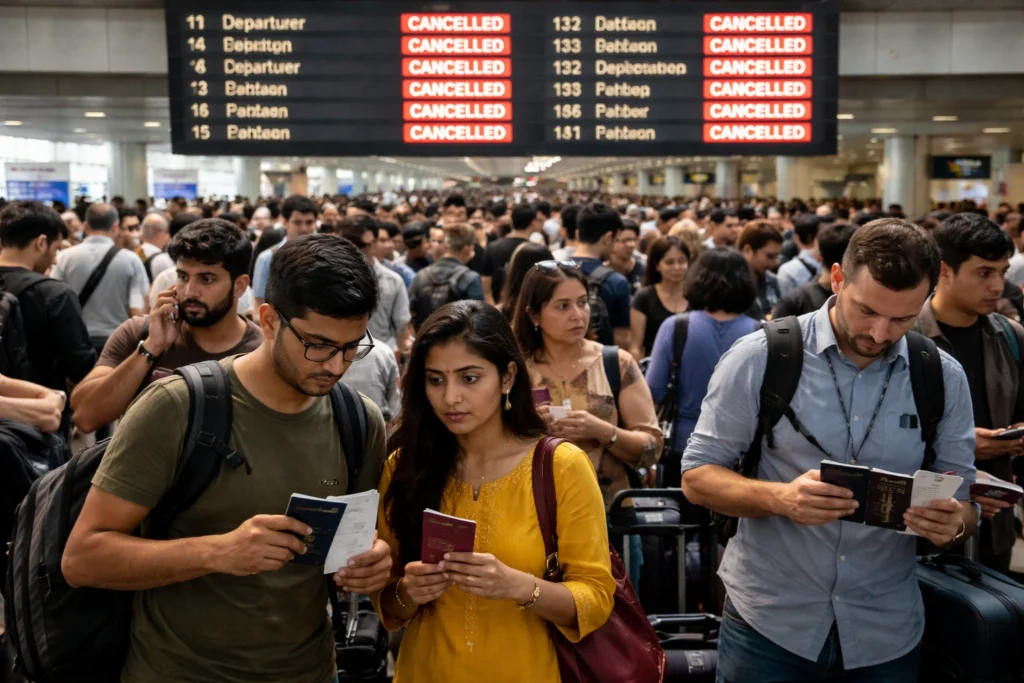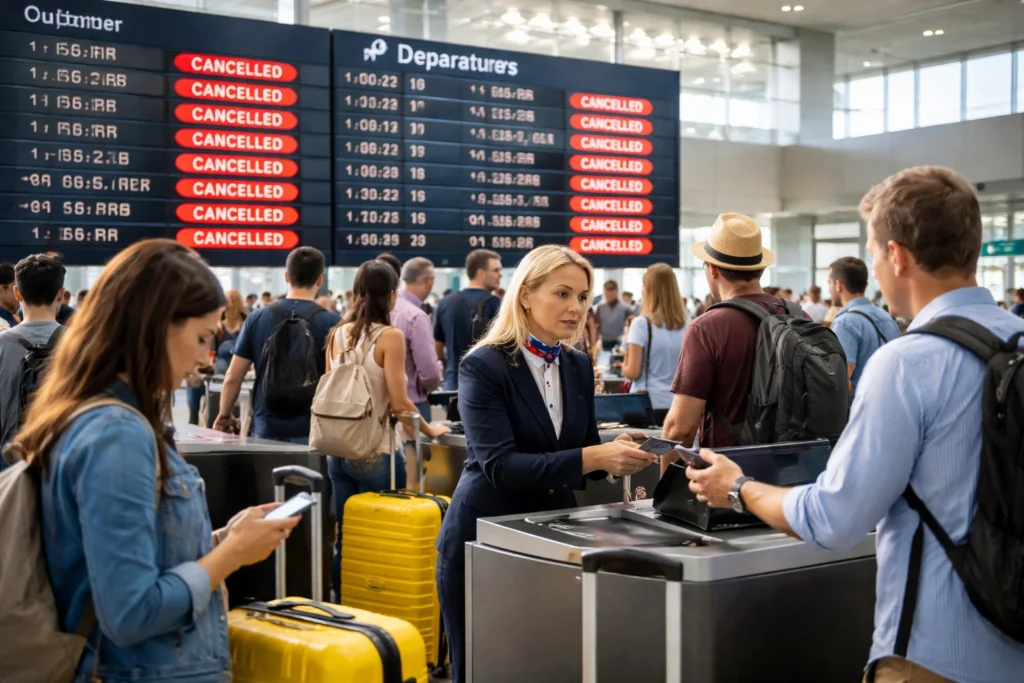
Airspace closures across the Middle East have triggered major travel disruptions. Countries including the UAE, Qatar, Bahrain, and Saudi Arabia have restricted flights.
These sudden measures have grounded aircraft and stranded thousands of passengers. Major hubs like Dubai, Doha, and Riyadh face operational challenges.
Travelers now struggle to adjust plans as cancellations continue. Airlines have stepped in with urgent solutions to support affected passengers.
Airlines Introduce Flexible Refund and Rebooking Policies
Leading airlines have responded quickly to the crisis. Qatar Airways, Emirates, Etihad, Saudia, Gulf Air, and Air Arabia now offer flexible options.
Passengers can request full refunds or change travel dates without fees. These policies reduce stress during uncertain travel conditions.
Airlines aim to protect customer trust and maintain service standards. This approach reflects strong commitment to passenger welfare.
Qatar Airways Expands Passenger Support Measures
Qatar Airways has introduced comprehensive support for affected travelers. The airline allows full refunds for disrupted bookings.
Passengers can also reschedule flights without penalties. The airline has extended travel flexibility until late 2026.
These measures provide travelers with more control over their plans. They also ensure smoother recovery from disruptions.
Emirates Enhances Customer Assistance Efforts
Emirates has implemented similar flexible policies. The airline offers full refunds for canceled flights.
Passengers can also rebook flights without additional charges. Emirates has waived change fees to support travelers.
Customer service teams are working continuously to manage requests. This effort ensures faster resolution during high demand.
Etihad Airways Supports Stranded Travelers
Etihad Airways has prioritized assistance for affected passengers. The airline provides full refunds and free date changes.
Travelers can modify bookings easily through online tools. The airline has simplified the process to improve efficiency.
Etihad’s approach focuses on reducing inconvenience. It ensures passengers receive timely support during disruptions.
Saudia Offers Flexible Travel Solutions
Saudia has introduced supportive policies for impacted travelers. Passengers can cancel flights and receive full refunds.
The airline also allows free rebooking for future travel dates. This flexibility helps travelers adjust plans without financial loss.
Saudia continues to communicate updates through multiple channels. This ensures passengers stay informed throughout the situation.
Gulf Air and Air Arabia Provide Relief Options
Gulf Air and Air Arabia have also introduced flexible measures. Both airlines offer full refunds and fee free rebooking.
Passengers can change travel dates based on availability. These options provide much needed relief during disruptions.
The airlines continue to update customers through digital platforms. This improves transparency and communication.
Global Airlines Adjust to Changing Conditions
International airlines have also adapted to the situation. Carriers across Europe and beyond now offer flexible booking policies.
These changes reflect the global impact of Middle East airspace closures. Airlines must adjust routes and schedules quickly.
This evolving situation highlights the complexity of global aviation networks. It also shows how quickly disruptions can spread.
Travel Industry Faces Operational Challenges
Airspace restrictions have created significant operational challenges. Airlines must manage cancellations, rerouting, and customer support simultaneously.
Airports also face increased pressure due to delays and congestion. Ground services must adapt to changing schedules.
These disruptions affect both leisure and business travel. They also impact tourism and trade across the region.
Passenger Experience Remains a Top Priority
Despite the challenges, airlines continue to focus on passengers. Flexible policies aim to reduce uncertainty and financial risk.
Travelers now expect quick solutions and clear communication. Airlines must meet these expectations to maintain trust.
Support services, digital tools, and customer care teams play a key role. They help passengers navigate complex travel situations.
Future Outlook for Regional Air Travel
The situation remains dynamic as restrictions evolve. Airlines will continue adjusting policies based on developments.
Travelers should monitor updates and plan accordingly. Flexibility will remain essential in the coming months.
The crisis highlights the importance of adaptable travel systems. It also reinforces the need for resilient global aviation networks.
For more travel news like this, keep reading Global Travel Wire