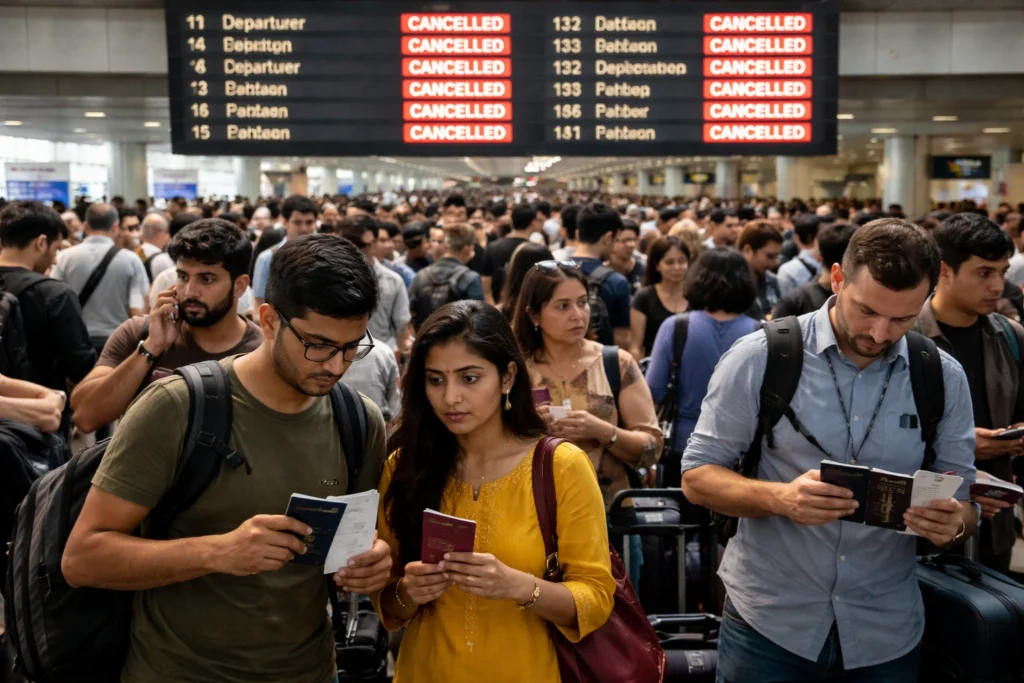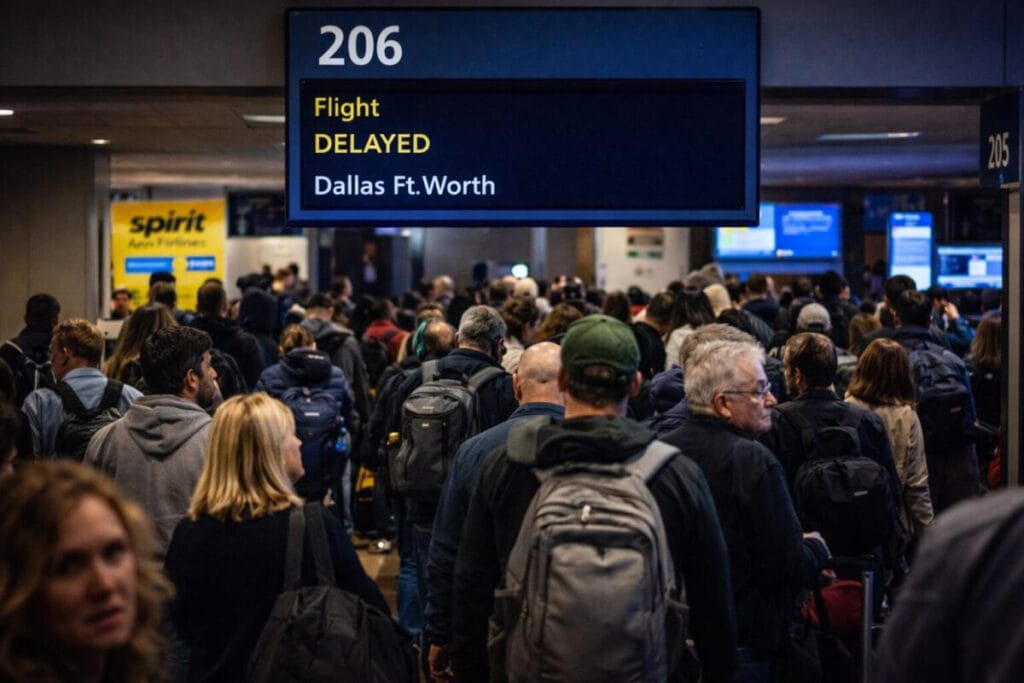
Thousands of travelers faced unexpected challenges after widespread flight disruptions impacted airports across the United States. Airlines canceled more than one hundred flights and delayed hundreds more, affecting major hubs in New York, California, Illinois, and other regions. The disruptions created significant challenges for leisure travelers, business passengers, and families navigating busy travel schedules.
Airports reported heavy operational pressure as travelers searched for rebooking options and adjusted their plans. Airlines worked to manage the situation while maintaining safety and operational efficiency.
Major Airport Hubs Experience Significant Delays and Cancellations
Several major airports experienced substantial disruption during the affected travel period. Chicago O’Hare, Newark Liberty, Atlanta’s Hartsfield-Jackson, and Dallas-Fort Worth reported high numbers of delays and cancellations. Toronto Pearson also saw notable operational strain, which affected international connections.
Chicago O’Hare experienced dozens of delays and multiple cancellations, with several carriers facing scheduling challenges. Newark Liberty reported similar issues, especially among low-cost and regional operators. Atlanta faced a moderate level of disruption despite maintaining high traffic volumes.
Dallas-Fort Worth reported both regional and international delays. Travelers encountered longer waiting times and missed connections, which added pressure to airport operations.
Airlines Face Operational Challenges During Peak Travel Period
Some airlines experienced greater disruption than others. Low-cost carriers and regional operators struggled with staffing limitations and scheduling adjustments. Spirit Airlines and certain regional affiliates saw higher cancellation percentages compared to other carriers.
Operational challenges often affect smaller fleets more significantly because limited aircraft availability reduces flexibility. Airlines must adjust routes quickly when unexpected disruptions occur, which increases the risk of cascading delays across the network.
Major carriers also faced challenges, although their larger fleets allowed them to maintain more consistent operations overall.
Weather and Staffing Issues Drive Disruptions
Winter weather conditions across the northeastern United States contributed to delays and cancellations. Storm systems created difficult flying conditions, which forced airlines to adjust schedules for safety reasons. Weather disruptions often spread quickly because flights rely on tightly coordinated aircraft rotations.
Airline staffing shortages also played a role. Industry analysts note ongoing pilot shortages and crew scheduling challenges. Airlines must ensure crews meet strict safety regulations regarding rest periods and duty hours. When delays occur, crew availability may limit the ability to operate scheduled flights.
Air traffic control delays added another layer of complexity. High traffic volumes combined with weather-related restrictions slowed operations at several airports.
Impact on Tourism and Travel Plans
Flight disruptions create ripple effects across the tourism industry. Travelers may miss hotel reservations, tours, or cruise departures. Destinations that depend on air travel often experience reduced visitor numbers during major disruptions.
Cities such as New York, Los Angeles, and Las Vegas rely heavily on air traffic for tourism growth. When flights cancel or delay, hotels and local businesses may see fewer visitors. International travelers also face challenges when connecting flights change unexpectedly.
Business travelers often experience financial consequences due to missed meetings or schedule changes. Tourism experts emphasize the importance of flexible planning during busy travel periods.
Passenger Rights and What Travelers Should Know
Travelers affected by cancellations or delays should understand their rights under transportation regulations. U.S. Department of Transportation guidelines require airlines to offer refunds when flights cancel and passengers choose not to travel.
Airlines typically provide rebooking options for delayed or canceled flights. In certain situations, passengers may receive meal vouchers or accommodation assistance. Travelers should check airline policies carefully because compensation rules vary.
Experts recommend monitoring airline apps or websites for real-time updates. Early communication allows passengers to secure alternative flights before availability decreases.
Practical Tips for Navigating Flight Disruptions
Travelers can reduce stress by preparing for unexpected disruptions. Keeping travel insurance and flexible booking options can help manage changes. Packing essential items in carry-on luggage ensures comfort during extended delays.
Passengers should also maintain digital copies of tickets, hotel reservations, and travel documents. These resources help speed up rebooking processes when disruptions occur.
Arriving early at the airport during uncertain weather conditions provides extra time to handle schedule changes. Travelers may also consider alternative airports or routes when available.
Aviation Industry Looks Toward Improved Resilience
Airlines continue investing in technology to reduce disruption risks. Advanced weather tracking systems help carriers anticipate operational challenges earlier. Improved scheduling software allows airlines to adjust flight networks more efficiently.
Industry leaders also emphasize the need for enhanced communication with passengers. Clear updates and proactive customer service improve traveler confidence during difficult situations.
Government aviation agencies encourage collaboration between airlines and airports to enhance resilience. Coordinated planning can minimize the impact of disruptions on travelers and tourism.
Economic Effects on Airlines and Local Communities
Flight disruptions create financial challenges for airlines due to refunds, compensation, and operational costs. Local businesses also experience economic impact when travelers cancel trips or delay visits.
However, industry analysts note that demand for travel remains strong. Temporary disruptions often lead to short-term setbacks rather than long-term declines in tourism activity.
Airlines aim to recover quickly by restoring schedules and improving operational reliability. Continued investment in staffing and infrastructure may help reduce future disruptions.
Navigating Travel in an Unpredictable Environment
The recent wave of cancellations highlights how interconnected the aviation system has become. Weather conditions, staffing levels, and technical factors can combine to create widespread challenges.
Travelers who stay informed and flexible can manage disruptions more effectively. Airlines, airports, and government agencies continue working toward solutions that improve reliability and safety.
As travel demand grows, industry stakeholders must balance efficiency with resilience. Strengthening contingency planning will help ensure smoother journeys for travelers and support sustainable tourism growth across the United States.
For more travel news like this, keep reading Global Travel Wire