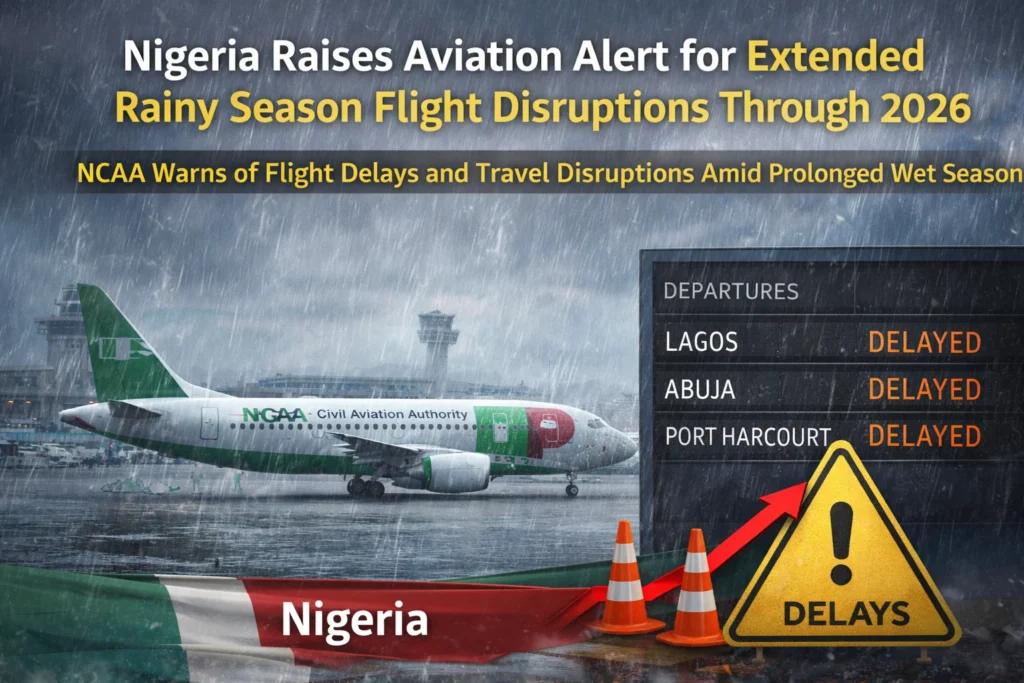
Nigeria’s aviation and tourism sectors are preparing for a challenging year ahead as the Nigeria Civil Aviation Authority issues an official advisory warning of prolonged weather-related disruptions through December 2026. According to guidance released by aviation regulators and supported by national meteorological forecasts, shifting rainfall patterns are expected to significantly affect flight operations across domestic and regional networks.
Government aviation authorities have confirmed that the traditional rainy season timeline is undergoing a noticeable shift. Rainfall is now projected to begin earlier in the year and extend well beyond its usual duration, creating a longer period of operational uncertainty for airlines and travelers. This development is expected to impact major aviation hubs including Lagos, Abuja, and Port Harcourt, which serve as critical gateways for both domestic tourism and international connectivity.
Officials from the Nigerian Meteorological Agency have indicated that erratic rainfall, thunderstorms, and reduced visibility will become more frequent throughout 2026. These conditions are likely to disrupt flight schedules, increase delays, and reduce operational efficiency across the country’s aviation system. Tourism authorities have emphasized that such disruptions could influence travel planning and visitor flows, particularly during peak travel periods.
The extended rainy season is expected to affect not only domestic flights but also regional and international connections. Aviation authorities note that Nigeria’s strategic position as a regional travel hub means that disruptions within the country can have wider implications for travelers connecting to other destinations across Africa, Europe, and the Middle East.
Weather-related disruptions are not new to Nigeria’s aviation sector, but the projected extension of the rainy season represents a significant change. Officials highlight that thunderstorms and heavy rainfall can lead to reduced visibility, making it difficult for aircraft to land or take off safely. These conditions often result in delays, diversions, and occasional cancellations, particularly during periods of intense weather activity.
The impact of these disruptions is compounded by existing operational challenges within the aviation system. Transport authorities acknowledge that factors such as aircraft availability, maintenance scheduling, and ground infrastructure limitations already place pressure on airline operations. When combined with prolonged adverse weather, these challenges can lead to cascading delays across flight networks.
For example, a single weather-related delay at a major airport can affect multiple subsequent flights, disrupting schedules throughout the day. Passengers traveling on connecting flights may face missed connections, extended waiting times, and increased travel costs. Tourism boards note that such experiences can influence traveler perceptions and affect overall tourism demand.
Despite these challenges, government agencies are working to mitigate the impact on travelers and the tourism industry. The NCAA has outlined passenger rights and guidelines to ensure that airlines provide assistance during delays. These include provisions for refreshments, rebooking options, and accommodation in cases of extended disruptions.
However, aviation authorities also emphasize that weather-related events are typically classified as extraordinary circumstances, meaning that compensation may not always apply. Travelers are therefore encouraged to plan ahead and remain flexible when traveling during the extended rainy season.
Tourism officials recommend several strategies to minimize disruption. Booking flights during early morning hours, when weather conditions are generally more stable, can reduce the likelihood of delays. Allowing additional time for connections and monitoring flight updates are also important steps for ensuring a smoother travel experience.
The extended rainy season is expected to coincide with key travel periods, including the end-of-year holiday season. Traditionally, these months have been associated with stable weather conditions, supporting increased travel activity. However, the current forecasts suggest that travelers may need to adjust their expectations and plan accordingly.
Tourism boards are adapting their strategies to address these challenges, focusing on communication, traveler support, and flexible booking policies. By providing timely information and assistance, authorities aim to maintain confidence in Nigeria’s tourism sector despite the disruptions.
The situation also highlights the broader impact of climate variability on global aviation. Changes in weather patterns are increasingly influencing flight operations, requiring airlines and regulators to adopt more adaptive approaches. In Nigeria, this means enhancing coordination between aviation authorities, meteorological agencies, and airlines to improve response times and minimize disruption.
Looking ahead, the extended rainy season is likely to reshape travel patterns within Nigeria and the wider region. Travelers may opt for alternative routes, adjust travel dates, or choose destinations with more predictable weather conditions. These shifts could have implications for tourism demand and airline strategies.
Government agencies continue to monitor the situation closely, with a focus on ensuring safety and maintaining operational efficiency. Investments in infrastructure, technology, and weather forecasting are expected to play a key role in addressing the challenges posed by changing climate conditions.
For travelers, the key takeaway is the importance of preparation and flexibility. While Nigeria remains a vibrant destination with significant tourism potential, navigating the extended rainy season will require careful planning and awareness of evolving conditions.
As the aviation sector adapts to these changes, collaboration between stakeholders will be essential in supporting both travel and tourism. The extended rainy season may present challenges, but it also offers an opportunity for the industry to strengthen resilience and improve the overall travel experience.