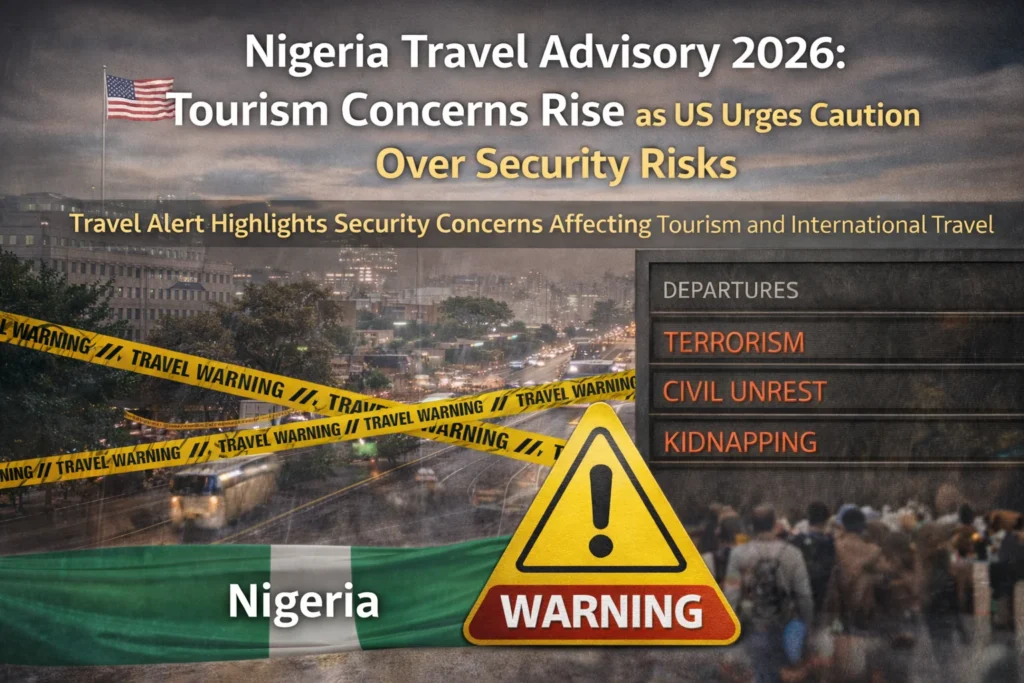
Nigeria’s tourism and travel landscape is facing renewed global attention following an updated advisory issued by the United States Department of State urging citizens to reconsider travel to the country. The guidance, based on official security assessments, highlights concerns related to safety risks in certain regions, with potential implications for tourism, business travel, and international mobility.
According to official statements, the advisory places Nigeria at a “reconsider travel” level overall, while identifying several states under the highest caution category. These areas have been flagged due to security challenges, including incidents of unrest and localized violence. Authorities emphasize that such advisories are issued to inform travelers and ensure safety awareness rather than discourage all travel activity across the country.
The advisory also includes the authorization for non-essential personnel and their families to depart from the US embassy in Abuja. This measure reflects precautionary steps taken by diplomatic missions when security conditions are assessed as uncertain. While the embassy continues to operate, officials have confirmed that essential services remain available.
Tourism authorities and industry stakeholders in Nigeria are closely monitoring the situation, recognizing the potential impact on international travel sentiment. Nigeria has been actively working to promote its tourism sector, highlighting cultural heritage, natural attractions, and business opportunities. However, travel advisories from major countries can influence traveler decisions and affect visitor numbers.
Government agencies in Nigeria have previously stated that security conditions vary significantly across different regions. While some areas experience challenges, others remain stable and continue to host domestic and international visitors. Tourism boards emphasize that key urban centers and established travel destinations maintain operational infrastructure and services for travelers.
The advisory also draws attention to the evolving nature of security concerns, noting that incidents can occur in public spaces such as markets, hotels, and transport hubs. Officials stress that travelers should remain vigilant, follow local guidance, and stay informed through official channels when planning visits.
Despite these concerns, Nigeria continues to engage in international cooperation aimed at strengthening security and stability. Government statements confirm ongoing collaboration with global partners in areas such as counter-terrorism, intelligence sharing, and maritime security. These efforts are part of a broader strategy to enhance safety and support economic development.
Tourism experts note that travel advisories often have a ripple effect beyond leisure travel. Business travel, international conferences, and investment activities can also be influenced by such guidance. Nigeria, as one of Africa’s largest economies, relies on international engagement to support growth and development, making the perception of safety an important factor.
Industry representatives highlight that repeated advisories can shape global perceptions, even in regions where conditions are stable. This underscores the importance of balanced communication and accurate information to ensure that travelers have a clear understanding of the situation.
Local tourism authorities are continuing to promote domestic travel and regional tourism as part of their strategy to sustain the sector. By encouraging residents to explore destinations within the country, they aim to support local businesses and maintain economic activity despite international challenges.
At the same time, officials are working to strengthen traveler confidence by improving infrastructure, enhancing security measures, and providing updated information. Initiatives include increased coordination between security agencies and tourism operators, as well as the development of guidelines to support safe travel experiences.
The advisory also highlights the importance of preparedness for travelers. Authorities recommend that visitors plan their trips carefully, stay informed about local conditions, and follow official advice throughout their journey. Travel insurance, flexible booking options, and contingency planning are also encouraged to manage potential disruptions.
For the Nigerian tourism sector, the current situation presents both challenges and opportunities. While advisories may affect short-term travel demand, they also reinforce the need for continued investment in safety and infrastructure. By addressing these areas, Nigeria aims to strengthen its position as a competitive destination in the global tourism market.
Government officials have yet to issue a formal response to the latest advisory, but previous statements indicate a commitment to improving security and supporting tourism growth. Efforts to enhance stability and promote positive travel experiences remain central to national development plans.
The evolving situation also reflects broader trends in global travel, where safety considerations play a significant role in destination choice. Travelers are increasingly seeking reliable information and assurances when planning trips, making transparency and communication essential for tourism authorities.
As Nigeria navigates this period, collaboration between government agencies, tourism boards, and international partners will be crucial. By working together, stakeholders can address concerns, support travelers, and promote sustainable growth in the tourism sector.
While the advisory underscores ongoing challenges, it also highlights the resilience of Nigeria’s travel industry. With continued efforts to improve safety and infrastructure, the country remains committed to welcoming visitors and showcasing its diverse attractions.
The Nigeria travel advisory serves as a reminder of the dynamic nature of global tourism, where changing conditions require adaptability and informed decision-making. For travelers and industry stakeholders alike, staying informed and prepared will be key to navigating the evolving landscape.