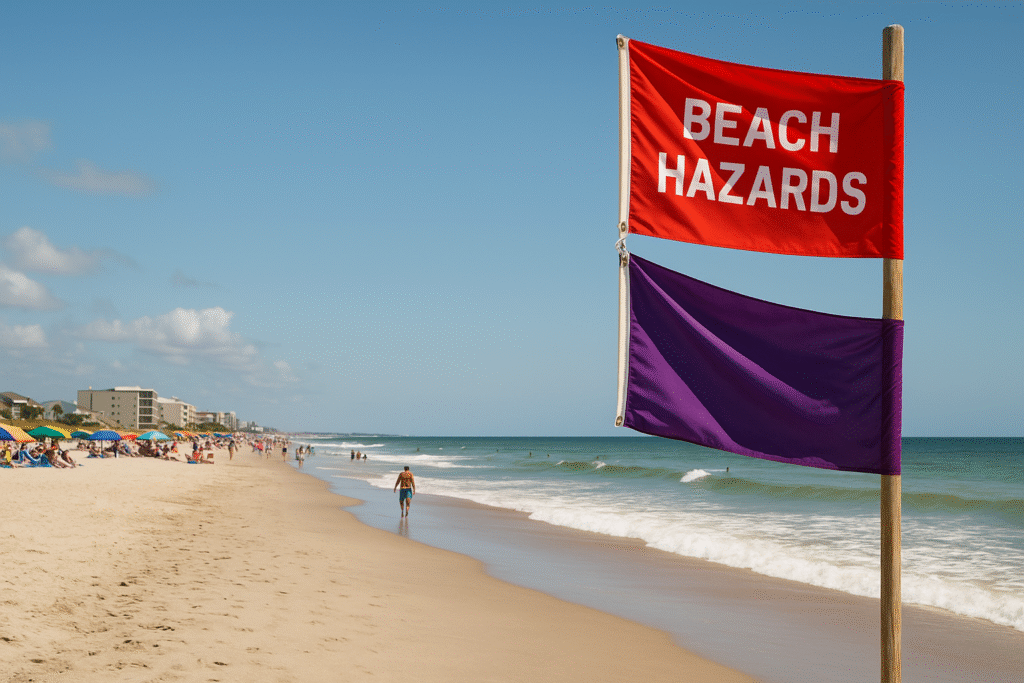
On September 14, 2025, the National Weather Service (NWS) issued a Beach Hazards Statement for Pender and New Hanover counties in North Carolina. The advisory, lasting until 8:00 PM EDT, highlights the risks of rip currents and strong longshore currents across some of the state’s most popular beaches.
The warning covers high-traffic tourist areas including Wrightsville Beach, Carolina Beach, and Kure Beach—destinations that attract thousands of visitors each year for surfing, swimming, and family vacations. While these stretches of shoreline are renowned for their beauty, this advisory serves as a reminder that ocean conditions can change quickly, and safety should always remain a top priority.
What the Warning Means
The Beach Hazards Statement emphasizes two dangerous conditions:
- Strong Longshore Currents
These currents move parallel to the shoreline and can carry swimmers down the coast without warning. For beachgoers unfamiliar with the ocean, this phenomenon can be both surprising and disorienting. - Moderate Risk of Rip Currents
Rip currents are narrow channels of water that flow away from the beach into deeper waters. Even experienced swimmers can struggle against their strength. The key danger lies in the speed and unpredictability of these currents, which can quickly sweep swimmers away from shore.
The NWS strongly advises visitors to exercise caution, consult lifeguards before entering the water, and remain alert to posted warnings and flags at the beach.
Popular Tourist Beaches Under Advisory
The advisory directly affects several of North Carolina’s most cherished beach destinations:
- Wrightsville Beach – Famous for its turquoise waters and surfing scene, Wrightsville Beach offers a lively atmosphere. However, with increased current activity, it becomes risky for those venturing too far from lifeguard-monitored areas.
- Carolina Beach – Known as a family-friendly destination with boardwalk attractions and fishing piers, Carolina Beach faces heightened risks due to rip currents during this period.
- Kure Beach – Offering a quieter, more laid-back experience, Kure Beach is ideal for relaxation, but even here, beachgoers must stay alert to the sea’s changing conditions.
- North Topsail Beach – A favorite for peaceful getaways and long walks on the sand, this area is also affected by the hazard statement. Swimming should be limited and only attempted under lifeguard supervision.
Safety Guidelines for Tourists
For travelers planning a coastal visit, understanding and following beach safety protocols is essential. Authorities recommend the following measures:
- Avoid swimming during warnings: When conditions are deemed unsafe, it is best to stay out of the water altogether.
- Swim near lifeguards: Choose designated swimming zones with professional supervision. Lifeguards are trained to spot hazards early and act swiftly in emergencies.
- Recognize rip currents: Look for water that appears darker, choppier, or flowing out to sea. If caught in one, remain calm, float, and swim parallel to the shore until free of the current.
- Respect beach flags: Yellow flags suggest moderate risk, while red flags indicate dangerous conditions. Always adhere to these warnings.
- Wear flotation devices: For added safety, especially when engaging in paddleboarding or kayaking, tourists should wear life jackets.
- Stay updated: Keep track of weather alerts via mobile apps, beach patrols, or posted advisories. Conditions may change throughout the day.
Tourism Beyond the Waves
Though hazardous conditions may limit ocean activities, Pender and New Hanover counties still offer a wide variety of attractions for visitors. Travelers can enjoy vibrant local dining, explore historic landmarks, stroll through charming coastal towns, or visit nearby nature reserves and parks.
For families, aquarium visits, lighthouse tours, and shopping districts provide alternative activities that remain unaffected by beach advisories. These inland attractions ensure that vacations need not be canceled but simply adjusted with safety in mind.
Broader Impact on Coastal Tourism
The issuance of beach hazard warnings during peak travel times highlights the delicate balance between tourism and safety. While beaches remain the central draw, the region’s tourism boards continue to encourage visitors to explore the broader cultural and natural experiences the area has to offer.
Local businesses, from surf shops to seaside restaurants, often adjust their services during advisories, focusing on promoting non-aquatic activities. For example, many surf schools pivot to on-land safety training sessions when ocean conditions are unsafe, ensuring that tourists still enjoy a meaningful experience while staying protected.
Final Thoughts: Safety First, Fun Always
North Carolina’s beaches are among the most stunning on the East Coast, offering travelers a perfect blend of relaxation and adventure. However, as the current Beach Hazards Statement illustrates, the ocean demands respect. By staying informed, following safety protocols, and heeding lifeguard advice, tourists can ensure that their trip remains memorable for all the right reasons.
When planning a beach day at Wrightsville, Carolina, Kure, or North Topsail Beach, prioritize safety. A day in the sun is best enjoyed when everyone returns home safely. The ocean will still be there tomorrow—so make cautious choices today and enjoy the beauty and vibrancy of North Carolina’s coastal treasures.
For more travel news like this, keep reading Global Travel Wire