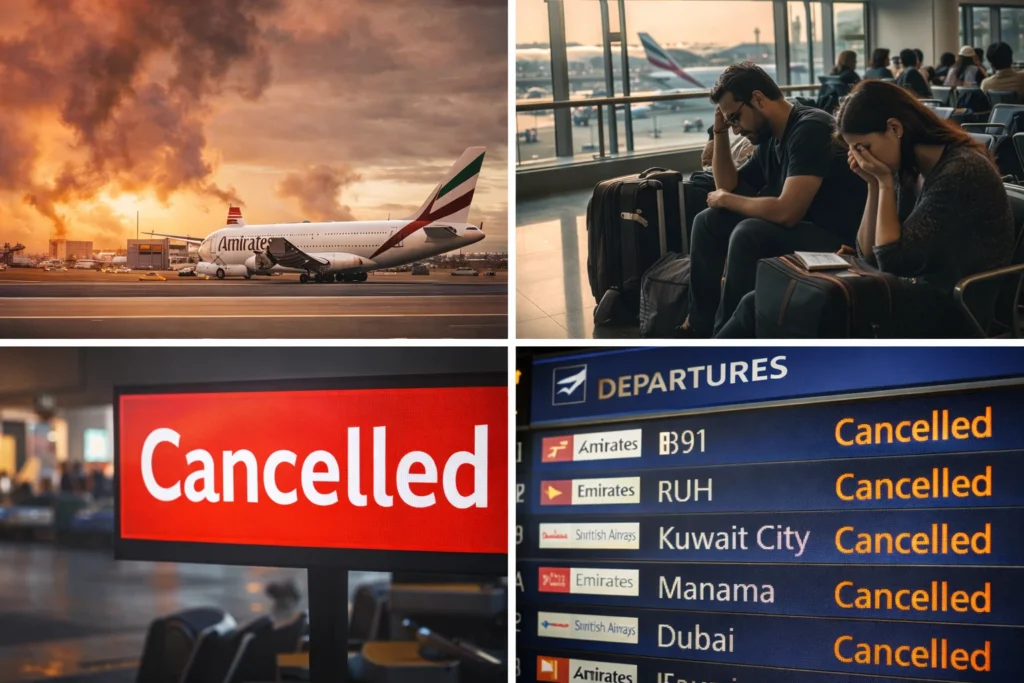
Brazil’s aviation system experienced widespread disruption after airlines cancelled more than 20 scheduled flights across major hubs. Airlines including United, LATAM, American Airlines, Delta Air Lines and Azul removed several domestic and international services from their schedules. The cancellations impacted routes connecting São Paulo, Rio de Janeiro, Brasília and other key destinations.
Both long-haul and short-haul flights were affected, which created challenges for passengers traveling within Brazil and abroad. Aviation experts note that disruptions concentrated at major hub airports can quickly spread across interconnected networks.
Brazil’s aviation infrastructure plays a vital role in domestic mobility because of the country’s size. Therefore, even limited operational issues can affect thousands of passengers.
International Routes Cancelled at São Paulo-Guarulhos
São Paulo-Guarulhos International Airport experienced several long-haul cancellations involving flights to the United States. United Airlines cancelled Flight UAL148 to Newark Liberty International Airport. LATAM Airlines suspended Flight TAM8180 to New York’s John F. Kennedy International Airport. American Airlines removed Flight AAL950, while Delta Air Lines cancelled Flight DAL226, both scheduled for JFK.
These cancellations reduced overnight international capacity at Brazil’s busiest airport. Long-haul routes connect Brazil to global business and tourism markets. Therefore, disruptions affected travelers with connecting flights across North America and Europe.
Large aircraft typically operate these routes, which means each cancellation impacted a significant number of passengers.
Brasília Domestic Route Interrupted
At Presidente Juscelino Kubitschek International Airport in Brasília, LATAM cancelled Flight TAM3536 to Santos Dumont Airport in Rio de Janeiro. This route serves as a major corridor for government officials, business travelers and frequent commuters.
The removal of this service created additional pressure on remaining flights operating between Brazil’s capital and Rio de Janeiro. High demand for this route means limited flexibility when disruptions occur.
Regional Connectivity Affected in Campinas
Viracopos International Airport in Campinas also experienced cancellations that reduced regional connectivity. Azul Conecta cancelled Flight ACN5144 to Jacarepaguá, while Azul Linhas Aéreas suspended Flight AZU4590 to Ribeirão Preto.
These short-haul routes play a crucial role in linking smaller cities with major urban centers. Regional aviation supports business activity and tourism growth by providing frequent and flexible travel options. Therefore, even limited cancellations can disrupt travel plans for local passengers.
Congonhas Airport Faces Highest Number of Cancellations
The most significant disruption occurred at São Paulo-Congonhas Airport, one of Brazil’s busiest domestic hubs. Multiple airlines cancelled flights connecting São Paulo with Santos Dumont, Goiânia, Navegantes, Belo Horizonte, Porto Alegre and Rio de Janeiro–Galeão.
The São Paulo–Rio de Janeiro air bridge remains one of the busiest routes in the country. Several cancellations along this corridor reduced available seats and forced travelers to seek alternative itineraries.
Congonhas relies heavily on tight scheduling and rapid aircraft turnaround. Operational challenges at this airport can quickly cascade into broader network disruptions.
Santos Dumont Airport Experiences Additional Pressure
At Rio de Janeiro’s Santos Dumont Airport, airlines cancelled multiple departures including two GOL flights to São Paulo-Congonhas and one LATAM service to Brasília. Santos Dumont operates within strict capacity limits due to its urban location. Therefore, any schedule adjustment affects passenger flow significantly.
Travelers experienced longer wait times and reduced flexibility when rebooking flights. High-frequency domestic routes typically offer multiple daily departures. However, cancellations reduce this flexibility.
Galeão Airport Impacted by Domestic and International Changes
Rio de Janeiro–Galeão International Airport recorded several cancellations involving long-haul and domestic routes. Delta Air Lines cancelled two departures to New York JFK, while American Airlines removed one similar service. A GOL domestic flight to São Paulo-Congonhas was also suspended.
These cancellations reduced transcontinental connectivity between Brazil and the United States. Long-haul disruptions often trigger chain reactions across airline schedules due to aircraft rotation and crew planning.
Passenger Challenges and Network Effects
Passengers affected by the cancellations faced various challenges, including rebooking delays, limited seat availability and disrupted travel connections. Business travelers experienced schedule changes that affected meetings and events. Leisure travelers encountered uncertainty during peak travel periods.
Customer service teams worked to assist passengers with alternative routes. However, remaining flights often operated near capacity, which reduced flexibility.
Network-level disruptions require airlines to rebalance resources quickly. Aircraft repositioning, crew assignments and maintenance schedules all influence recovery timelines.
Operational Factors Behind the Disruptions
The variety of aircraft types involved suggests broader operational adjustments rather than a single technical issue. Airlines may cancel flights to protect network stability when faced with operational constraints.
Possible factors include crew availability, aircraft maintenance schedules and weather-related challenges. Brazilian aviation authorities continue to monitor operational performance to ensure safety and reliability.
Brazil’s complex air network relies on major hubs such as São Paulo and Rio de Janeiro. When disruptions occur in these cities, the effects spread across the national system.
Economic and Tourism Implications
Flight cancellations can influence tourism flows, especially when long-haul routes to North America experience disruption. International visitors contribute significantly to Brazil’s hospitality sector, particularly in cities like Rio de Janeiro and São Paulo.
Domestic tourism also depends on reliable air connectivity. Regions connected by short-haul flights rely on consistent schedules to support local economies.
Airlines and tourism boards continue to focus on restoring passenger confidence by improving communication and operational transparency.
Outlook for Brazil’s Aviation Recovery
Airlines operating in Brazil aim to stabilize schedules and reduce future disruptions. Enhanced planning and coordination among airlines, airports and regulators may help improve reliability.
Brazil remains one of the largest aviation markets in Latin America. As demand for travel continues to grow, maintaining stable operations will remain essential for both domestic and international connectivity.
Travelers are advised to monitor flight updates and confirm schedules before departure. While disruptions may occur occasionally, industry efforts focus on restoring efficiency and ensuring smoother travel experiences across Brazil’s aviation network.
For more travel news like this, keep reading Global Travel Wire