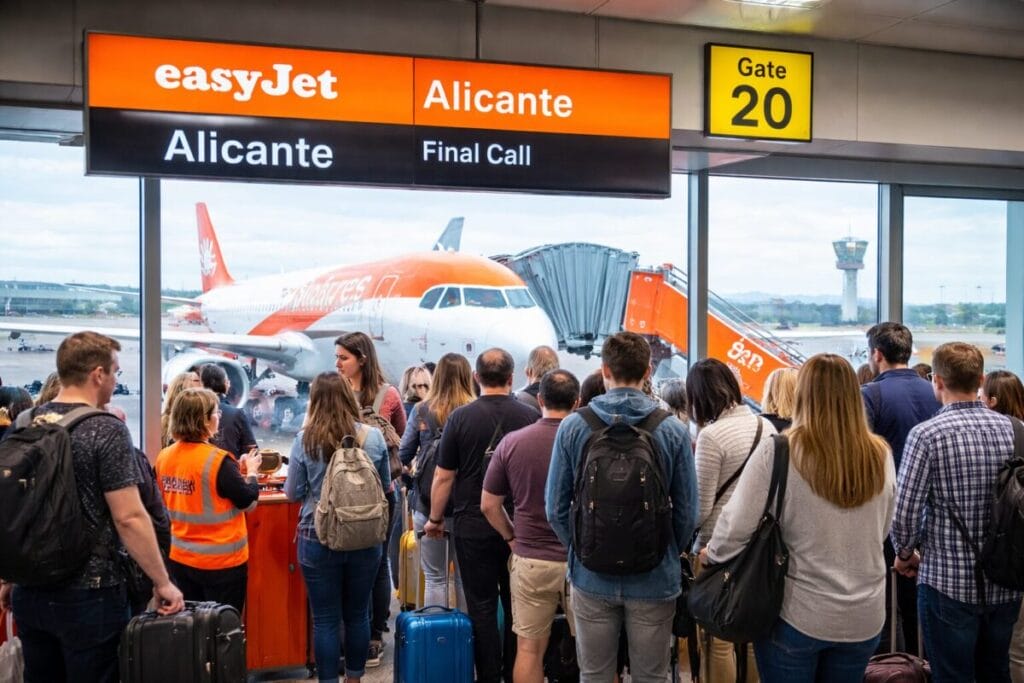
A boarding dispute involving easyJet at London Luton Airport has drawn attention across the UK and Spain travel market. The incident involved a passenger traveling to Alicante who faced denied boarding after a disagreement over cabin baggage size and conduct at the gate.
The situation began during routine pre-boarding checks but quickly escalated into a wider discussion about airline authority, passenger rights, and strict baggage enforcement. As low-cost carriers refine operational procedures, travelers increasingly encounter detailed compliance checks before boarding.
Dispute Begins During Routine Baggage Inspection
The passenger, an NHS doctor traveling for a short holiday, arrived at the boarding gate with only hand luggage. Staff asked her to place her backpack into a baggage sizer to verify compliance with airline size rules.
She stated that the bag initially appeared oversized but fit within the gauge after she removed a jacket. According to her account, the bag then met the airline’s permitted dimensions without force.
However, tensions reportedly rose during the exchange with ground staff. A gesture intended to demonstrate compliance allegedly caused concern among employees. The airline later cited conduct issues as a key factor behind the decision to deny boarding.
Despite an apology and an offer to pay additional baggage fees, the passenger could not board the flight to Alicante.
Airline Response Highlights Conduct Standards
easyJet confirmed that cabin baggage checks form part of standard boarding procedures across European airports. These checks help ensure fairness among passengers who pay for additional cabin baggage allowances.
The airline stated that the decision to refuse transport involved behavioral considerations rather than baggage size alone. According to the airline’s policy, staff may deny boarding if they consider behavior disruptive or unsafe.
Airlines maintain strict rules regarding interactions with employees to protect safety and maintain orderly operations. While details of internal assessments remain confidential, the airline emphasized that staff safety remains a priority.
Growing Importance of Cabin Baggage Enforcement Across Europe
Low-cost airlines across Europe increasingly rely on ancillary fees, including baggage charges, to maintain competitive ticket pricing. As a result, cabin baggage policies have become stricter, especially on busy leisure routes between the United Kingdom and Spain.
Many airlines include a small personal item in base fares while charging for larger carry-on luggage. Boarding gate checks ensure that passengers comply with these rules before entering the aircraft cabin.
London Luton Airport, a major hub for low-cost carriers, regularly conducts size verification using metal sizer frames. These procedures help avoid delays caused by limited overhead bin space.
Travelers often face disputes when luggage measurements sit close to size limits. Even small adjustments can influence whether staff approve or reject a bag.
Alicante Route Reflects Strong Leisure Travel Demand
The London Luton to Alicante route remains popular among British holidaymakers seeking Mediterranean destinations. Alicante offers beaches, cultural attractions, and warm weather, which attract year-round visitors.
Strong demand for leisure travel increases pressure on airlines to maintain efficient boarding processes. Fast turnaround times help airlines maximize aircraft utilization and reduce operational costs.
Airlines therefore enforce baggage rules consistently to prevent delays that could affect entire flight schedules. However, strict enforcement sometimes creates friction with passengers who feel rules lack flexibility.
Legal Authority Allows Airlines to Deny Boarding
Airlines hold the legal authority to refuse transport under specific circumstances. Conditions of carriage allow carriers to deny boarding when passengers fail to comply with instructions or when staff consider behavior disruptive.
These rules align with aviation safety standards established across Europe. While passengers may receive compensation when airlines deny boarding due to overbooking, cases involving conduct often fall outside automatic reimbursement schemes.
Passengers who believe decisions were unfair can submit formal complaints or seek resolution through consumer protection channels. Aviation regulators may review cases when disputes escalate.
Impact on Customer Experience and Airline Reputation
Incidents like this attract widespread attention because social media amplifies passenger experiences quickly. Airlines must balance operational efficiency with customer satisfaction to maintain brand reputation.
Clear communication about baggage policies and respectful interactions between staff and passengers play essential roles in avoiding conflicts. Travelers expect consistent enforcement and transparent explanations when issues arise.
At the same time, airlines face increasing pressure to maintain strict procedures as passenger numbers grow and operational margins remain tight.
Advice for Travelers Flying Between the UK and Spain
Travelers can reduce stress by reviewing airline baggage policies carefully before arriving at the airport. Measuring bags at home and understanding fare conditions can prevent last-minute surprises at boarding gates.
Arriving early allows extra time to resolve issues if staff request adjustments or additional payments. Maintaining calm and cooperative communication also helps ensure smoother interactions during inspections.
Frequent travelers recommend keeping essential items in smaller personal bags that fit easily within airline limits. Flexibility and preparation remain key strategies for navigating modern air travel.
Broader Implications for European Tourism Travel
The easyJet dispute reflects wider changes across the aviation industry. Airlines continue to refine revenue strategies while managing growing passenger demand across popular tourism corridors.
Routes between the United Kingdom and Spain represent some of Europe’s busiest leisure travel markets. Ensuring smooth boarding experiences remains vital for maintaining traveler confidence and supporting tourism growth.
Although isolated disputes may occur, strong safety standards and efficient operational practices continue to define modern aviation. As travel demand increases, clear policies and respectful communication will remain essential for both airlines and passengers.
For more travel news like this, keep reading Global Travel Wire