



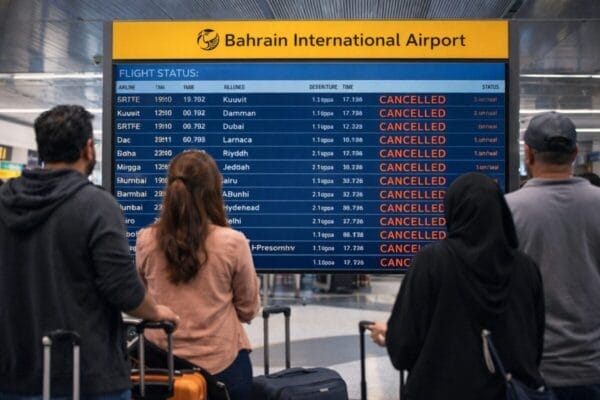
Thousands of travelers found themselves stranded at Qatar’s Hamad International Airport after a massive disruption forced airlines to cancel hundreds of flights and delay several others. The situation unfolded amid a combination of regional airspace closures, challenging weather conditions, and operational pressures that significantly affected air travel across the Middle East.
Hamad International Airport, widely recognized as one of the world’s busiest aviation hubs, experienced one of its most turbulent days in recent years. The disruption affected both departing and connecting passengers, leaving travelers uncertain about when they would be able to continue their journeys.
Hundreds of Flights Cancelled
Airport authorities reported that 287 flights were cancelled while at least one additional flight experienced major delays during the disruption. The cancellations affected numerous international routes connecting Doha with destinations across Asia, Europe, Australia, and the Middle East.
As a major global transit hub, Hamad International Airport handles tens of millions of passengers each year. The sudden halt in flight operations created ripple effects across global travel networks, particularly for passengers using Doha as a connecting point for long-haul journeys.
Many travelers were forced to remain inside airport terminals or seek temporary accommodation while waiting for updates from airlines regarding alternative flights.
Major Airlines Affected
Several prominent airlines experienced disruptions due to the operational challenges at the airport. Carriers including Flydubai, Saudia, Etihad Airways, Oman Air, and other international airlines were among those impacted by the cancellations.
The largest number of affected flights involved Qatar’s national airline, which operates a significant portion of departures from the airport. With aircraft unable to depart or arrive due to restricted airspace and operational complications, airlines had limited options to reroute flights.
International carriers operating routes to destinations such as Australia, Southeast Asia, and Europe were also forced to adjust their schedules, leading to further delays for travelers worldwide.
Airspace Restrictions Across the Region
One of the primary causes behind the widespread flight disruption was the temporary closure of key airspace corridors in parts of the Middle East. Aviation authorities imposed restrictions due to rising geopolitical tensions and safety concerns in the region.
Airspace closures can significantly disrupt airline operations because aircraft rely on carefully planned routes that avoid restricted zones. When airspace suddenly becomes unavailable, airlines must either reroute flights through longer paths or cancel services altogether.
In this case, several critical aviation corridors connecting the Gulf region with Europe and Asia were affected, leaving airlines with limited routing options.
The restrictions forced many airlines to suspend flights temporarily until safe travel routes could be confirmed by aviation authorities.
Weather Conditions Complicate Operations
Alongside the airspace restrictions, severe weather conditions also played a role in disrupting operations. Atmospheric disturbances and storm activity in parts of the region made flight scheduling even more challenging.
Weather events can affect airport visibility, runway operations, and aircraft safety. When combined with airspace limitations, the result can be significant delays or cancellations.
Air traffic controllers and airport operators must prioritize safety during such conditions, often leading to reduced flight capacity until the weather improves.
Thousands of Passengers Stranded
The immediate impact of the disruption was felt by thousands of passengers who were either waiting to depart from Doha or attempting to connect through the airport.
Travelers heading to destinations such as Australia, South Asia, Southeast Asia, and the Middle East experienced particularly severe delays. Some passengers had already boarded aircraft before being informed of cancellations, while others remained in airport lounges awaiting further instructions.
Families traveling on holiday, business travelers attending meetings, and students heading to universities abroad were all affected by the sudden disruption.
Airport terminals quickly became crowded as passengers sought information from airline counters regarding rebooking options and accommodation arrangements.
Airlines Provide Assistance
Airlines responded by implementing emergency passenger assistance measures. Many carriers arranged hotel accommodations for stranded travelers and distributed meal vouchers to help passengers during extended waiting periods.
Customer service teams worked to rebook passengers on alternative flights where possible, though limited aircraft availability and restricted airspace made rescheduling difficult.
Airlines also issued travel alerts advising passengers to check flight status updates before arriving at the airport.
Despite these efforts, the scale of the disruption meant that some passengers faced extended delays before securing new travel arrangements.
Global Travel Ripple Effects
Because Hamad International Airport serves as a major connection hub linking continents, the disruptions extended far beyond Qatar. Flights departing from Europe, Asia, and Australia that were scheduled to connect through Doha also experienced delays or cancellations.
Airlines operating intercontinental routes depend on reliable hub airports to maintain global schedules. When disruptions occur at a major hub, delays can spread across multiple flight networks.
Travel analysts say such disruptions highlight the fragile nature of international aviation systems, where a single event can affect thousands of passengers across the world.
Advice for Travelers
Travel authorities recommend that passengers traveling through the Middle East remain alert to possible flight disruptions. Travelers should monitor airline notifications and confirm flight status before heading to the airport.
Flexible travel plans and travel insurance may help reduce inconvenience during periods of unexpected operational disruption.
Passengers are also advised to allow additional time for connections when traveling through major aviation hubs.
Outlook for Air Travel Recovery
Airport authorities and airlines are working closely with aviation regulators to restore normal flight operations as quickly as possible. The reopening of restricted airspace and improvement in weather conditions will be key factors in stabilizing flight schedules.
While Hamad International Airport has a reputation for efficiency and modern infrastructure, the recent events demonstrate how quickly regional factors can influence global aviation.
As airlines gradually resume normal services, travelers can expect flight operations to return to standard levels once safety conditions allow.
For now, passengers are encouraged to stay informed and remain patient while airlines and airport authorities manage the complex process of restoring normal air travel operations.
For more travel news like this, keep reading Global Travel Wire