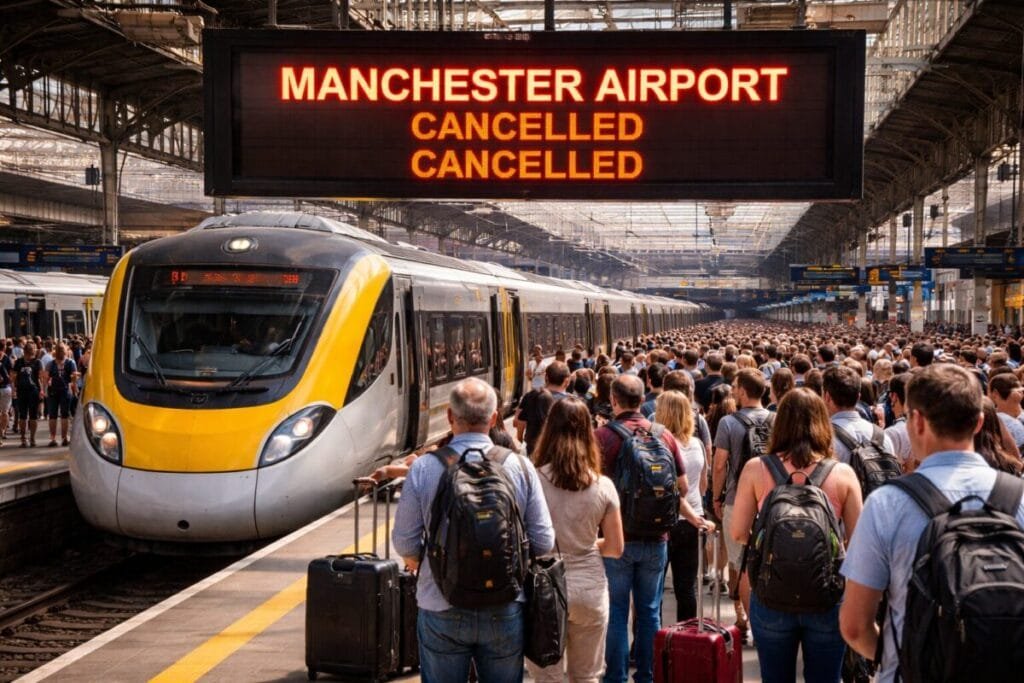
Travelers faced significant disruption after a technical failure halted train services between Manchester Piccadilly and Manchester Airport. A points failure near Heald Green caused immediate cancellations and delays across several rail operators. The affected line serves as a critical transport link for both airport passengers and daily commuters.
Rail engineers arrived on-site to fix the issue. However, authorities warned that disruptions could continue for several hours. Thousands of passengers experienced sudden schedule changes and struggled to find alternative routes. The disruption highlighted how technical problems can quickly affect travel across a busy transport corridor.
Several rail operators experienced service interruptions, including Northern, TransPennine Express, and Transport for Wales. With limited rail alternatives available, travelers turned to other forms of transport to reach the airport or city center.
Business and leisure travelers face immediate travel challenges
The disruption created serious challenges for business travelers who depend on reliable rail connections. Many passengers risked missing meetings, events, or flights due to delays. Airport rail services usually provide fast and predictable travel, so cancellations created unexpected stress.
Leisure travelers also experienced significant inconvenience. Manchester Airport ranks among the busiest airports in the United Kingdom. As a result, any disruption to transport links affects thousands of holidaymakers and international visitors.
Families traveling for vacations faced higher costs as they searched for taxis or ride-sharing options. Tourists unfamiliar with local transport systems encountered additional difficulties navigating alternative routes. The sudden shift in travel plans added pressure for those already managing tight schedules.
Alternative transport options help passengers navigate disruption
Transport authorities encouraged passengers to use alternative routes while engineers worked to resolve the issue. The Metrolink tram network offered one of the main alternatives between Manchester city center and the airport. Bus services also continued to operate, although increased demand led to crowded conditions.
Travelers who needed faster options considered taxis or ride-sharing services. Although more expensive, these options provided flexibility for passengers trying to catch flights. Many travelers chose to leave earlier than planned to avoid further delays.
Experts recommend checking live transport updates during disruptions. Real-time information helps passengers adjust plans quickly and reduce uncertainty. Travelers should also confirm airline schedules, as transport disruptions sometimes affect flight check-in timing.
Rail disruption highlights vulnerability of critical airport links
Rail connections play a vital role in airport accessibility across the United Kingdom. Manchester Airport relies heavily on rail services to move passengers efficiently between the terminal and surrounding regions. When technical failures occur, alternative transport networks must absorb increased demand.
Infrastructure experts often emphasize the importance of maintenance and monitoring systems to reduce disruptions. Modern railway networks depend on complex signaling and switching systems. Even minor technical faults can create widespread delays across multiple routes.
The timing of this disruption added further complexity. Scheduled engineering works planned for the weekend increased concerns about continued travel difficulties. Travelers preparing for upcoming journeys faced uncertainty about future service reliability.
Tourism impact extends beyond local commuters
Travel disruptions at major transport hubs often create ripple effects across the tourism industry. Hotels, tour operators, and airport services depend on smooth passenger movement. When rail links fail, travelers may arrive late, miss connections, or change plans entirely.
International tourists arriving at Manchester Airport rely on rail services to reach nearby cities quickly. Cancellations forced many visitors to adjust itineraries or rely on unfamiliar transport options. These challenges can affect visitor experiences and overall travel satisfaction.
Despite the disruption, local transport networks showed flexibility by providing alternatives. City authorities often encourage diversified transport systems to maintain mobility during unexpected events. Integrated transport planning can help reduce pressure during emergencies.
Passenger rights and travel planning become essential during delays
Passengers affected by rail cancellations should understand their travel rights. Train operators typically provide refunds or alternative arrangements for cancelled services. Compensation may apply depending on delay length and specific circumstances.
Travel insurance can also provide support in cases where delays cause missed flights or additional costs. Travelers should review policies before journeys to understand coverage. Keeping receipts and documentation helps when making claims later.
Experts recommend allowing extra travel time when disruptions occur. Early departures reduce stress and improve chances of reaching destinations on time. Monitoring official service updates remains one of the most effective ways to stay informed.
Lessons for future travel resilience
The Manchester Airport rail disruption demonstrates the importance of resilient transport networks. Airports require dependable connections to support tourism, business travel, and regional mobility. Authorities continue to invest in infrastructure upgrades to improve reliability.
Technology improvements, predictive maintenance, and better communication systems can help reduce disruption impacts. Transport planners increasingly focus on creating flexible networks that allow quick adjustments during emergencies.
For travelers, preparation remains essential. Checking travel updates, planning backup routes, and allowing extra time can reduce stress during unexpected disruptions. As rail networks grow more complex, both operators and passengers must adapt to ensure smoother travel experiences.
Although technical failures cannot always be avoided, effective response strategies and clear communication help minimize disruption. The recent incident highlights the need for ongoing investment and planning to maintain reliable access to major airports and tourism gateways.
For more travel news like this, keep reading Global Travel Wire