




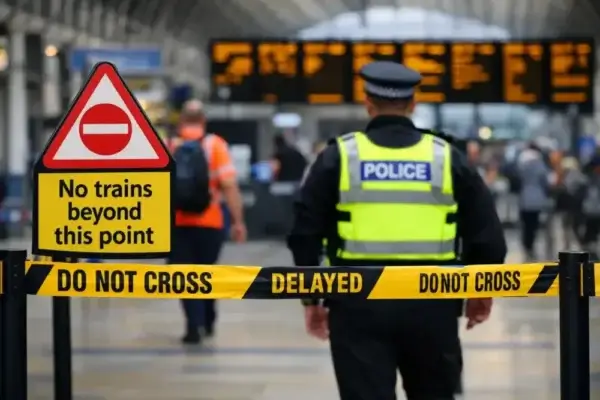





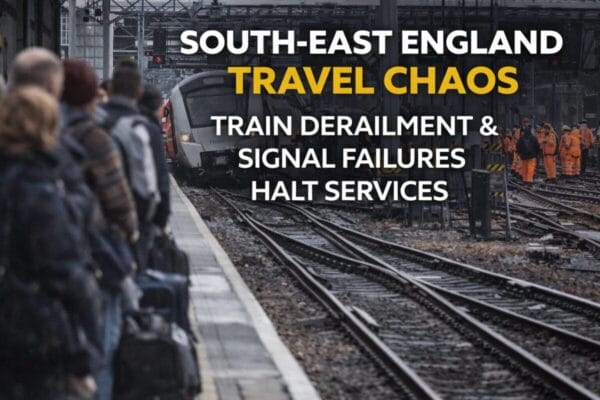
Rail passengers across south-east England are facing severe travel disruption after a combination of a train derailment and major signalling failures brought large sections of the network to a standstill. The incident has prompted an urgent “do not travel” warning, leaving commuters, leisure travelers, and tourists scrambling for alternatives as services operated by Southern, Thameslink, and Gatwick Express remain heavily affected.
The disruption began early in the day following a derailment inside Selhurst Depot, a key maintenance and operational hub in south-east London. Although the derailment did not occur on a passenger route, its location has had a far-reaching impact on train availability across the region. Compounding the problem, a separate signalling failure between London Blackfriars and Norwood Junction drastically reduced the number of usable tracks, forcing remaining services to operate at reduced speeds.
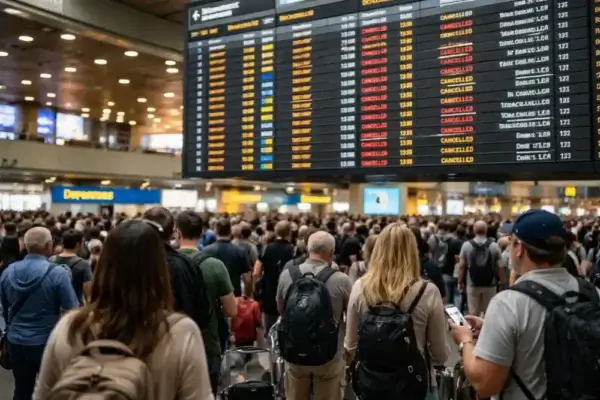
Together, these incidents have created a perfect storm for the region’s rail network. With trains unable to enter or leave depots as planned and signalling restrictions limiting capacity on one of the busiest corridors into central London, operators were forced to cancel or severely curtail services across a wide area of south-east England.
Govia Thameslink Railway, which operates one of the largest and most complex rail franchises in the UK, issued an early-morning alert advising passengers not to travel unless absolutely necessary. The operator warned that only a very limited service could be provided and that delays of up to an hour should be expected for those who must travel. Passengers were urged to check journey information frequently and consider alternative modes of transport.
The scale of disruption has been extensive. Routes linking key commuter towns and major destinations have been affected, including services between London and Sussex, Kent, Bedfordshire, and Cambridgeshire. Trains connecting London Bridge with East Grinstead, Brighton with Cambridge, Orpington with Luton, and Bedford with Three Bridges have all experienced cancellations or diversions. Other services have been truncated, running only on partial sections of their usual routes.
For travelers heading to or from Gatwick Airport, the situation has been particularly challenging. Gatwick Express services have been disrupted, complicating airport transfers for international tourists and business travelers. Many passengers have reported overcrowding on replacement services and increased pressure on road transport as travelers turn to taxis, coaches, and private vehicles.
The impact is being felt most acutely during peak commuting hours, when the network typically carries tens of thousands of passengers into and out of London. Govia Thameslink Railway accounts for a significant share of daily rail journeys in the UK, and disruption on this scale inevitably ripples across the wider transport system. Underground lines, buses, and major roads in south London and surrounding counties have all experienced knock-on congestion.
Tourism and hospitality businesses across south-east England are also feeling the effects. Day-trippers, theatre-goers, and visitors with pre-booked attractions have faced missed reservations and delayed arrivals. Hotels near major stations and airports have reported an increase in last-minute changes, as travelers adjust plans or extend stays due to rail uncertainty.
Rail engineers and infrastructure teams have been working to resolve both the depot derailment and the signalling fault, but no definitive timeline has been provided for a full return to normal services. Safety checks, repairs, and system testing must be completed before operations can resume at full capacity, and authorities have cautioned that disruption may continue throughout the day and potentially beyond.
The timing of the incident has added to public frustration, as it comes amid wider changes in the UK rail industry. The government is in the process of bringing several major rail operators under public ownership as part of a broader reform aimed at improving reliability, accountability, and passenger experience. While proponents argue that nationalisation will lead to long-term improvements, events like this highlight the complexity of maintaining and modernising an aging and heavily used rail network.
Passenger groups have renewed calls for greater resilience in rail infrastructure, particularly in high-density regions such as south-east England. Issues at depots and signalling centres, while sometimes unseen by the public, can have disproportionate effects when failures occur. Industry experts note that investment in maintenance, staff training, and contingency planning will be critical to reducing the frequency and severity of such disruptions.
For now, passengers are being advised to avoid rail travel in the affected areas where possible. Those who must travel are encouraged to allow significantly extra time, remain flexible with plans, and follow official service updates closely. Many employers across the region have activated remote-working policies in response to the disruption, helping to ease pressure on the transport network.
Despite the current chaos, rail operators have stressed that safety remains the top priority and that services will only resume fully once all systems are confirmed to be operating correctly. Compensation and refund arrangements are expected to be made available to affected passengers, in line with passenger rights regulations.
As south-east England works through the fallout from this major rail failure, the incident serves as a stark reminder of how dependent the region’s economy, tourism, and daily life are on reliable public transport. Until normal service is restored, travelers are urged to plan ahead, stay informed, and consider alternative ways to reach their destinations.
For more travel news like this, keep reading Global Travel Wire