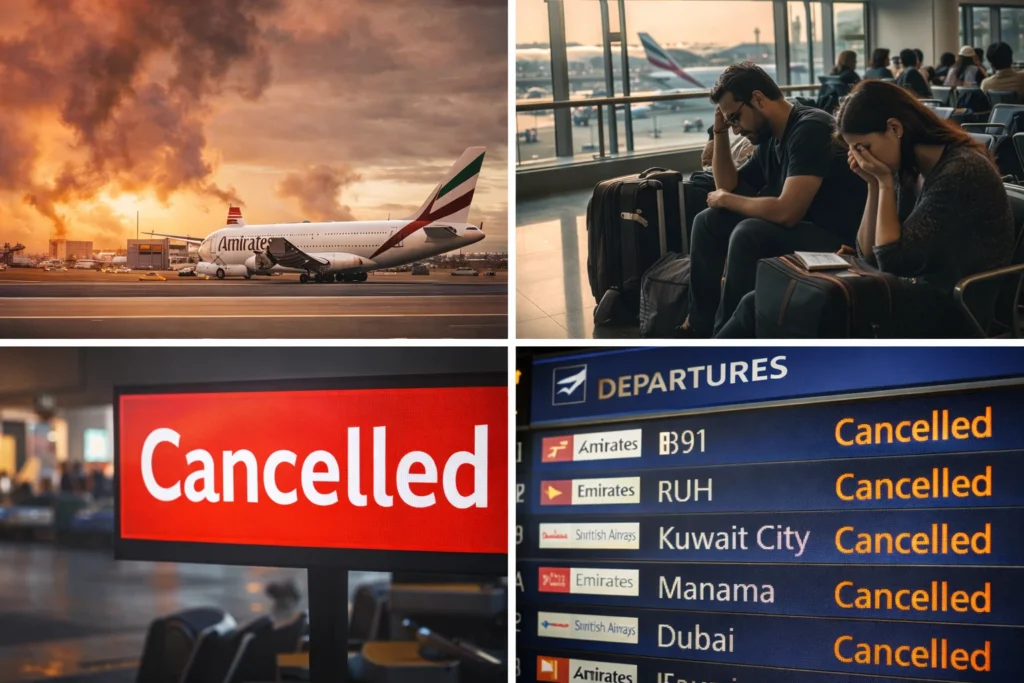
Air travel across parts of Southeast and East Asia faced major disruption after airlines cancelled more than 70 scheduled departures. The cancellations affected airports in Indonesia, Malaysia, Laos, Taiwan, and Hong Kong. Passengers traveling to destinations such as Jakarta, Singapore, Sydney, Bangkok, New York, Boston, and San Francisco experienced sudden changes to their itineraries.
The pattern of cancellations spanned domestic, regional, and long-haul routes. Several identical services were withdrawn on consecutive days, which signals sustained operational strain rather than isolated adjustments.
Major carriers including Garuda Indonesia, Batik Air, Cathay Pacific, and United Airlines adjusted schedules as pressure mounted across interconnected aviation networks.
Indonesia Records the Highest Number of Disruptions
Indonesia absorbed the largest share of cancellations, with 64 departures removed from schedules across multiple airports. Jakarta’s Soekarno-Hatta International Airport accounted for the highest concentration.
Airlines cancelled flights linking Jakarta to Makassar, Lombok, Yogyakarta, Palembang, Medan, Surabaya, Manado, Samarinda, and Palangkaraya. International routes to Singapore and Kuala Lumpur were also affected. The recurrence of cancellations on these routes indicates extended network instability.
Makassar’s Sultan Hasanuddin International Airport experienced repeated cancellations to Jakarta, Sentani, and Palu across several days. Bali’s Ngurah Rai International Airport saw disruptions to Sydney-bound services and return flights to Jakarta.
Surabaya, Medan, and Palembang also recorded suspended connections, weakening domestic east–west travel corridors. Indonesia’s large geography increases reliance on aviation for business and tourism. Therefore, repeated cancellations created notable disruption for both residents and visitors.
Malaysia and Laos Experience Regional Impact
Malaysia recorded fewer cancellations, yet the affected routes hold strong regional importance. Kuala Lumpur International Airport saw services to Bangkok Don Mueang and Singapore Changi removed from departure boards. These routes serve as key connectors within Southeast Asia’s high-density air network.
Laos experienced concentrated disruptions from Wattay International Airport in Vientiane. Airlines cancelled repeated evening departures to Changsha in China and a domestic service to Xieng Khouang. The repetition of identical routes suggests wider scheduling challenges rather than a single-day issue.
Regional aviation relies heavily on smooth transit through hubs such as Kuala Lumpur and Singapore. When services reduce on these corridors, passenger flows across neighboring countries feel the effect.
Taiwan Sees Long-Haul Cancellations
At Taiwan Taoyuan International Airport, airlines cancelled long-haul flights to New York, San Francisco, and Bangkok. These services connect East Asia with North America and Southeast Asia. The removal of intercontinental flights places pressure on travelers who depend on transpacific connections.
Long-haul operations require complex coordination of aircraft rotations and crew scheduling. When disruptions occur, airlines may suspend specific routes to protect network stability.
Passengers scheduled for North America often face longer rebooking times due to limited seat availability. Such cancellations influence both tourism and business travel flows.
Hong Kong Experiences Transpacific Disruptions
Hong Kong International Airport recorded five long-haul cancellations across two days. Flights to New York and Boston did not operate as scheduled. These services typically use wide-body aircraft that carry large passenger loads.
Hong Kong functions as a major transit hub linking Asia with North America and Europe. Therefore, disruptions at this airport can ripple through global travel networks.
Repeated long-haul cancellations suggest network-level adjustments, possibly linked to aircraft allocation or operational recovery strategies.
Network-Level Challenges Behind the Disruptions
Across all affected markets, consistent patterns emerge. Airlines cancelled identical routes over consecutive days. Major hub airports absorbed the majority of disruptions. Domestic, regional, and long-haul services all experienced impact simultaneously.
These trends point toward network-level constraints rather than isolated technical problems. Airlines may adjust schedules to manage aircraft utilization, crew assignments, or maintenance requirements.
When airlines rebalance capacity, they often prioritize core routes while suspending others temporarily. This approach reduces cascading delays but increases short-term passenger inconvenience.
Passenger Impact Across the Region
Travelers across Asia encountered rebooking delays, reduced seat options, and uncertain departure times. Domestic passengers in Indonesia faced the highest volume of cancellations, particularly on routes connecting major cities.
International travelers transiting through Taiwan and Hong Kong experienced greater complexity due to long-haul route suspensions. Many passengers required alternative connections via other regional hubs.
Airlines activated customer support systems to handle rescheduling requests. However, peak travel periods and limited capacity on replacement flights added pressure.
Business travelers, tourists, and migrant workers all felt the impact. In Southeast Asia, aviation supports tourism-dependent economies and cross-border labor mobility. Therefore, prolonged instability may influence short-term travel confidence.
Economic and Tourism Implications
The cancellations occurred across destinations known for strong tourism demand. Bali, Jakarta, Hong Kong, and Kuala Lumpur attract millions of international visitors annually. Reduced connectivity can temporarily slow inbound travel flows.
Governments in the region continue to promote tourism recovery and regional integration. Stable air connectivity remains essential to these strategies. Airlines and airport authorities will likely focus on restoring reliability and rebuilding passenger confidence.
Outlook for Asian Aviation Stability
Air travel demand across Asia continues to grow as tourism rebounds. However, the recent cancellations highlight the complexity of managing large-scale networks across diverse geographies.
Airlines are expected to adjust schedules, reallocate aircraft, and enhance operational coordination in the coming weeks. Clear communication with passengers will remain critical during recovery efforts.
While disruptions may persist in the short term, major hubs across Indonesia, Malaysia, Laos, Taiwan, and Hong Kong continue to play essential roles in global aviation. As airlines stabilize operations, travelers can expect gradual improvements in connectivity across domestic, regional, and long-haul routes.
For more travel news like this, keep reading Global Travel Wire