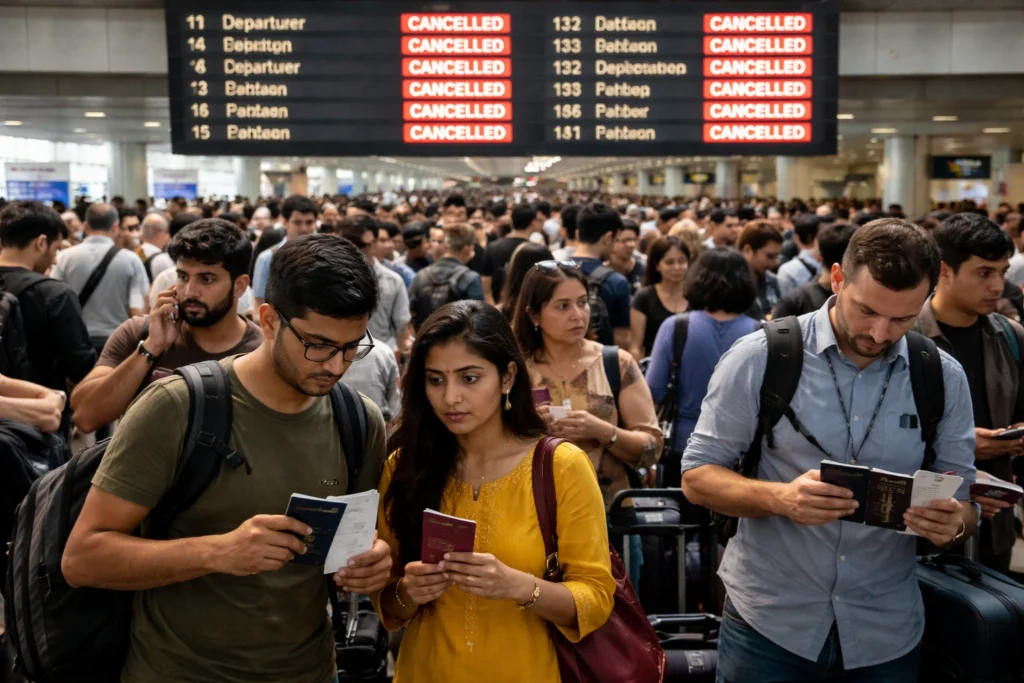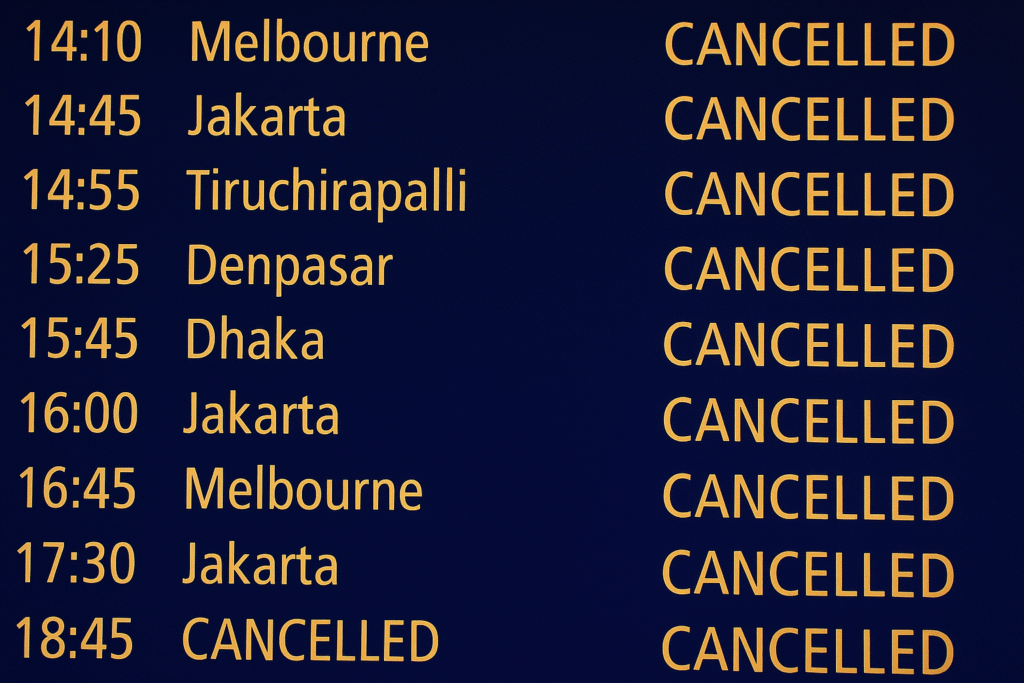
Singapore’s Changi Airport faces a new wave of travel disruption this week as 11 key flights are cancelled, impacting travelers bound for Melbourne, Jakarta, Bali, Tiruchirapalli, and Dhaka. Major carriers including Jetstar Airways, Scoot, and Biman Bangladesh Airlines have suspended services on several regional and international routes. The cancellations mark another challenging week for Singapore’s aviation network, one of Asia’s busiest transit hubs.
Jetstar Flights to Melbourne Affected
Jetstar Airways experienced the highest number of cancellations from Singapore, particularly on its long-haul Melbourne route. Three flights bound for Melbourne Tullamarine Airport were grounded this week, affecting departures on Thursday, Friday, and Sunday evenings.
These cancellations disrupted both business and leisure travel, especially for passengers planning weekend trips or connecting flights in Australia. Travelers reported long queues at customer service counters as they sought alternative arrangements or refunds.
Jetstar’s Melbourne service is one of the most popular routes from Singapore, catering to both tourists and frequent fliers. The repeated suspensions over consecutive days signal deeper scheduling or fleet management issues within the airline’s regional network.
Jakarta Route Disruptions Ripple Across Southeast Asia
Scoot Airlines and other regional carriers also cancelled multiple flights between Singapore and Jakarta. The suspended flights included Scoot’s TNU154 on Tuesday and Wednesday, TNU152 on Thursday, and AWQ265 on Wednesday afternoon.
These cancellations hit business travelers particularly hard, as Singapore–Jakarta remains one of Southeast Asia’s busiest routes. The disruptions created a ripple effect across connecting flights within Indonesia, affecting passengers heading to secondary destinations such as Surabaya, Bali, and Medan.
Travelers are advised to verify their itineraries directly with their airlines, as some Jakarta-bound services have been rescheduled or merged with other flights to reduce operational strain.
Southern India Routes See Multiple Cancellations
Two AXB Airlines flights to Tiruchirapalli in southern India were cancelled on Tuesday, one scheduled for 12:30 a.m. and another at 11:25 a.m. The sudden cancellations affected travelers visiting family or conducting business in Tamil Nadu.
With Tiruchirapalli being a key entry point for South Indian travelers, these disruptions caused cascading delays for passengers connecting to other domestic destinations. AXB Airlines has begun notifying passengers of rebooking options and refund procedures, though travelers are urged to monitor updates closely.
Biman Bangladesh Cancels Dhaka Flight
Biman Bangladesh Airlines cancelled its Friday morning flight to Dhaka’s Shahjalal International Airport, further adding to Changi’s growing list of suspensions. The early morning flight, typically used by connecting passengers traveling to other Bangladeshi cities, was removed from the schedule with little notice.
This cancellation caused significant inconvenience for passengers traveling for family or business purposes ahead of the weekend. Airport officials confirmed that alternative arrangements were being coordinated, though delays are expected for those seeking rebookings.
Holiday Travel to Bali Disrupted
Tourists heading to Bali also faced unexpected setbacks when Jetstar Airways cancelled its Wednesday evening flight to Ngurah Rai International Airport. The route, one of Southeast Asia’s most popular leisure connections, saw many passengers scrambling to adjust holiday itineraries.
Travel agencies in Singapore reported a spike in customer inquiries following the cancellation. Some travelers opted to reroute through Kuala Lumpur or Jakarta to reach Bali, while others postponed their trips. Hotels in Bali also noted a rise in rebooking requests from stranded guests awaiting new flight confirmations.
Causes Behind the Cancellations
The current wave of disruptions at Singapore Changi stems from several combined factors. Airlines are grappling with fleet rotations, pilot scheduling shortages, and fluctuating passenger demand. Regional weather patterns have also contributed to flight timing adjustments and cancellations.
Industry analysts highlight that while Changi Airport remains one of the world’s most efficient, it is not immune to the global challenges affecting aviation. With record passenger volumes and tight turnaround schedules, even minor operational hiccups can trigger widespread ripple effects.
Passenger Advice and Precautions
Travelers flying out of Changi this week should remain vigilant and proactive. To minimize stress, follow these key steps:
- Monitor flight status frequently: Use official airline apps or Changi Airport’s live flight tracker for real-time updates.
- Arrive early: Allow extra time for security and rebooking procedures in case of last-minute changes.
- Choose flexible tickets: Opt for fares that permit date changes or refunds when booking regional routes.
- Stay informed: Follow airline social media and official notifications for alerts.
- Contact airlines directly: Rebook or request assistance through verified customer service channels.
Outlook for Singapore’s Aviation Network
Despite this wave of cancellations, Changi Airport continues to operate at near-full capacity, handling thousands of flights weekly. Authorities and airlines are working to reduce disruptions by coordinating fleet schedules and improving crew availability.
Tourism and business travel remain strong across Southeast Asia, and most airlines expect services to normalize soon. However, industry experts caution that fluctuations in demand and weather-related delays could continue to affect punctuality.
For now, travelers are urged to maintain flexibility, plan ahead, and stay informed about changing flight schedules. Changi Airport’s management continues to prioritize efficiency and passenger support, ensuring the region’s key aviation hub remains reliable despite temporary setbacks.
Singapore’s recent wave of flight cancellations underscores the complex balance between growing travel demand and operational logistics. For travelers, preparedness and adaptability are essential. With airlines adjusting routes and frequencies, the best strategy remains simple: stay alert, stay flexible, and expect the unexpected when flying through one of Asia’s busiest airports.
For more travel news like this, keep reading Global Travel Wire