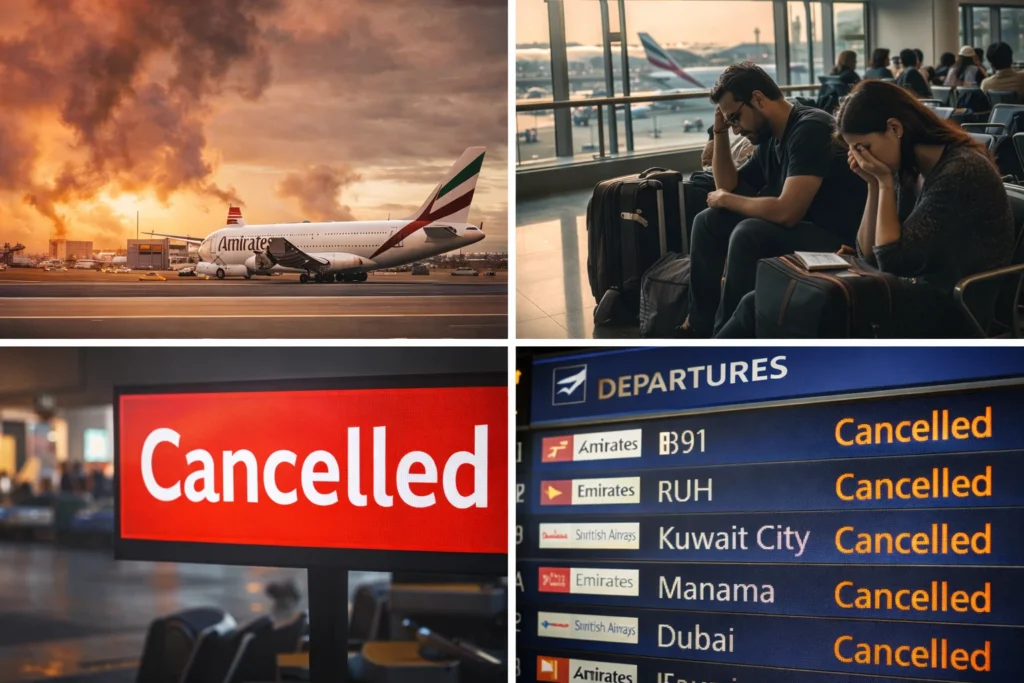
South Korea’s aviation sector faced significant disruption after multiple flight cancellations affected both international and domestic routes. Korean Air and Philippine Airlines cancelled seven scheduled departures from Incheon International Airport and Jeju International Airport. These disruptions impacted travel to major destinations including New York, Boston, Manila, Cheongju, and Yeosu.
The cancellations occurred across several days and involved different aircraft types. This pattern indicates broader operational challenges rather than isolated schedule changes. Travelers experienced delays, rebooking complications, and uncertainty regarding onward journeys.
South Korea plays a key role in global aviation connectivity. Therefore, disruptions at its primary hubs can influence travel across Asia, North America, and beyond.
Incheon International Airport Faces Long-Haul Disruptions
Incheon International Airport recorded the majority of cancelled flights. Five departures were removed from the schedule, including several long-haul services to North America. These routes typically operate with large aircraft that carry hundreds of passengers, which increased the overall impact.
Korean Air cancelled Flight KAL85 to John F. Kennedy International Airport twice on consecutive days. The airline also cancelled Flight KAL81 to New York, scheduled with an Airbus A380. Another cancellation involved Flight KAL91 to Boston Logan International Airport, operated by a Boeing 777-300ER.
Philippine Airlines cancelled Flight PAL403 to Manila, which operates as a major regional connection linking South Korea and Southeast Asia. These cancellations disrupted business travel, tourism, and transit passengers connecting through Incheon.
Repeated cancellations on the New York route highlight ongoing scheduling challenges. Long-haul flights rely on precise aircraft rotation and crew planning. Any operational disruption can quickly affect multiple departures.
Domestic Network Experiences Strain at Jeju Airport
The disruption extended beyond international travel. Jeju International Airport also recorded domestic cancellations, affecting important regional connections.
Korean Air cancelled Flight KAL1708 to Cheongju and Flight KAL1636 to Yeosu. Both services operate with Bombardier CS300 aircraft and provide essential connectivity between Jeju Island and mainland destinations.
Domestic flights play a crucial role in supporting business travel and tourism within South Korea. Reduced flight availability created inconvenience for travelers who depend on frequent connections.
Regional disruptions demonstrate how operational issues can spread throughout an airline network. Even short-haul routes can experience changes when airlines adjust aircraft allocation or crew scheduling.
Aircraft Variety Suggests Network-Level Adjustments
The cancelled flights involved multiple aircraft types, including Airbus A380, Boeing 777-300ER, Airbus A330-300, and Bombardier CS300 models. This diversity indicates that the disruption did not stem from a single fleet problem.
Instead, airlines may have adjusted schedules to manage broader operational constraints. These constraints can include maintenance planning, crew availability, or network balancing.
Widebody aircraft cancellations require significant coordination. Airlines must reposition aircraft, manage crew schedules, and accommodate passengers across multiple routes. Such adjustments often result in additional cancellations or schedule changes.
Passenger Impact and Travel Challenges
Travelers faced several challenges due to the cancellations. Long-haul disruptions often create complex rebooking scenarios because alternative flights may have limited availability.
Passengers traveling to New York and Boston likely experienced extended transit times or rerouted itineraries. Domestic travelers affected by Jeju cancellations may have needed alternative transport options or later departures.
Customer service teams worked to manage high volumes of requests as passengers sought rebooking or refunds. Ground staff also coordinated gate assignments, baggage handling, and flight updates during the disruption period.
Frequent travelers understand that hub airports rely on tightly connected schedules. When one segment fails, multiple connections can experience delays or cancellations.
Operational Challenges in Global Aviation
The recent disruptions reflect broader trends affecting the global aviation industry. Airlines worldwide continue to balance rising demand with operational capacity. Staffing levels, aircraft availability, and weather conditions can all influence flight reliability.
South Korea’s position as a transit hub amplifies the impact of disruptions. Incheon International Airport connects major routes across Asia, Europe, and North America. Therefore, any operational instability affects travelers far beyond local routes.
Airlines often cancel flights proactively to protect network stability. While cancellations inconvenience passengers, they can prevent cascading delays that disrupt larger schedules.
Economic and Tourism Implications
Flight cancellations influence not only airlines but also tourism economies. South Korea attracts international visitors for business, culture, and leisure experiences. Reduced flight availability may affect inbound tourism numbers temporarily.
Hotels, tour operators, and local businesses rely on consistent international arrivals. Therefore, sustained disruptions could influence short-term revenue.
Domestic travel also plays an important role in supporting regional economies. Jeju Island, a popular tourist destination, depends heavily on frequent flights connecting mainland cities.
Guidance for Travelers During Disruptions
Passengers traveling through South Korea should monitor flight status updates regularly. Airlines typically provide notifications through mobile applications and email alerts.
Travelers may benefit from flexible booking options or travel insurance that covers unexpected schedule changes. Early arrival at airports and awareness of alternative routes can reduce stress during disruptions.
Communication between airlines and passengers remains essential during operational challenges. Clear updates help travelers adjust plans and minimize inconvenience.
Outlook for South Korea’s Aviation Stability
The recent cancellations highlight the complexity of managing large airline networks. Korean Air and Philippine Airlines continue to adjust operations to maintain schedule reliability.
As airlines stabilize their networks, passengers can expect gradual improvement in flight availability. Ongoing coordination between airlines and airport authorities will help restore normal operations.
South Korea remains a major global aviation hub with strong connectivity. While disruptions may occur occasionally, the industry’s focus on efficiency and recovery aims to maintain traveler confidence and ensure long-term growth in international and domestic travel.
For more travel news like this, keep reading Global Travel Wire