
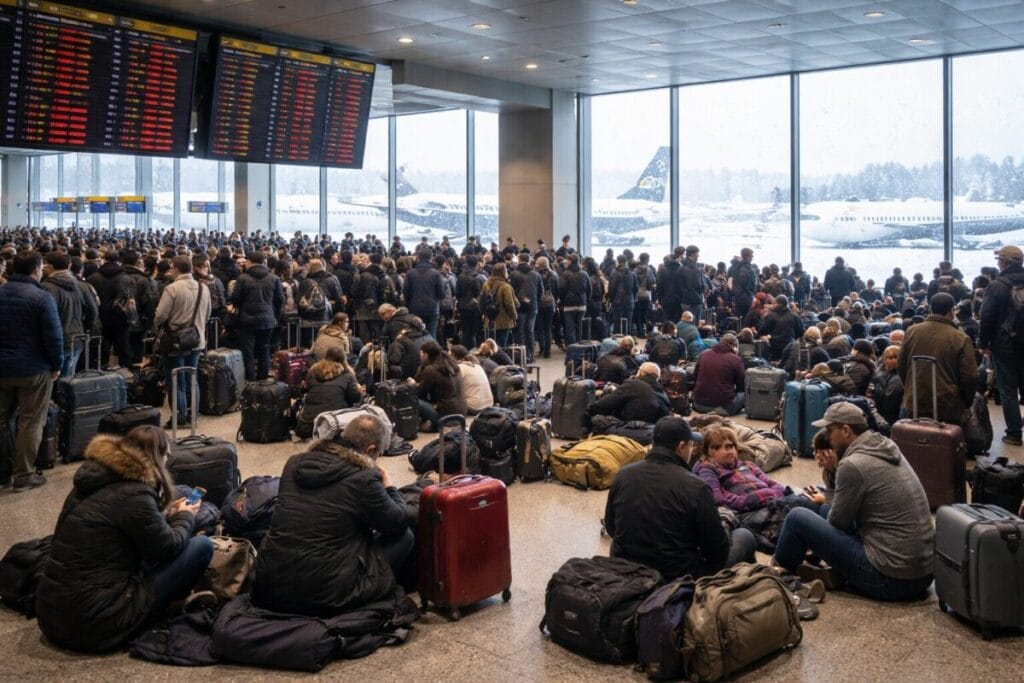
A powerful snowstorm hit the United States and triggered widespread flight cancellations. Airlines canceled thousands of flights and stranded travelers across major tourism destinations. American Airlines, Delta, United, Southwest, SkyWest, PSA, and other carriers suspended service in large numbers as the storm intensified. Major tourism cities such as Orlando, Los Angeles, New York, Indianapolis, and Brisbane reported severe airport disruptions. International connections also faced delays as airlines struggled with weather conditions.
Travelers packed airport terminals and searched for rebooking options. Many passengers slept in chairs and on terminal floors as airlines worked to reorganize schedules. Tourism businesses in affected regions reported sudden booking changes, last-minute cancellations, and delayed arrivals. Hotels near major airports saw rapid increases in demand as stranded passengers searched for accommodation.
Storm Fern Creates National Emergency Response
Winter Storm Fern drove the major wave of cancellations. The National Weather Service warned of intense snowfall, freezing temperatures, and heavy ice throughout multiple states. The agency reported ice accumulation on runways and taxiways. Weather officials urged airlines and airports to take precautionary action to prevent runway accidents.
Governors in several states issued emergency declarations. Officials deployed snowplows and road crews to clear highways near airport corridors. State emergency offices also coordinated shelter availability in areas with stranded travelers. Power utility companies confirmed outages across several regions as heavy ice snapped tree limbs and damaged power lines.
The Federal Aviation Administration reported air traffic flow restrictions throughout key airspace corridors. The agency directed airlines to reduce arrival and departure volumes to allow runway clearing efforts. FAA officials continued to update airlines as conditions evolved throughout the day.
Thousands of Flights Canceled Nationwide
Real-time aviation data showed more than 11,000 canceled flights within a two-day period. Airlines canceled 3,703 flights earlier in the day and scheduled an additional 7,926 cancellations for the following day. The large number stunned many travelers and disrupted tourism movement during peak travel season.
American Airlines canceled more than 900 flights. Southwest canceled more than 570 flights. Delta canceled more than 200 flights. United Airlines canceled more than 150 flights and experienced heavy delays across its network. SkyWest, Envoy Air, and PSA canceled hundreds of regional flights and disrupted flight connections between smaller tourism cities and major hubs.
Airports in Orlando, Los Angeles, LaGuardia, Dallas-Fort Worth, Indianapolis, and Denver reported the highest cancellation volumes. Tourism markets in these cities rely heavily on steady flight flows. Airlines rebooked passengers on later flights as weather conditions improved. However, airline representatives warned travelers to expect continued schedule changes.
Tourism Destinations Feel the Ripple Effect
Tourism boards across affected states tracked the impact of the storm on visitor arrivals. Florida tourism officials reported reduced arrivals into Orlando as theme park visitors struggled to reach the region. California tourism offices monitored delays at Los Angeles International Airport and expected late hotel arrivals across the coastal tourism market. New York hospitality groups prepared for delayed check-ins throughout Manhattan.
Travel agencies reported a rise in customer service requests for rebooking and travel insurance claims. Many families attempted to adjust vacation plans. Business travelers searched for alternative cities to make meetings and events. Airline partners in the tourism industry updated travelers through apps and customer support centers.
Officials Warn of Continued Disruptions
The National Weather Service forecasted continued snowfall in several northern states. Meteorologists warned of blowing snow, icy highways, and reduced visibility near major airports. The service urged travelers to check updated forecasts and avoid nonessential travel in storm zones.
The Department of Transportation monitored airline response and reminded travelers of compensation rules in specific circumstances. U.S. airline passenger rights differ from European rules. The DOT encouraged travelers to review airline policies regarding hotel vouchers, meal vouchers, and rebooking options.
The Centers for Disease Control and Prevention issued guidance for travelers stuck in crowded terminals. The agency reminded passengers to practice good hygiene and wear masks if they felt unwell while waiting in congested airport lounges.
What Travelers Should Do Now
Travel experts offered advice to travelers affected by the snowstorm. They encouraged passengers to track updates through airline mobile apps and airport social media channels. They recommended early communication with hotels and tour operators to adjust bookings. Travel insurance companies advised customers to read policy details regarding weather disruptions.
Experts also suggested passengers consider ground transportation alternatives when available. Train services continued to operate in several states, although some routes experienced delays from frozen tracks. Rental car companies saw increased demand from travelers searching for road travel solutions.
Conclusion: A Challenging Moment for U.S. Tourism Travel
The intense snowstorm created a major challenge for U.S. tourism travel. Airlines canceled thousands of flights, and airports struggled with weather conditions. Travelers faced long delays, hotel changes, and reshuffled itineraries. Tourism destinations across the country demonstrated resilience, but the situation highlighted the vulnerability of air travel to winter storms.
For more travel news like this, keep reading Global Travel Wire