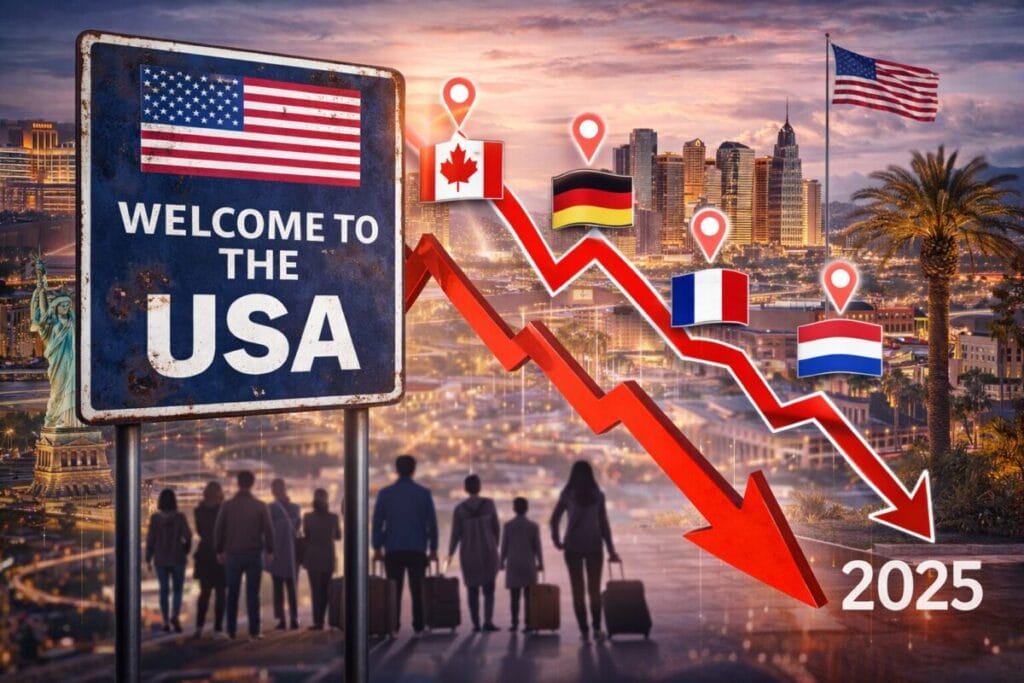
The United States tourism sector is experiencing a notable slowdown in 2025. Several major states, including Nevada, Texas, California, Florida, Minnesota and New Jersey, report declines in international visitor numbers. At the same time, key source markets such as Canada, Germany, France and the Netherlands show reduced travel to the United States.
Global tourism continues to expand in many regions. However, international arrivals to the United States have not matched that growth. Industry analysts link the downturn to rising travel costs, complex visa processes and shifting global travel preferences.
Tourism remains a vital part of the U.S. economy. Therefore, the decline raises concerns for both large cities and smaller communities that depend on visitor spending.
Nevada Records Drop in Visitor Numbers
Nevada, known for Las Vegas and major national parks, reports a measurable decline in international arrivals. Visitor traffic to entertainment venues, resorts and outdoor attractions has slowed compared with previous years.
Rural areas near Great Basin National Park have also felt the impact. Local hotels, restaurants and service stations rely heavily on foreign travelers. With fewer visitors, many small businesses report lower revenue and shorter operating hours.
Las Vegas conventions and trade events also depend on international attendance. Reduced overseas participation has influenced hotel occupancy rates and event-related spending.
Texas Sees Lower International Attendance
Texas relies on both leisure and business tourism. Cities such as Austin, Houston and Dallas attract global conferences and cultural events. In 2025, several major events reported lower international registration numbers.
Airlines operating long-haul routes from Texas adjusted schedules to match weaker demand. Fewer overseas travelers affected hospitality providers and transport services across the state.
San Antonio and Austin, which draw visitors for heritage and music festivals, experienced softer international bookings. The reduction reflects broader shifts in global travel patterns.
California’s Key Attractions Experience Slower Growth
California traditionally ranks among the most visited U.S. states by international travelers. Major attractions include Disneyland, the Golden Gate Bridge and Yosemite National Park. In 2025, visitor numbers from Canada and parts of Europe declined.
Theme parks and urban tourism centers reported fewer high-spending international guests. San Francisco and Los Angeles observed slower growth in overseas arrivals compared with pre-pandemic levels.
Travel experts note that some European travelers have opted for destinations in Mexico or within Europe due to shorter travel distances and competitive pricing.
Florida Faces Decline in Canadian Travel
Florida depends heavily on Canadian tourism, especially during winter months. In 2025, fewer Canadian visitors traveled to destinations such as Orlando, Miami and the Gulf Coast.
Theme parks in Orlando saw reduced international attendance. Coastal hotels and vacation rentals reported lower seasonal occupancy.
The decline in “snowbird” travel from Canada affected local economies in beach communities. Restaurants, retail stores and entertainment venues experienced slower business activity compared with previous years.
Minnesota and New Jersey Also Report Decreases
Minnesota’s tourism economy includes outdoor recreation, festivals and cultural events. International arrivals declined in 2025, affecting downtown businesses and seasonal attractions.
Guided tours in state parks and lakes saw fewer overseas reservations. Retail and dining establishments in major urban centers recorded softer sales tied to reduced visitor traffic.
New Jersey also reported a decline in international tourism. Coastal destinations such as Atlantic City and Cape May saw fewer overseas bookings. Business travel and conferences along the East Coast recorded lower foreign participation.
Key Source Markets Pull Back on U.S. Travel
Canada remains one of the largest source markets for U.S. tourism. In 2025, Canadian travel to the United States declined compared with prior years. Higher travel costs and exchange rate fluctuations influenced travel decisions.
Germany and France also recorded fewer outbound trips to the United States. Rising airfares and administrative requirements contributed to changing preferences. Many travelers from these countries selected destinations within Europe or Asia.
The Netherlands, another consistent European source market, showed similar trends. Dutch travelers explored alternative destinations that offered simplified entry processes and competitive pricing.
Economic Ripple Effect Across Communities
The decline in international tourism affects more than major cities. Small towns and rural communities depend on foreign visitors for seasonal income. Hotels, tour operators and retail shops rely on international spending to sustain operations.
Reduced tourism revenue may lead to hiring freezes or shorter work schedules in hospitality sectors. Local governments that depend on tourism-related taxes may also experience lower collections.
Industry leaders emphasize the importance of international visitors because they often stay longer and spend more than domestic travelers.
Addressing the Challenges Ahead
Tourism analysts suggest that policy adjustments and marketing initiatives could help restore international interest. Streamlining visa processes and promoting affordability may encourage more overseas visitors.
Travel industry organizations continue to highlight the diversity of U.S. attractions, from national parks to cultural hubs. Coordinated campaigns aimed at key source markets could help rebuild confidence.
Improved communication about entry requirements and travel conditions may also influence traveler decisions. Industry stakeholders stress the need for collaboration between federal agencies, state tourism boards and private businesses.
Outlook for U.S. Tourism
The 2025 slowdown presents a challenge for U.S. tourism. States such as Nevada, Texas, California, Florida, Minnesota and New Jersey face measurable impacts from reduced international arrivals.
At the same time, global tourism demand remains strong. Therefore, recovery remains possible if strategic adjustments address cost, accessibility and perception factors.
International travel to the United States has historically rebounded after downturns. By enhancing competitiveness and strengthening global partnerships, the U.S. tourism sector may regain momentum in the coming years.
For more travel news like this, keep reading Global Travel Wire