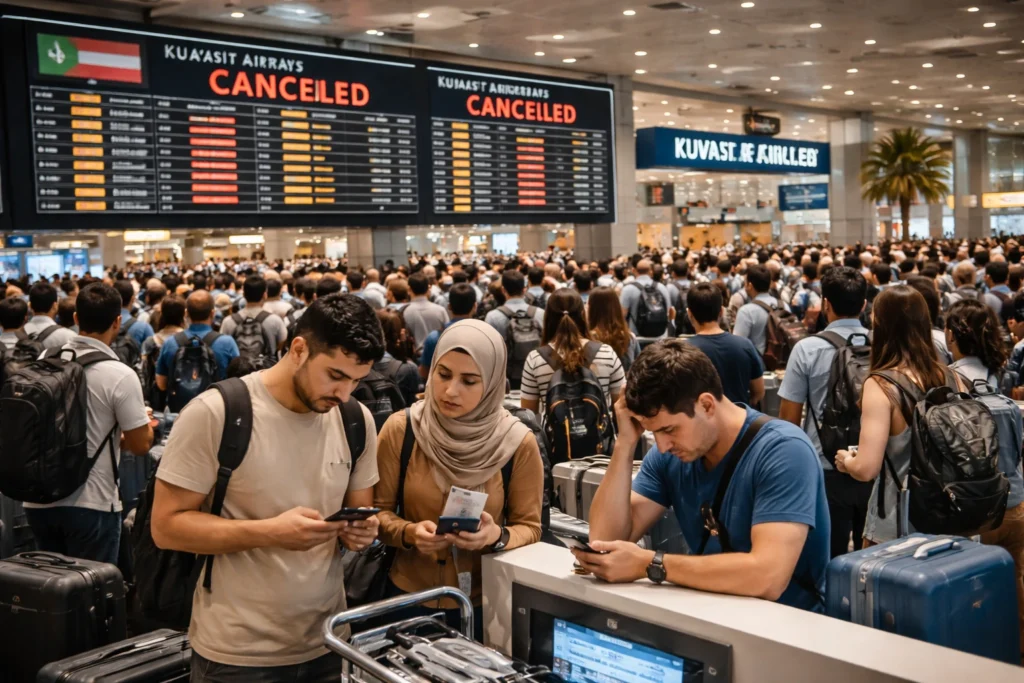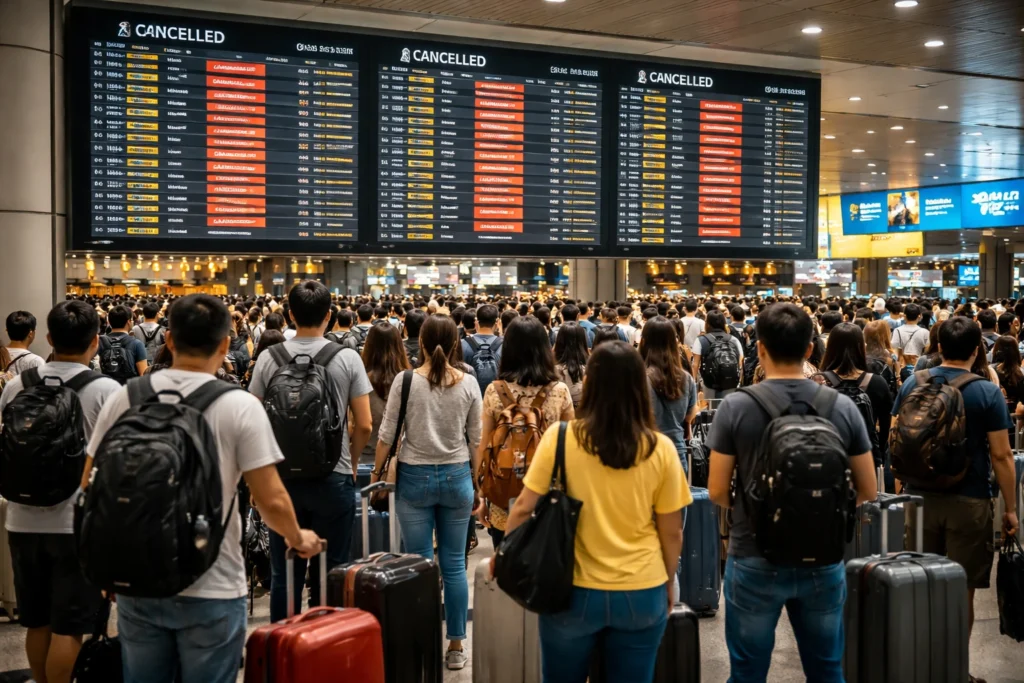
Air travel across the United Arab Emirates faces major disruption as airlines cancel over 50 flights.
Dubai, Abu Dhabi, Sharjah, and Al Maktoum airports report significant schedule changes. These cancellations affect both regional and international routes.
Major airlines including Gulf Air, FlyDubai, Etihad, and Qatar Airways adjust operations due to ongoing challenges. Travelers now face delays, rebooking issues, and limited options.
These disruptions highlight growing pressure across the Middle East aviation sector.
Dubai International Airport Faces Major Operational Challenges
Dubai International Airport records the highest number of cancellations this week. Airlines suspend flights across several destinations.
Gulf Air cancels multiple flights to Bahrain across consecutive days. These repeated cancellations disrupt key regional connections.
FlyDubai also suspends routes to destinations such as Prague, Warsaw, Belgrade, and Alexandria. Flights to Kabul, Colombo, and Djibouti also face disruption.
These cancellations affect both short-haul and long-haul travel, which increases passenger inconvenience.
Travelers using Dubai as a transit hub now experience delays and missed connections.
Abu Dhabi Airport Reports Significant Flight Disruptions
Abu Dhabi International Airport also experiences heavy disruption across several routes. Airlines cancel flights to Bahrain, Cairo, Ahmedabad, and Riyadh.
Etihad Airways reduces services on key international routes. Gulf Air continues to cancel flights to Bahrain across multiple days.
EgyptAir also suspends flights to Cairo, which affects passengers traveling between the UAE and North Africa.
These changes reduce connectivity and create challenges for business and leisure travelers alike.
Sharjah and Al Maktoum Airports Add to the Disruption
Sharjah International Airport reports fewer cancellations but still contributes to overall disruption. Flights to Lahore and Cairo face cancellation during early hours.
Al Maktoum International Airport also records flight cancellation to Doha. Early morning departures appear more vulnerable to disruption.
Even smaller airports now experience operational strain, which reflects the scale of the situation across the UAE.
Travelers should consider alternative airports but remain cautious due to widespread impact.
Key Routes and Destinations Affected by Cancellations
The cancellations impact a wide range of destinations across multiple regions. Bahrain and Cairo see the highest number of disrupted flights.
Flights to Doha, Prague, Warsaw, Belgrade, and Kuala Lumpur also face cancellation. South Asian destinations such as Lahore and Ahmedabad experience disruption as well.
These changes affect both tourism and business travel across key global corridors.
Passengers traveling through the UAE now face fewer direct flight options.
Patterns Behind UAE Flight Cancellations
Several clear patterns emerge from these disruptions. Airlines cancel many late-night and early-morning flights.
Regional routes show higher cancellation rates compared to long-haul routes. However, European destinations also experience disruption.
Gulf Air, FlyDubai, and Etihad account for most cancellations. This trend indicates operational challenges across multiple carriers.
These patterns highlight ongoing pressure within the aviation network.
Impact on Travelers Across the UAE
Passengers face long delays, missed connections, and limited rebooking options. Airlines provide refunds or alternative flights, but high demand slows the process.
Travelers must adjust plans quickly to avoid major disruptions. Flexible tickets and early planning help reduce inconvenience.
Tourism and business travel both feel the impact of these cancellations.
Passengers should stay updated through airline notifications and airport announcements.
Travel Tips to Handle UAE Flight Disruptions
Travelers should take practical steps to manage the situation. Checking flight status regularly helps avoid unexpected surprises.
Booking flexible tickets allows easier changes when disruptions occur. Choosing alternative routes or airports may improve travel options.
Arriving early at the airport provides extra time to manage delays. Staying informed ensures smoother travel during uncertain conditions.
These simple steps can reduce stress and improve overall travel experience.
Conclusion: Travelers Must Stay Flexible Amid Ongoing Disruptions
The UAE aviation sector faces a challenging period with widespread flight cancellations. Airlines continue adjusting schedules to manage operational pressure.
Travelers must stay flexible and informed while planning trips. Careful preparation can reduce disruption and improve travel outcomes.
Despite challenges, airlines continue operating essential routes and working toward stability.
For more travel news like this, keep reading Global Travel Wire https://www.globaltravelwire.com/