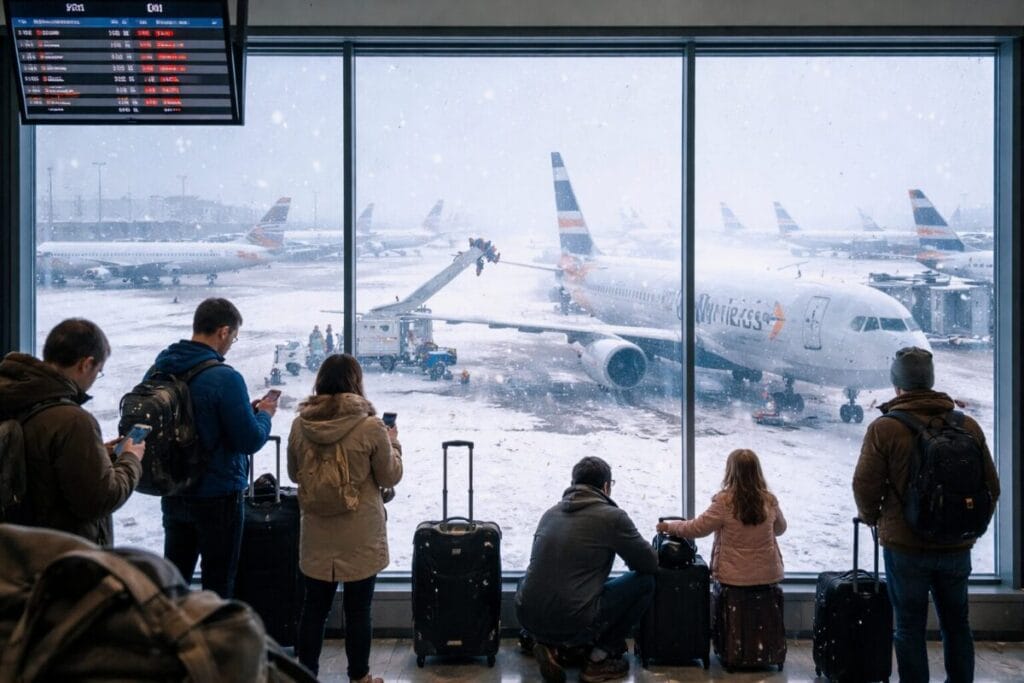
Winter Storm Fern took aim at the United States and shredded flight schedules across dozens of states. The storm hit during a busy travel period and trapped thousands of passengers in crowded terminals. Airlines scrambled to restore order as weather alerts spread from the Southern Plains to New England. Travelers watched screens fill with cancellation notices and long lines formed at service counters. The disruption grew into one of the worst aviation snarls of the season.
American Airlines acknowledged the scale of the crisis and issued an apology. The airline noted the stress many passengers faced as they tried to rebook flights or secure hotel rooms. Customer care teams fielded constant messages while airport crews worked through ice, snow and bitter cold.
Storm Strength and Geographic Reach
Meteorologists tracked Fern as it swept across the nation with unusual force. The system hammered cities with snow, sleet, and polar air. States along the East Coast dealt with coastal ice and freezing rain while southern states faced rare winter conditions. High winds toppled trees, blocked highways and stressed emergency services. Millions lost power as ice coated power lines and utility crews faced dangerous repair conditions.
Governors in several states issued emergency orders. Officials urged residents to delay travel and to stay indoors until road conditions improved. Forecasters from the National Weather Service warned motorists about black ice and whiteout visibility. Warnings covered major interstate corridors and complicated bus and rail travel.
Airline Operations Grind to a Halt
Flight tracking data showed thousands of cancellations across the airline industry. American Airlines took the largest hit due to its strong presence at Dallas-Fort Worth, Charlotte and major northeastern airports. Crews struggled to de-ice aircraft while runways froze under constant precipitation. Airspace bottlenecks emerged when ground teams slowed operations for safety checks and crew changes.
The cancellation numbers climbed through the weekend. Analysts predicted more than 15,000 cancellations by Monday. Passengers in New York, Boston, Philadelphia and Chicago dealt with heavy waits and limited seating. Smaller airports also faced disruptions when aircraft and flight crews failed to arrive on time. The storm exposed how interconnected air travel systems depend on precise scheduling.
American Airlines Addresses Travelers
American Airlines apologized to customers and outlined efforts to stabilize its network. The airline encouraged travelers to use digital tools for updated schedules and rebooking. Customer service teams highlighted travel waivers that allowed schedule changes without fees. The airline noted the long hours its staff faced while they guided confused and tired passengers through alternative plans.
Other airlines extended similar waivers and urged travelers to monitor weather forecasts. Airport staff across the country handed out snacks, blankets and water to families with long overnight waits. Local hotels filled with stranded passengers who needed shelter until flights resumed.
Ripple Effects Across the Travel Economy
Fern’s reach extended beyond aviation. Bus companies struggled to maintain schedules as highways iced over. Amtrak modified routes and limited departures in several corridors. Ride-share drivers faced hazardous roads and long delays. Hotels near airports booked out quickly as travelers fought for rooms. Restaurants near terminals reported heavy demand as waits grew longer.
Tourism analysts noted that weather events create costly ripple effects. Travelers miss cruises, tours, conferences and family events. Businesses also deal with supply disruptions when cargo flights miss connections. Insurance claims rise for trip protection and lost luggage. Winter weather often produces these chain reactions, yet Fern delivered heavier damage due to its national footprint.
Government Guidance for Passengers
The U.S. Department of Transportation reminded travelers about refund rules. Passengers qualify for refunds if airlines cancel or significantly alter flights. Refund eligibility covers even non-refundable tickets. Officials encouraged travelers to request refunds through official airline channels. Airlines do not need to offer hotel rooms or meals during weather events, yet some airlines offer accommodations voluntarily.
Government agencies also urged travelers to plan for longer clearance lines once schedules resume. Customs and security staff often deal with compressed arrival windows when cancellations cluster flights into narrow time periods. Airline officials stressed the importance of patience during recovery.
Human Impact and Traveler Experiences
The storm created many personal stories. Families tried to reach relatives, business travelers tried to reach meetings, and vacationers tried to salvage long-planned trips. Some travelers slept in terminals while children watched movies on tablets and adults guarded charging outlets. Many travelers shared experiences of frustration yet also praised airport workers, pilots and flight attendants who helped tired passengers through the ordeal.
Acts of kindness became common. Travelers shared snacks, phone chargers and travel tips. Airport volunteers guided elderly passengers and helped families find quiet seating areas. Those gestures softened the blow of an exhausting week.
Recovery Timeline and Outlook
As the storm weakened, airlines began rebuilding their networks. Aircraft repositioning started at dawn in several hubs and crew managers worked to fill staffing gaps. Analysts predicted a slow multi-day recovery due to crew scheduling rules and aircraft maintenance checks. Some airports continued to deal with icy ramps and backed-up baggage operations.
Travel economists noted that weather disruptions can inform future planning. Airlines continue to invest in snow removal, de-icing equipment and schedule buffers. Experts also encourage travelers to keep flexible itineraries during winter months. The aviation industry often recovers quickly once weather clears, yet recovery always depends on geography, fleets and staffing.
Winter Storm Fern showed how fast travel systems can unravel under extreme conditions. It also showed how travelers adapt, airlines regroup and communities support stranded guests. The nation now watches the skies as Fern exits and the next storm system approaches.
For more travel news like this, keep reading Global Travel Wire