The global cruise tourism sector is witnessing a dual trend of growing international arrivals and increasing awareness of travel risks, as highlighted by recent developments in both the Caribbean and Southeast Asia. While travelers continue to embrace cruise holidays in large numbers, tourism authorities are also noting a lag in the adoption of flexible travel insurance, raising concerns about preparedness amid global disruptions.
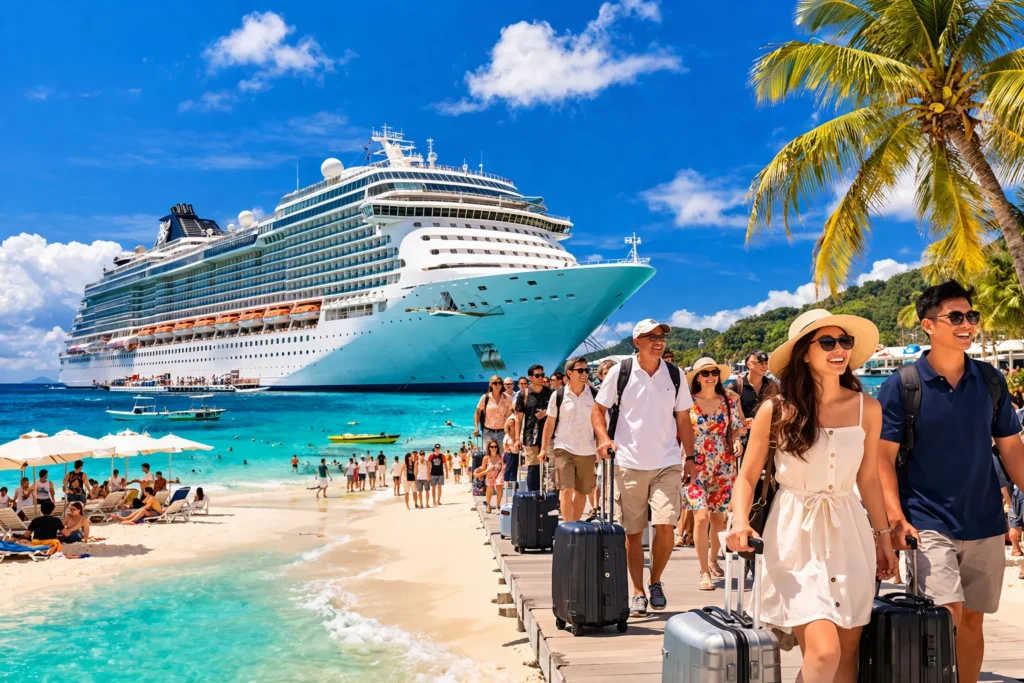
In the Philippines, Boracay recently marked a significant milestone in its cruise tourism development with the arrival of a luxury cruise vessel carrying approximately 1,500 international visitors along with hundreds of crew members. According to official statements from the Malay-Boracay Tourism Office and the Department of Tourism in Western Visayas, the visit represents a strong indicator of the island’s growing position in the global cruise tourism market.
The vessel’s arrival provided passengers with a full-day experience on the island, allowing them to explore Boracay’s renowned beaches, local culture, and hospitality offerings. Tourism officials organized a ceremonial welcome, reflecting the importance of cruise tourism in boosting regional economies and strengthening international tourism ties.
Government tourism data emphasizes that cruise tourism contributes significantly to local economic activity. Visitors arriving via cruise ships engage in spending on dining, retail, excursions, and cultural experiences, benefiting small businesses and service providers. The timing of the Boracay visit, following a major holiday period, further supported local tourism recovery efforts.
Cultural performances organized for visitors showcased the rich heritage of Western Visayas, aligning with national tourism strategies that promote cultural tourism as a key component of the visitor experience. Authorities have consistently highlighted the importance of integrating cultural elements into tourism offerings to enhance destination appeal and visitor satisfaction.
At the same time, global tourism trends indicate a growing need for travel preparedness. Industry data suggests that while demand for cruise travel remains strong, many travelers are not opting for flexible insurance options such as Cancel-For-Any-Reason coverage. This type of insurance provides broader protection against unexpected disruptions, including weather events and geopolitical developments.
Tourism authorities have noted that the Caribbean cruise segment, in particular, shows lower adoption rates of flexible insurance compared to other destinations. This trend raises concerns as the region is frequently affected by seasonal weather patterns and other external factors that can disrupt travel plans.
The contrast between increasing cruise arrivals and limited insurance uptake highlights a gap in traveler awareness. Governments and tourism organizations are encouraging travelers to consider comprehensive coverage to ensure a Safe and smooth travel experience. As global travel becomes more dynamic, preparedness is becoming an essential aspect of tourism planning.
The cruise industry continues to play a vital role in international tourism growth. Official statistics indicate that millions of travelers are expected to choose cruise vacations in the coming years, driven by the convenience of all-inclusive packages and the ability to visit multiple destinations in a single यात्रा. This growth is supported by investments in port infrastructure, destination marketing, and cruise route expansion.
Boracay’s inclusion in international cruise itineraries reflects the Philippines’ broader tourism development strategy. The government has been actively promoting the country as a प्रमुख cruise destination, focusing on enhancing port facilities, improving visitor services, and ensuring sustainable tourism practices. These efforts aim to attract more cruise operators and increase the number of international arrivals.
Sustainability remains a key priority for tourism authorities. The influx of cruise visitors requires careful management to protect natural resources and maintain the quality of the visitor experience. Boracay, in particular, has implemented measures to balance tourism growth with environmental conservation, ensuring that the island remains a premier destination for future generations.
The integration of cultural experiences, environmental management, and infrastructure development is central to the success of cruise tourism in the region. By offering a well-rounded experience, destinations can attract repeat visitors and strengthen their position in the competitive global tourism market.
Meanwhile, the issue of travel insurance continues to gain importance. Tourism boards are working to raise awareness about the benefits of flexible insurance options, particularly in light of recent global events. Educational campaigns and partnerships with travel providers are being used to inform travelers about the importance of comprehensive coverage.
Technology is also playing a role in enhancing the travel experience. Digital platforms enable travelers to access information, plan itineraries, and purchase insurance easily, contributing to a more seamless journey. Governments are supporting digital transformation initiatives to improve accessibility and efficiency within the tourism sector.
The combination of strong cruise arrivals and evolving travel behavior underscores the resilience of the tourism industry. While challenges such as disruptions and risk management persist, the sector continues to adapt and innovate. Destinations like Boracay are demonstrating how strategic planning and collaboration can drive tourism growth while maintaining high standards of service.
Looking ahead, the future of cruise tourism will depend on the ability of stakeholders to address emerging trends and challenges. This includes enhance traveler awareness, improving infrastructure, and ensuring sustainable practices. By focusing on these areas, the tourism industry can continue to thrive and deliver memorable experiences to visitors worldwide.
The recent developments in Boracay highlight the potential of cruise tourism to drive economic growth and cultural exchange. At the same time, they serve as a reminder of the importance of preparedness in an increasingly complex travel environment. As global tourism evolves, destinations and travelers alike must adapt to ensure a safe, enjoyable, and sustainable future for travel.
For more travel news like this, keep reading Global Travel Wire