Greece is transforming its cruise tourism strategy as Santorini enforces strict passenger limits. Major cruise lines now adjust itineraries across the Mediterranean. This shift highlights a growing focus on sustainability and visitor management.
Authorities have introduced a daily cap of 8,000 cruise passengers for Santorini. This measure aims to reduce overcrowding and protect local infrastructure. Previous peak arrivals often exceeded 15,000 visitors per day.
At the same time, Greece has introduced a €20 sustainability fee during peak travel months. This fee applies to popular islands such as Santorini and Mykonos. These policies are already reshaping cruise deployment decisions across the region.
Major Cruise Lines Redesign Mediterranean Itineraries
Cruise operators are actively removing Santorini from key routes. Carnival Miracle will drop the island from its 2027 itineraries. Other ships, including Viking Star, Gemini, and Blue Sapphire, are also making similar changes.
These adjustments reflect operational challenges caused by new restrictions. Large vessels struggle to fit within the daily passenger cap. Cruise companies now prioritize destinations with better infrastructure and smoother passenger flow.
Industry players are also reviewing schedules for 2025 and 2026. Several operators have already reduced Santorini calls or replaced them entirely. This trend confirms a long-term shift rather than a temporary adjustment.
Infrastructure Challenges Accelerate the Shift
Santorini faces several logistical limitations that impact cruise operations. The island lacks a deep-water port for large vessels. Ships must rely on tender boats to transport passengers to shore.
A single cable car connects the port area to Fira, the main town. This system often creates long queues and delays during peak arrivals. These bottlenecks reduce turnaround efficiency for cruise ships.
Large vessels carrying thousands of passengers face additional constraints. A single ship can use most of the daily visitor quota. This situation limits scheduling flexibility and increases competition for docking slots.
Crete’s Souda Bay Emerges as a Leading Alternative
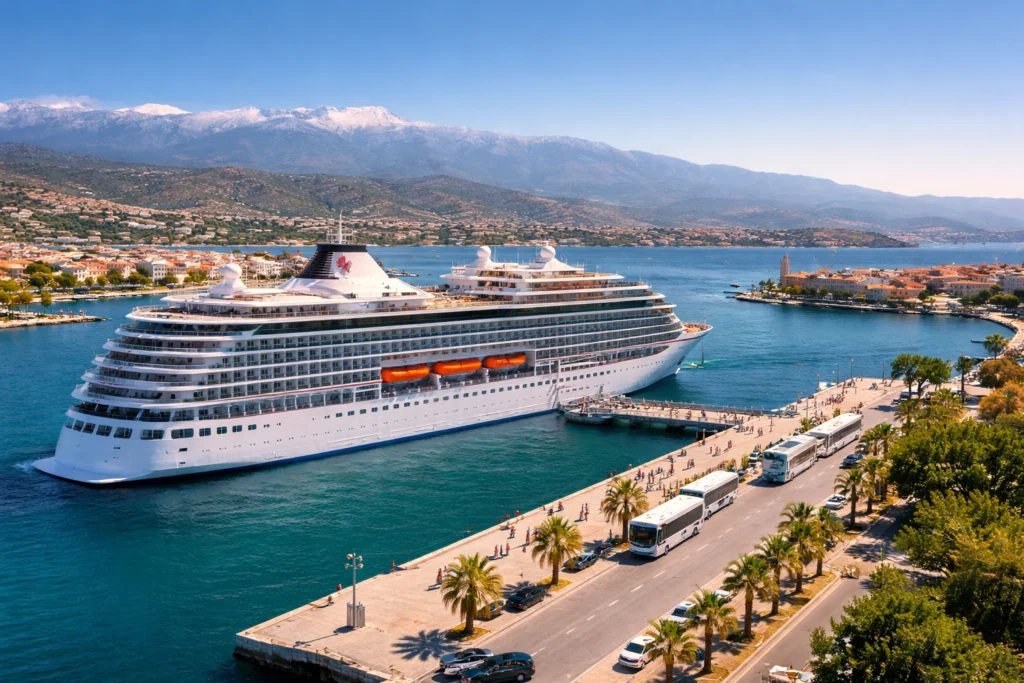
Crete’s Souda Bay is gaining attention as a key replacement for Santorini. The port offers deep-water docking, allowing large ships to berth directly. This eliminates the need for tender operations.
Passengers can disembark quickly and access nearby attractions without delays. The port also provides efficient infrastructure for handling high volumes of visitors. This capability makes it a reliable choice for cruise operators.
Souda Bay also benefits from strong air connectivity. Chania International Airport supports seamless travel connections for cruise passengers. This advantage strengthens Crete’s position as a major tourism hub.
Secondary Greek Destinations Gain Momentum
Other Greek destinations are also benefiting from the shift. Islands such as Syros and Patmos are seeing increased cruise traffic. Nafplio is also attracting more itineraries due to its accessibility and cultural appeal.
These destinations offer less crowded environments and faster visitor movement. Travelers can enjoy authentic experiences without heavy congestion. Cruise lines are responding to changing preferences by diversifying their routes.
Nafplio’s proximity to Athens enhances its appeal. Easy access from the capital allows seamless travel planning. Meanwhile, smaller islands provide unique cultural and historical experiences.
Sustainability Drives Policy and Industry Change
Greece’s tourism strategy reflects a broader global focus on sustainability. Authorities are introducing structured measures to manage visitor flows. These include passenger caps, environmental fees, and controlled port access.
These policies aim to protect popular destinations while supporting long-term tourism growth. By redistributing cruise traffic, Greece reduces pressure on overcrowded areas. At the same time, it promotes balanced development across multiple regions.
Cruise operators are aligning with these goals by adjusting itineraries. They are prioritizing ports that support efficient operations and sustainable tourism practices. This approach ensures continued growth while preserving destination quality.
Future Outlook for Mediterranean Cruise Tourism
The traditional Santorini and Mykonos cruise circuit is evolving. Cruise lines are now exploring new combinations of destinations across Greece. Crete, Syros, Patmos, and Nafplio are becoming key stops in redesigned itineraries.
Air connectivity continues to support these changes. Major airports in Athens, Heraklion, and Chania provide strong access for international travelers. This network ensures smooth travel experiences for cruise passengers.
As demand for meaningful travel experiences rises, cruise companies are adapting quickly. Travelers now seek less crowded destinations with deeper cultural engagement. Greece’s strategy aligns with this shift in traveler behavior.
A Turning Point for Greek Cruise Tourism
The changes in Santorini mark a turning point for Mediterranean cruise tourism. Greece is leading a transition toward sustainable and balanced travel. Cruise lines are responding by redesigning routes and investing in new destinations.
Crete and other emerging ports are set to benefit from increased visitor numbers. This redistribution will strengthen local economies and enhance visitor experiences.
The shift also reflects a new era in cruise tourism. Operators and destinations must work together to balance growth and sustainability. Greece’s approach offers a clear example of how policy can shape the future of global travel.
For more travel news like this, keep reading Global Travel Wire