



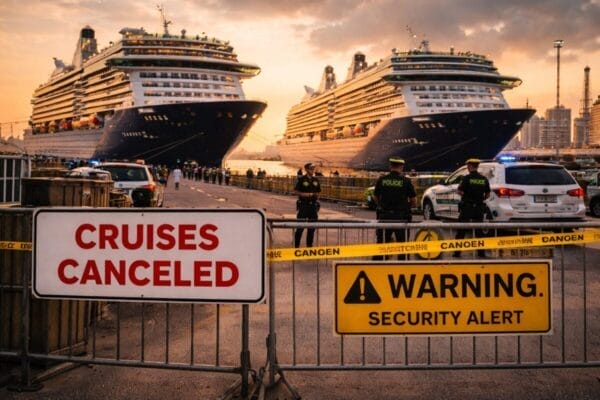


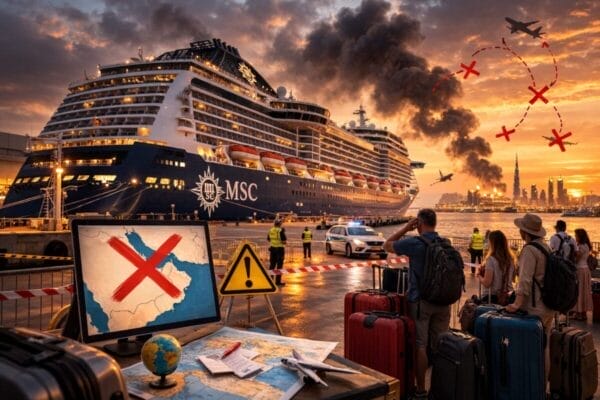
MSC Cruises has canceled two scheduled sailings of MSC Euribia from Dubai. The departures were planned for February 28 and March 7, 2026.
The company cited escalating regional conflict and related airspace disruptions. Ongoing instability across parts of the Arabian Gulf has complicated cruise logistics.
MSC Cruises confirmed that affected passengers will receive full refunds. The company has also provided flexible rebooking options.
This decision reflects growing operational challenges for cruise lines in the Middle East.
Airspace Closures and Port Restrictions Disrupt Operations
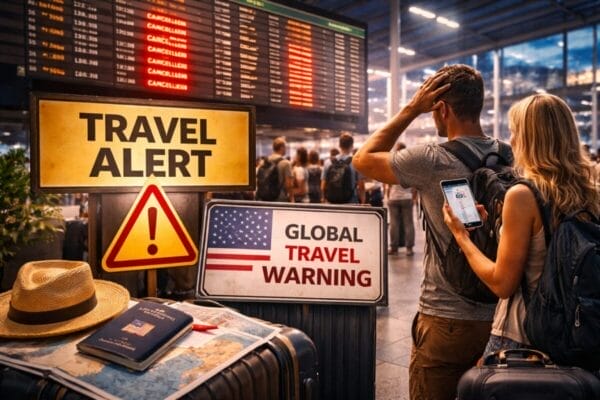
Airspace closures across parts of the Gulf have restricted flight connectivity. Cruise passengers rely heavily on regional airports for embarkation and return travel.
When flights face suspension, cruise operations become difficult to sustain. Port authorities have also tightened security protocols in response to regional tensions.
MSC Euribia remains docked in Dubai due to the suspension of flights to Doha. This operational pause underscores the cruise industry’s dependence on aviation stability.
Cruise tourism requires seamless coordination between airlines, ports, and hospitality services. Any disruption within this network creates cascading effects.
Impact on Dubai and Regional Cruise Tourism
Dubai ranks among the leading cruise hubs in the Middle East. The city has invested heavily in cruise terminals, waterfront developments, and tourism marketing.
Cruise passengers contribute significantly to local spending. They visit shopping centers, restaurants, cultural landmarks, and desert excursion sites.
The cancellation of two sailings may appear limited. However, even short-term disruptions can affect revenue streams for local businesses.
Hotels benefit from pre- and post-cruise stays. Transport providers and tour guides also depend on cruise arrivals. Reduced passenger flow impacts these sectors directly.
Other regional ports such as Abu Dhabi and Doha may also feel indirect effects. Cruise itineraries often include multiple Gulf destinations.
Support for Stranded Passengers
MSC Cruises has implemented immediate support measures for passengers aboard MSC Euribia. The company has offered complimentary Wi-Fi to maintain communication.
Passengers have also received refunds for canceled shore excursions. Crew members continue to provide onboard services while awaiting further updates.
Cruise operators face complex decisions during geopolitical instability. They must balance passenger safety with operational continuity.
MSC Cruises chose cancellation over uncertainty. This proactive step reflects a safety-first approach.
Economic Significance of Cruise Tourism in the Gulf
Cruise tourism plays a growing role in the Middle Eastern economy. According to regional tourism authorities, cruise arrivals have increased steadily over recent years.
Dubai, Abu Dhabi, and Doha have positioned themselves as winter cruise destinations. Mild weather and modern infrastructure attract international lines.
Cruise visitors support retail, hospitality, and entertainment industries. They also generate port fees and service revenues.
When sailings pause, these revenue channels temporarily slow. Tourism planners must therefore strengthen resilience strategies.
Broader Industry Implications
MSC Cruises joins other operators that have adjusted Gulf itineraries. Geopolitical events influence cruise planning more than many other travel sectors.
Cruise lines operate on fixed seasonal schedules. Sudden route changes require rapid coordination and financial adjustments.
Refund processing, passenger communication, and schedule reshuffling create additional operational costs. Despite these pressures, safety remains paramount.
The Gulf region has previously demonstrated strong recovery capacity. Tourism authorities often launch campaigns to restore traveler confidence once stability returns.
Long-Term Outlook for Middle East Cruise Tourism
Despite current disruptions, the Middle East retains strong long-term cruise potential. Luxury tourism infrastructure continues to expand.
Dubai has strengthened its status as a global tourism hub. The city hosts major events and maintains strong air connectivity under normal conditions.
Cruise lines view the region as strategically important for winter itineraries. The Gulf offers modern ports, cultural heritage sites, and high-end leisure experiences.
Industry analysts expect recovery once regional tensions ease. Cruise tourism historically rebounds after temporary geopolitical shocks.
Building Resilience and Future Growth
The MSC Euribia cancellations highlight the need for flexible planning. Cruise operators must maintain contingency frameworks for volatile regions.
Flexible booking policies help protect consumer confidence. Transparent communication builds long-term trust between cruise brands and travelers.
Regional governments can strengthen cooperation with airlines and port authorities. Integrated crisis management enhances stability during uncertain periods.
Investment in safety protocols and emergency coordination will remain crucial. These measures support sustainable growth once normal operations resume.
A Temporary Setback in a Growing Market
The cancellation of two MSC Euribia sailings marks a temporary setback for Middle East cruise tourism. However, the region’s strategic appeal remains strong.
Dubai and neighboring ports continue to attract global cruise interest. Once airspace restrictions ease, cruise schedules will likely resume.
For now, MSC Cruises prioritizes passenger safety and operational caution. The coming months will determine how quickly the Gulf cruise market regains momentum.
Tourism stakeholders across the region remain focused on recovery and resilience. With coordinated efforts, Middle East cruise tourism can return stronger and more adaptable.
For more travel news like this, keep reading Global Travel Wire