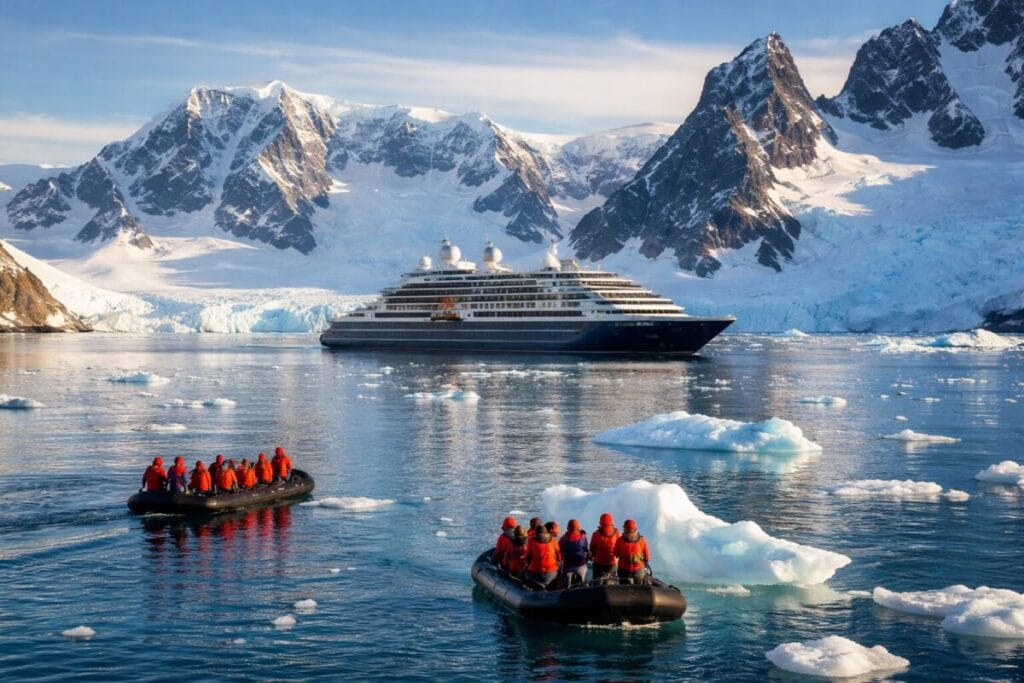
Luxury expedition cruise operator Ponant Exploration has announced the opening of bookings for an extended Antarctica expedition, positioning the journey as a deep, immersive experience designed for travelers seeking more than a brief visit to the White Continent. The long-duration voyage reflects a growing trend in polar tourism toward slow travel, expert-led exploration, and longer itineraries that allow guests to fully experience remote destinations.
Unlike traditional Antarctic Peninsula cruises that focus on shorter visits, this extended expedition emphasizes time at sea, educational programming, wildlife observation, and flexible scheduling to accommodate changing polar conditions. The company aims to attract travelers interested in meaningful exploration rather than fast-paced sightseeing, aligning with evolving consumer expectations in the expedition cruise sector.
A Shift Toward Longer, More Immersive Polar Experiences
The introduction of extended voyages highlights a wider transformation across Antarctica tourism. Travelers increasingly seek journeys that offer scientific insight, environmental awareness, and opportunities to understand the fragile ecosystems of the southernmost continent.
Longer itineraries provide advantages not always possible on shorter trips. Expedition teams can adapt to weather and sea ice conditions, explore less-visited landing sites, and spend more time observing wildlife such as penguins, whales, seals, and seabirds in their natural habitat. Extended sea days also allow for lectures from polar experts, photography workshops, and educational discussions that deepen travelers’ appreciation for Antarctica’s history, geology, and environmental challenges.
Industry analysts note that smaller expedition ships are becoming more popular, as they allow for more intimate experiences and easier access to remote landing zones while complying with strict environmental regulations governing visitor numbers ashore.
Booking Trends Reflect Growing Interest in Grand Voyages
Bookings for long-duration expedition cruises tend to attract a niche but highly motivated audience. Travelers interested in these journeys often prioritize exploration, education, and sustainability over traditional onboard entertainment.
With limited cabin availability and a specialized itinerary, early reservations are typically encouraged. Guests planning such voyages often consider additional factors such as travel insurance, international flights to departure ports, pre- and post-cruise accommodations, and seasonal travel demand.
The rise of “grand voyages,” which combine extended itineraries with immersive themes, suggests a broader shift in luxury travel. Many travelers now value time-rich experiences that allow them to disconnect from routine life and fully engage with unique environments.
Responsible Tourism at the Heart of Antarctic Travel
Antarctica remains one of the most carefully managed travel destinations in the world, and expedition operators are required to follow strict environmental guidelines designed to protect the region’s delicate ecosystems. These measures typically include limits on passenger numbers during landings, mandatory biosecurity procedures to prevent the introduction of foreign species, and wildlife viewing protocols that maintain safe distances from animals.
Responsible tourism has become a major selling point for polar voyages, particularly as travelers become more environmentally conscious. Expedition companies emphasize education and stewardship, encouraging guests to understand the importance of preserving Antarctica for future generations.
Experts highlight that visiting Antarctica requires flexibility and respect for nature. Weather changes rapidly, sea ice can alter routes, and wildlife encounters are unpredictable. For many travelers, this unpredictability adds to the sense of adventure and authenticity.
Industry Context: Sustainability and Resilience in Global Tourism
The announcement comes at a time when the global tourism industry is focusing heavily on sustainability and resilience following recent global disruptions. Industry conferences and policy discussions increasingly emphasize building tourism models that balance economic growth with environmental protection and community engagement.
Antarctica tourism often serves as a model for regulated travel due to its strict environmental oversight and emphasis on scientific collaboration. Operators work closely with international organizations and research communities to ensure tourism activities align with conservation goals.
This shift toward responsible exploration also reflects traveler demand for experiences that contribute to awareness rather than exploitation. Educational programming, expert expedition teams, and sustainable operational practices are becoming essential components of modern expedition travel.
A New Era of Polar Exploration
As bookings open for this extended Antarctic expedition, the message to travelers is clear: polar travel is evolving beyond short, bucket-list visits toward longer journeys that prioritize immersion, learning, and environmental respect.
The appeal lies not only in the dramatic landscapes of icebergs, glaciers, and vast open seas but also in the opportunity to experience Antarctica at a slower pace. Travelers can engage deeply with the destination, witness changing polar conditions over time, and develop a deeper understanding of one of Earth’s last great wildernesses.
With demand for meaningful travel experiences continuing to rise, extended expedition voyages may represent the future of luxury polar tourism. For adventurers seeking both discovery and reflection, the new itinerary offers a chance to explore Antarctica in a way that feels less like a checklist and more like a transformative journey.
For more travel news like this, keep reading Global Travel Wire