Asia’s river cruising sector is entering a new era, emerging as one of the most transformative trends shaping travel across the region. As travelers move away from fast-paced itineraries and crowded urban spaces, interest in immersive, slow-paced journeys along Asia’s historic rivers is rapidly increasing. By 2026, the expansion of river cruising has become a defining feature of Asian tourism development, supported by government investments, cultural preservation programs, and a growing preference for meaningful, sustainable travel experiences.
Across Southeast Asia and the Indian subcontinent, national tourism authorities have spent the past several years improving river infrastructure, strengthening navigational safety, and promoting heritage-rich itineraries that run through rural landscapes and cultural heartlands. These investments are part of a broader effort to distribute tourism more evenly, reduce strain on major cities, and introduce visitors to regions once difficult to reach by road or air. As a result, rivers that were once trade arteries are now emerging as major tourism corridors.
Travel ministries in Vietnam, Cambodia, Thailand, and India report a steady increase in demand for river-based itineraries. International travel organizations have highlighted slow travel as a key global trend, aligning perfectly with the nature of river journeys. Unlike traditional tourism, where travelers rush between attractions, river cruising encourages deeper engagement. Boats move gently through farmlands, fishing communities, temples, river markets, and rural settlements, offering a daily window into local life that is not easily accessible by other forms of transport.
Governments throughout Asia have embraced this shift. National tourism strategies emphasize experiential travel, cultural immersion, and low-impact tourism—objectives that river cruising naturally supports. By directing visitor flows inland, countries can protect overburdened city centers and coastal zones while strengthening economic opportunities for rural communities. River travel’s smaller group sizes and controlled visitor numbers also align with sustainability goals aimed at minimizing environmental pressures.
Southeast Asia remains the epicenter of this growth. The Mekong River, flowing through Vietnam, Cambodia, Laos, and Thailand, is at the forefront of the region’s river cruising boom. Tourism authorities in Vietnam and Cambodia describe the Mekong not simply as a scenic waterway, but as a living cultural link that connects multiple civilizations. River cruises along the Mekong often feature visits to floating markets, craft villages, fishing harbors, and UNESCO-listed heritage sites, making them ideal for travelers interested in history and anthropology.
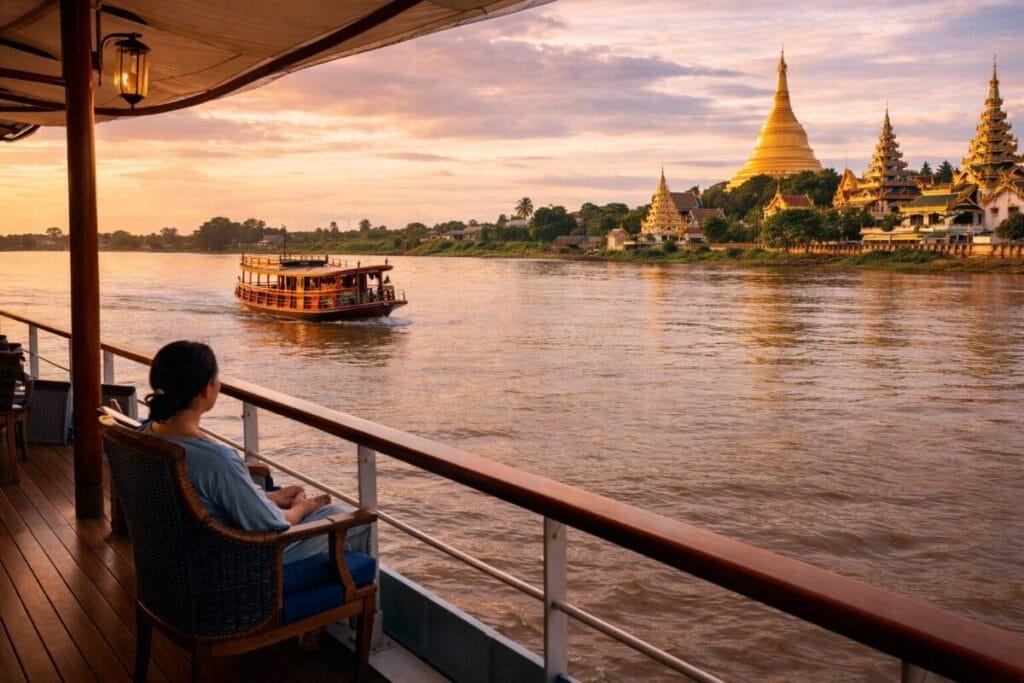
Nearby, Myanmar’s Irrawaddy River continues to attract attention, particularly among cultural travelers seeking access to ancient temples, rural communities, and regions where traditional lifestyles remain central to daily life. Although political and operational conditions vary across the region, tourism planners emphasize that river routes support long-term strategies to position Asia as a destination for immersive, educational travel.
Shorter cruise segments, typically three to four nights, are gaining traction among younger travelers and regional tourists. These flexible options fit easily into multi-destination travel plans and complement flights and rail journeys. The modular style of travel reflects current patterns in Asia, where travelers prioritize variety, cross-border exploration, and shorter but more frequent holidays.
India is experiencing its own surge in river-based tourism. The Kerala Backwaters have long been known for houseboats and day cruises, but the introduction of multi-day, professionally managed river journeys has diversified the market. Government investment in inland waterways, upgraded jetties, safety protocols, and community partnerships has strengthened the region’s capacity to welcome international travelers. Beyond Kerala, interest is also growing along the Brahmaputra and Ganges rivers, where nature-based and cultural itineraries are being integrated into national tourism strategies.
River cruising in Asia is also expanding into the premium segment. Once viewed primarily as an adventure niche, river cruises now cater to affluent travelers seeking privacy, comfort, and tailored experiences. Smaller vessels offer an intimate atmosphere with upgraded cabins, personalized service, and curated excursions. Tourism boards across Asia recognize luxury river travel as both high-value and low-volume—a model that generates strong revenue without creating the overcrowding challenges common in major cities.
Infrastructure remains central to the sector’s success. Governments are investing in modern navigation systems, dredging operations, port improvements, and improved access to cultural sites along riverbanks. Cross-border travel agreements, streamlined visa procedures, and strengthened tourism cooperation within ASEAN have further supported multi-country river routes. These developments signal a long-term commitment to river cruising as a pillar of Asian tourism.
For travelers considering their first river cruise in Asia, travel experts offer practical advice. Short itineraries of three to five nights are ideal for beginners and can be paired with city stays or overland tours. Destination choice depends on interest: cultural travelers gravitate toward the Mekong or Irrawaddy, while nature lovers may prefer India’s backwaters or the rivers of northern Thailand. The best seasons typically fall within the dry months—November to March in Southeast Asia and October to March in India—when river conditions are most stable.
Respect for local communities is essential. River cruises pass through working villages where customs and traditions remain deeply rooted. Travelers are encouraged to dress modestly, shop locally, and follow the guidance of licensed operators to ensure their presence supports cultural preservation.
As Asia prepares for the 2026 tourism season, one thing is clear: river cruising is no longer a niche product but a major force shaping the region’s future. It answers the dual demand of travelers seeking deeper experiences and governments promoting sustainable tourism. Asia’s great rivers—once the lifelines of trade and civilization—are reclaiming their historic role, guiding visitors through landscapes and cultures that define the region’s identity. With expanded connectivity and rising interest in inland journeys, river cruising is set to become one of Asia’s signature travel experiences in the years ahead.
For more travel news like this, keep reading Global Travel Wire